



 1M+ Pets Helped · Family-owned since 1999
Your pet's body was designed to thrive.
Let's give it what it needs.We provide the foundational nutrition that supports the body from the inside out — the way it was designed to be.
"The neurologist said she would never walk again. Two years later she was fully restored. I still get emotional thinking about it."
"My dog has been seizure-free since adding Nzymes and the mineral supplement. No medication. Just this."
"Our house has used Nzymes for 20 years — humans, dogs, cats, horses. It is part of our daily routine."
Two reasons people find us. One reason they never leave.
The vet has run out of answers. I need something that works at the root.
Most of our customers found us in a moment of crisis — their dog couldn't walk, the yeast kept coming back, the neurological episodes wouldn't stop. We've walked thousands of families through exactly this. Personally. With a real plan.
My pet is healthy — I want to keep it that way for as long as possible.
The same products that support struggling dogs also sustain healthy ones. Many of our longest customers started in crisis — and never stopped because they saw what consistent foundational nutrition does over time.
Start with the Foundation.
Every Pet. Every Stage. Every Day.The core of the Nzymes system. Our sprouted soy formula delivers live enzyme activity and food-based antioxidants that support cellular health from the inside out. Every transformation begins here.
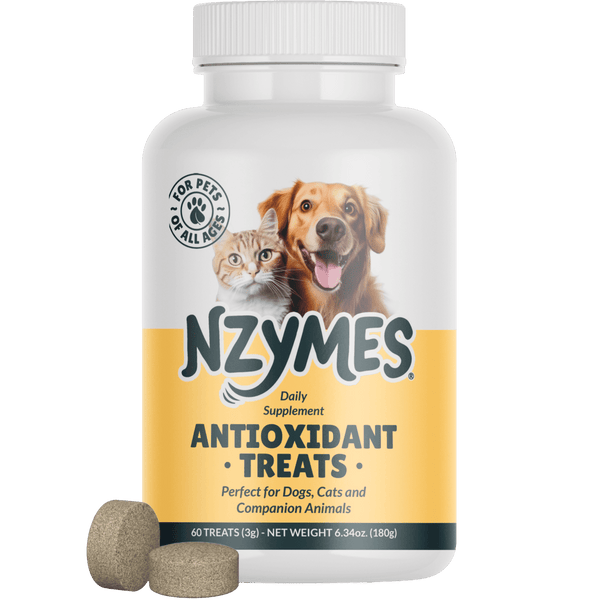
Beef liver chewable tablets with live SOD enzymes & live nutrition. The original formula from 1999 and the starting point for thousands of transformations.
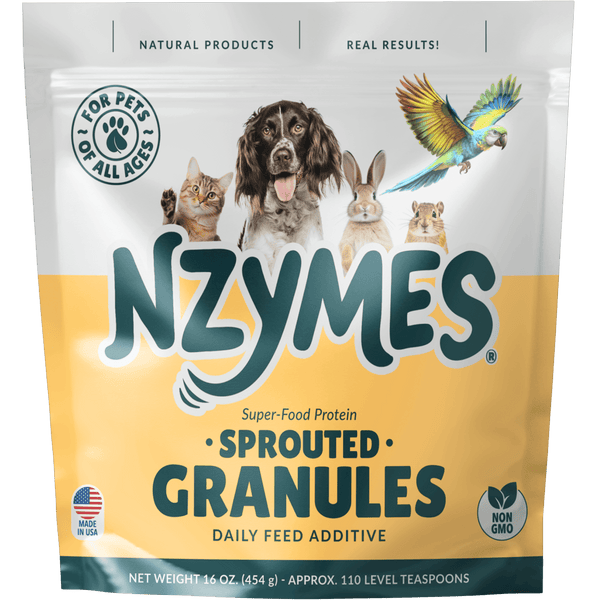
Raw super-food protein powder that can be mixed directly into meals. Same live nutrition — ideal for large breeds, cats, and multi-pet families.
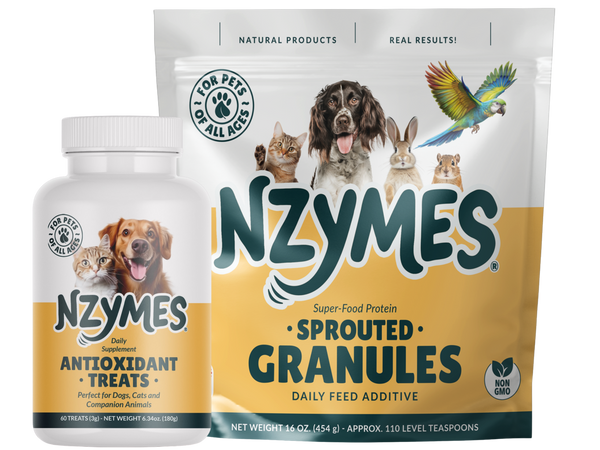
Antioxidant Treats + Sprouted Granules together. The most complete foundation — where most transformation stories begin.
8 Products. One complete system.
Each one restores. Together they transform.One dog.Nine seizures.
A family that refused to give up.Stan Stansbury didn't set out to build a company. He set out to help his dog Biscut — a Japanese Spitz who was having up to 9 neurological episodes a night. What he discovered trying to save her became the foundation of everything Nzymes is today.


Not sure what your pet needs?
Let's figure it out together.Take our free 2-minute quiz and we'll point you to the right support for your pet's specific situation. No sales pitch. Just real guidance from 27 years of experience.