
- Success Stories
- LearnThe Resource Library: guides, articles, stories


Looking for help with
Most searched
Also common
Everything else
Joints & mobility
Immune & breathing
Injury & recovery
Legs, hooves & joints
Gut & breathing
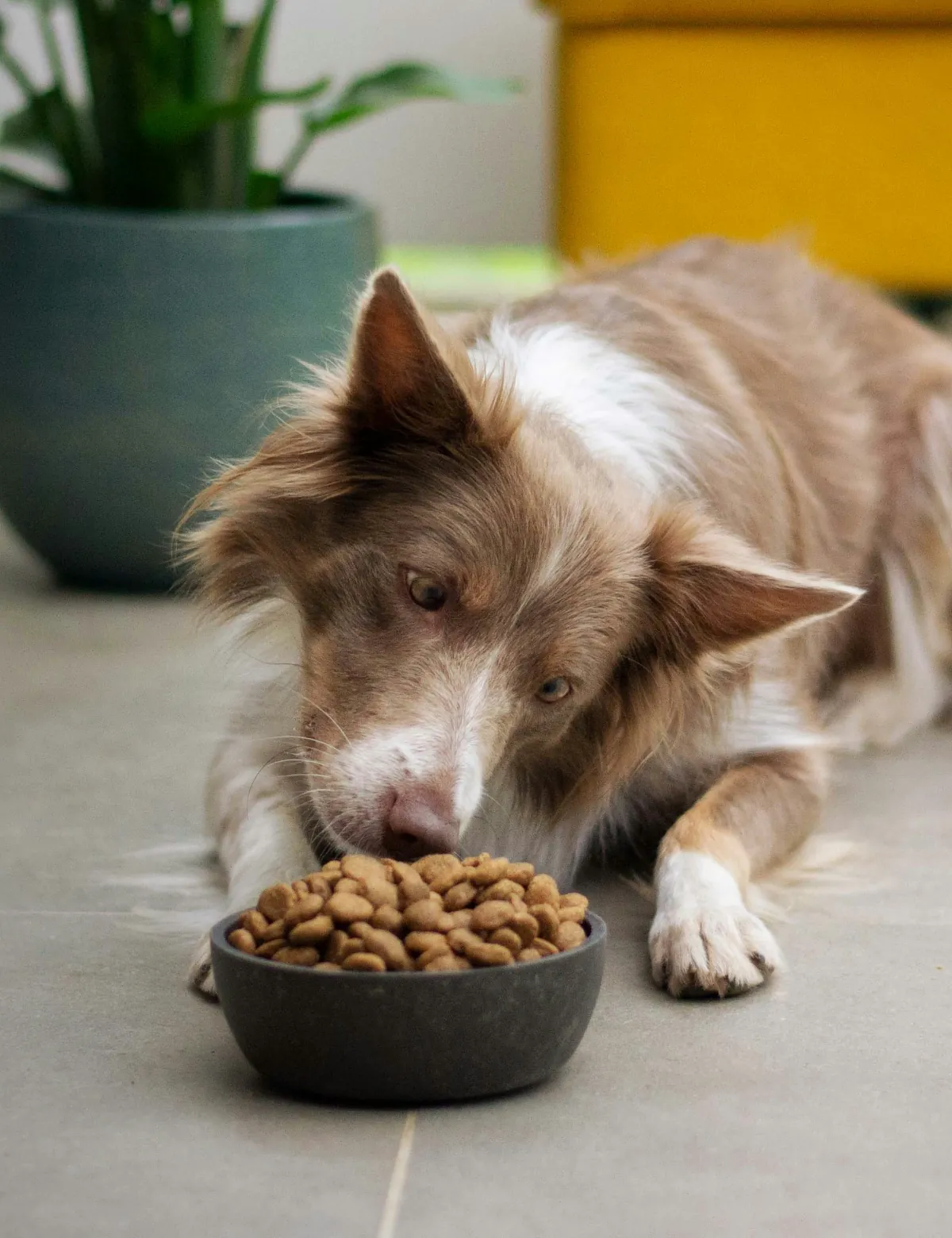
Digestion problems are common in dogs, and often the root of other trouble too. Here are the usual kinds, how to change food without upsetting the stomach, and when it's time for the vet.
A digestive disorder is any stomach or intestinal problem that reduces the body's ability to absorb food, or changes how food moves through. Healthy digestion is how a dog turns the food in the bowl into energy, and into the material the body uses to maintain and repair its tissues.
Because digestion problems can cause or add to other health issues, it's worth paying attention to the early signs and getting help quickly. The exact cause can be hard to pin down, even after a full exam and bloodwork, but it often comes back to an intestinal infection, parasites, or a food the body doesn't tolerate. Have your vet run the tests they need to find it, if possible.
Acute gastroenteritis is usually short-term, and most often comes from a dog eating something they shouldn't have: spoiled food, plants that are poisonous to dogs, fatty human food, or things that aren't food at all. Stress or an intestinal parasite can set it off too. It is inflammation, and sometimes infection, in the stomach and intestines.
Colitis is inflammation of the lining of the colon. Parasites or swallowed objects can cause it. It makes pooping more painful, and brings diarrhea that may be loose and bloody or carry mucus. Most dogs with colitis are middle-aged.3,4 If you see blood, read our bloody diarrhea guide and call the vet.
Constipation has many causes, and dehydration is one of the most common. Keep your dog's water dish clean, full and always available. A diet too low in fiber, or too little exercise, can also be behind it. If it lasts more than a few days, have your vet check that your dog hasn't swallowed something indigestible.
Pancreatitis is inflammation of the pancreas, the organ that makes digestive enzymes and helps control blood sugar. Often no single cause is found, but eating trash, a lot of table scraps or other unsuitable food is a common trigger. The usual signs are vomiting, loss of appetite, belly pain, weakness and diarrhea; milder cases may only look tired and off their food. Vets confirm it with bloodwork and sometimes X-rays or an ultrasound, and treat it with supportive care: medicine for the nausea, fluids for dogs who are very ill, and usually a low-fat diet afterward.1 If the vomiting lasts more than a day, or comes with pain or weakness, it's time for the vet.
Diarrhea is the most common sign of a digestion problem. Infections, parasites, stress, or even a change of dog food can cause it. It is not normal for a dog to have diarrhea for a long stretch, so pay attention and deal with it if it doesn't settle.
When you change foods, move from one to the next over a week. This is the best way we know to avoid an upset stomach and diarrhea:
Some digestion problems are severe or permanent, and need medical attention and a treatment plan made for your dog. Many of the common ones above clear up in a few days. Either way, the food you feed has a big effect on digestive health. Look into what's in it and how digestible those ingredients are, and check with the company whether any recalls have been announced.2
The best way we know to support digestion, and to help avoid trouble in the first place, is good nutrition: digestive enzymes and food-based supplements that give the body what it needs to absorb its food better. If your dog has a digestion problem, keep a close eye on how much they drink while they recover, and keep them as comfortable as you can. Left alone, digestion problems can lead to skin, heart and liver problems, and more.
Nzymes is food, not a treatment. A sudden or severe problem needs the vet first. What we make supports the everyday work of digestion: live-food enzymes to help break food down, antioxidants, and beneficial bacteria to keep the gut in balance.
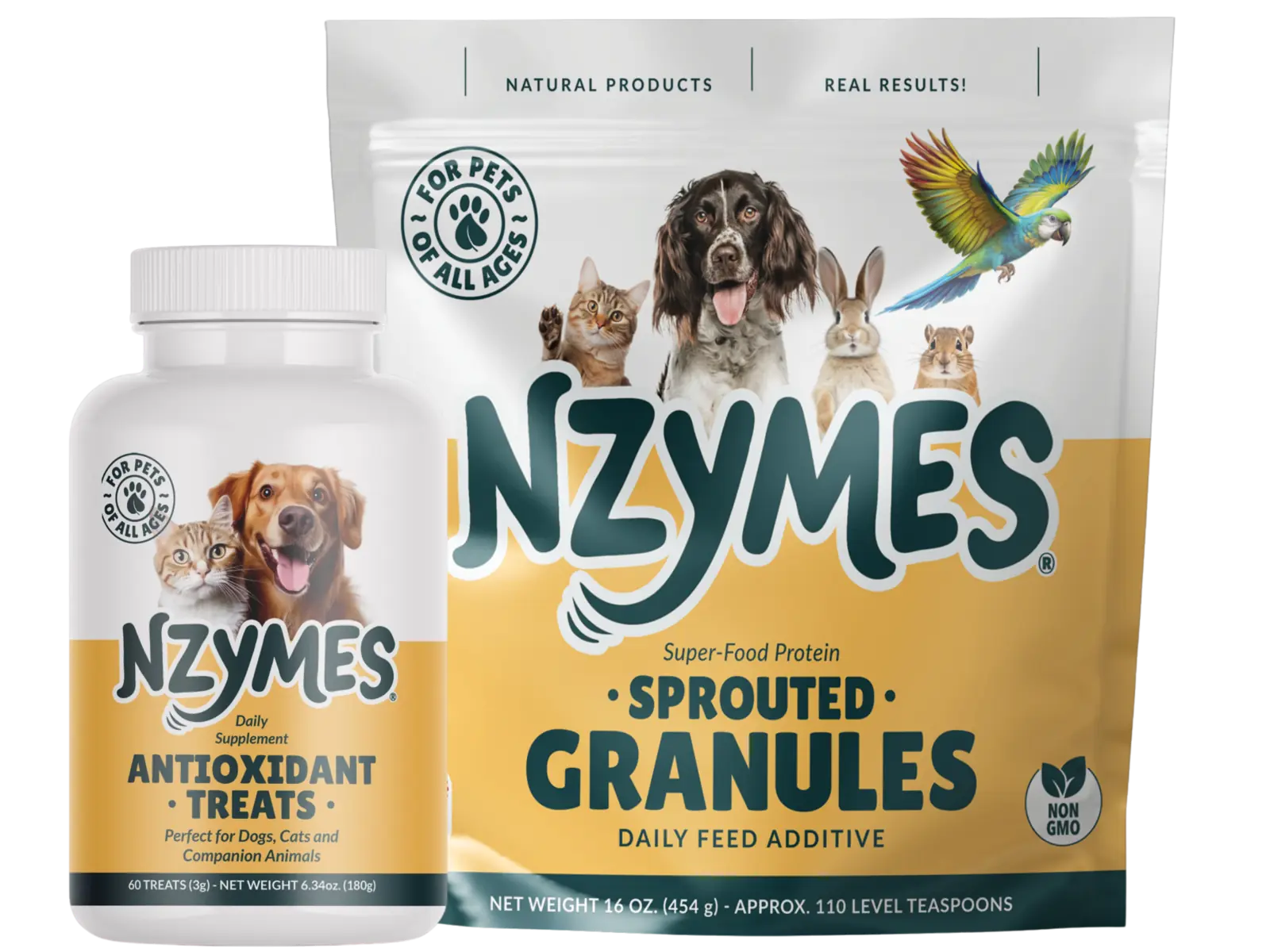 The Core FoundationSee the Core Foundation →Sprouted Granules in the bowl and Antioxidant Treats by hand: live-food enzymes and antioxidants, made from live sprouted soybean meal. Where every dog starts.
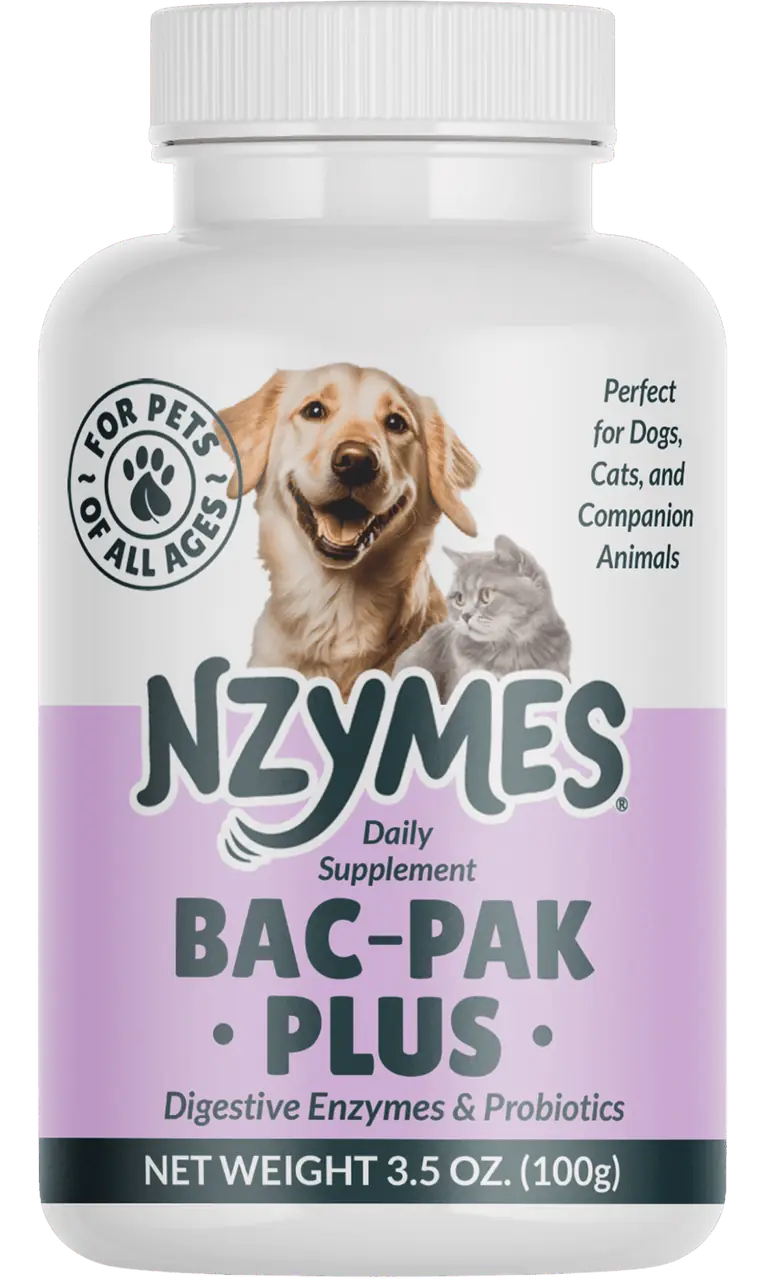 Bac-Pak PlusFive live probiotic strains plus eight digestive enzymes, to restore and protect the beneficial bacteria in the gut.
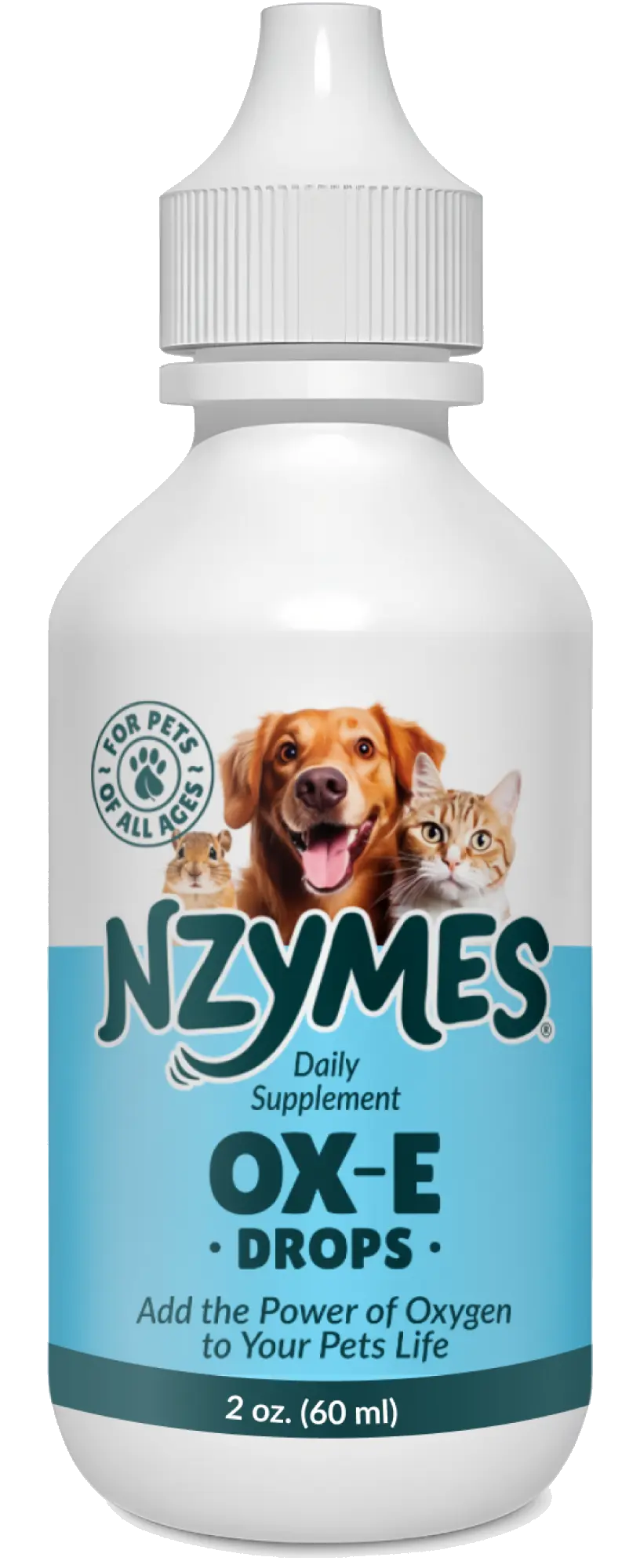 Ox-E DropsFor immune assistance: a few drops a day to support healthy pH and oxygen balance from within.
Not sure what fits your dog? Book a free consultation and tell us what you're seeing. Diet is the first thing we'll go over; our recommended foods guide shows what to look for.
Acute gastroenteritis (a short upset, often from eating something they shouldn't), colitis, constipation, diarrhea and pancreatitis. Diarrhea is the most common sign of all of them.
Over a week. Two days at 75% old food and 25% new, two days at 50/50, two days at 25% old and 75% new, and on day seven, all new food.
If diarrhea goes on more than a day or two, if there is blood, if vomiting keeps coming back or comes with belly pain or weakness, or if constipation lasts more than a few days. Prolonged diarrhea is not normal.
Often no single cause is found, but eating trash, a lot of table scraps or a fatty meal is a common trigger. Vomiting, loss of appetite, belly pain and weakness are the usual signs, and it needs a vet.
Nzymes is food, not a treatment. Live-food enzymes, antioxidants and beneficial bacteria help the body absorb its food better, which is where good digestion starts. A sudden or severe problem still needs the vet first.
Tell us what your dog eats, what you're seeing, and what the vet has said so far. We'll help you work out where to start.
The consultation is a scheduled half hour on Google Meet, so you get real time and real answers. It's free, and it always will be.