Guide · 6 min read

Tincture of Black Leaf

By Mike Stansbury · First published June 2020 · Revised September 2026For people and pets

Old remedies, put to work today. Three plants your great-grandmother might have recognized, Olive Leaf, Black Walnut, and Cayenne, blended into one tincture with one quiet job: helping keep the balance of good and bad organisms in the gut on your side.

Where the name comes from

Black Walnut. Olive Leaf.
Black Leaf.

People ask us about the name all the time, and the answer is simpler than it sounds. Take the first word of Black Walnut and the last word of Olive Leaf, and you have it. The two herbs that do the heaviest lifting in this tincture gave it its name; Cayenne, the third, is the one that helps carry them where they need to go.

Black Walnut
from the green outer husk
+
Olive Leaf
the leaf that keeps the tree healthy

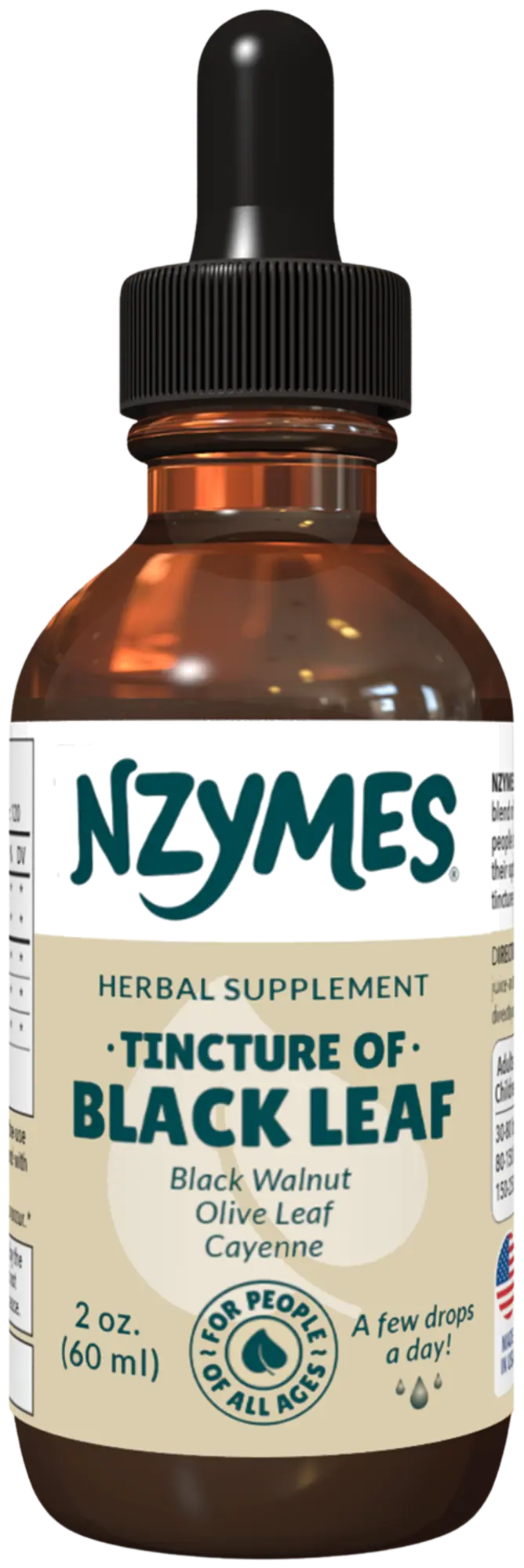
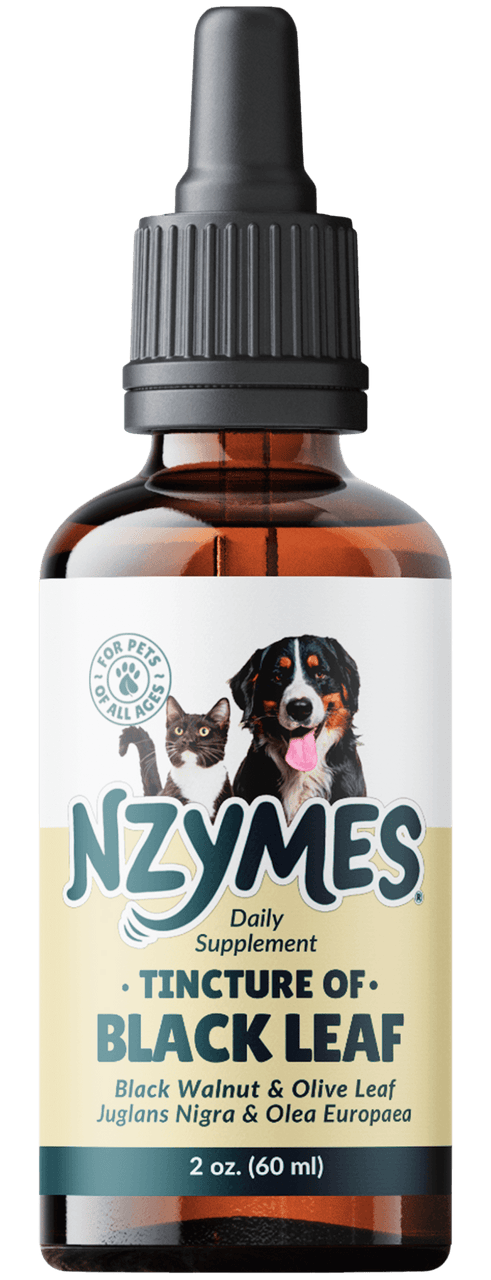
Nzymes Tincture of Black Leaf is a herbal blend of Black Walnut, Olive Leaf, and Cayenne Pepper, for people and pets of all ages. We harvest each plant at the point when it's at its most potent, and we tincture it using the Foss Method, a slow process that works the way nature does, so every drop carries the plant's whole character rather than one isolated piece of it. Every herb in Black Leaf is wild-crafted or organically grown.

Each of the three brings something the others don't, and together they help the body in its ongoing tug-of-war with unwelcome microbes, yeast, and parasites. That's why Black Leaf has a seat at the table in our gut and yeast work for people (see Leaky Gut Syndrome and You), and in the Skin Rescue and Wart Support programs for dogs.

Here's what each one does, and why it's in the bottle.

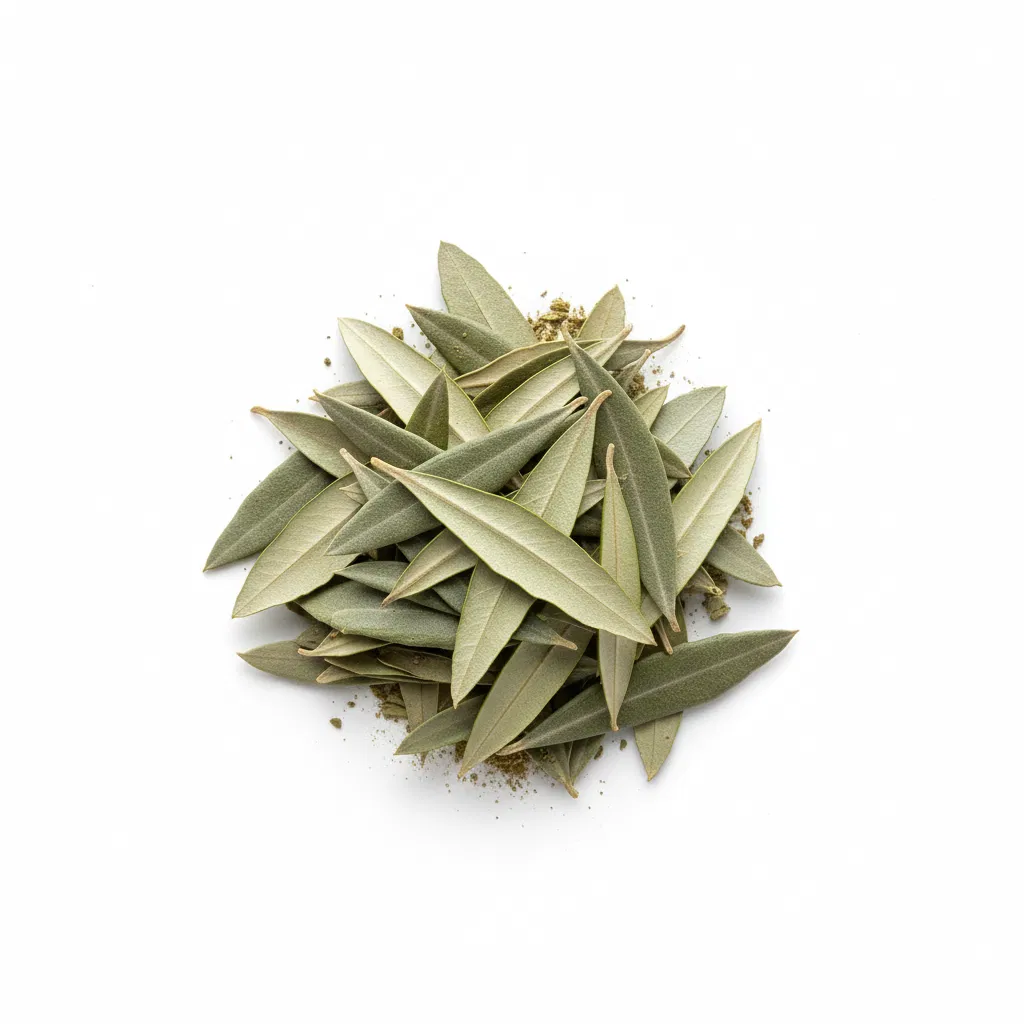
Dried olive leavesOlive Leaf
Herb one

Olive Leaf

Olea europaea · the leaf that keeps the tree healthy

If you've ever wondered how olive trees live for centuries, shrugging off pests and disease, the answer is in the leaf. People have reached for olive leaf for a very long time: for sore throats and the miseries that come with colds, flu, and pneumonia, and for the stubborn yeast and fungal troubles like Candida, systemic yeast, and leaky gut. It also pairs well with Mullein when the trouble is in the chest.

The history is a good story on its own. In Biblical times, olive leaf was believed to have remarkable healing properties. By the Colonial era it was being used against tropical fevers like malaria and dengue; a "tea" made by boiling down olive leaves was a well-known home recipe in 1850s England for travelers coming home from the tropics. Eventually scientists isolated the substance responsible and named it oleuropein. It turned out to be the very compound that makes the olive tree itself so hardy.

By the 1960s, researchers had traced oleuropein's active ingredient to elenolic acid, and studies since have pointed to a whole host of benefits: increased cardiovascular flow, lower blood pressure, calmer heart rhythm, lower LDL (bad) cholesterol, lower blood sugar, and fewer muscle spasms. On the microbial side, olive leaf was found to be extremely effective against harmful bacteria and parasitic protozoa, and in the lab it stopped the replication of every virus tested against it.

Its job in the blend: the all-rounder. Olive Leaf is the reason Black Leaf earns a place in yeast and leaky gut work.
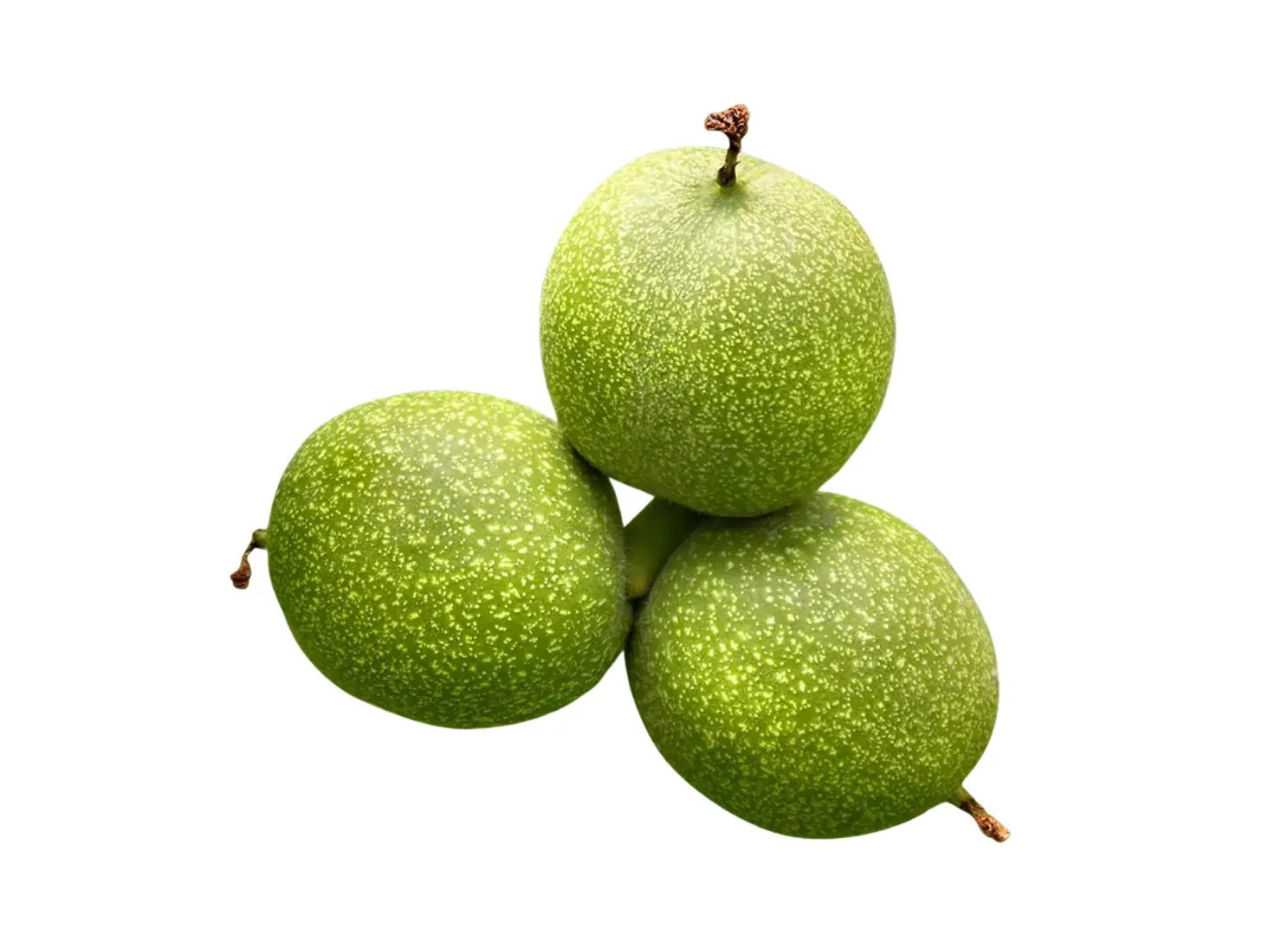
Green black walnut hullsBlack Walnut hull
Herb two

Black Walnut

Juglans nigra · from the green outer husk

Not the nut you'd put in a brownie. What we use is the green outer husk, the part most people throw away, because that's where the good stuff lives. Black walnut behaves a lot like olive leaf in its antimicrobial action, and the traditional understanding is that it oxygenates the blood, which is how it is said to make life hard for parasites. The Chinese have used black walnut extract for centuries against tapeworm. The husk is also rich in a natural, organic form of iodine, which is where its old reputation as an antiseptic comes from. Taken internally it has long been used for constipation, and it's one of the herbs people reach for first when the trouble is fungal or parasitic. (The NIH has a good summary of the health benefits of walnuts.)

On the skin, it has a long folk history too: eczema, psoriasis, herpes, impetigo, acne, dandruff, itch, boils, shingles, and fungal conditions like ringworm. It's been used as a gargle for sore throats, relaxed uvula, hoarseness, tonsillitis, and similar ailments. And it is a famous vermifuge, which is the old word for something that helps clear worms and parasites out of the gut.

Its job in the blend: the parasite and fungus specialist, and the source of the blend's natural iodine.
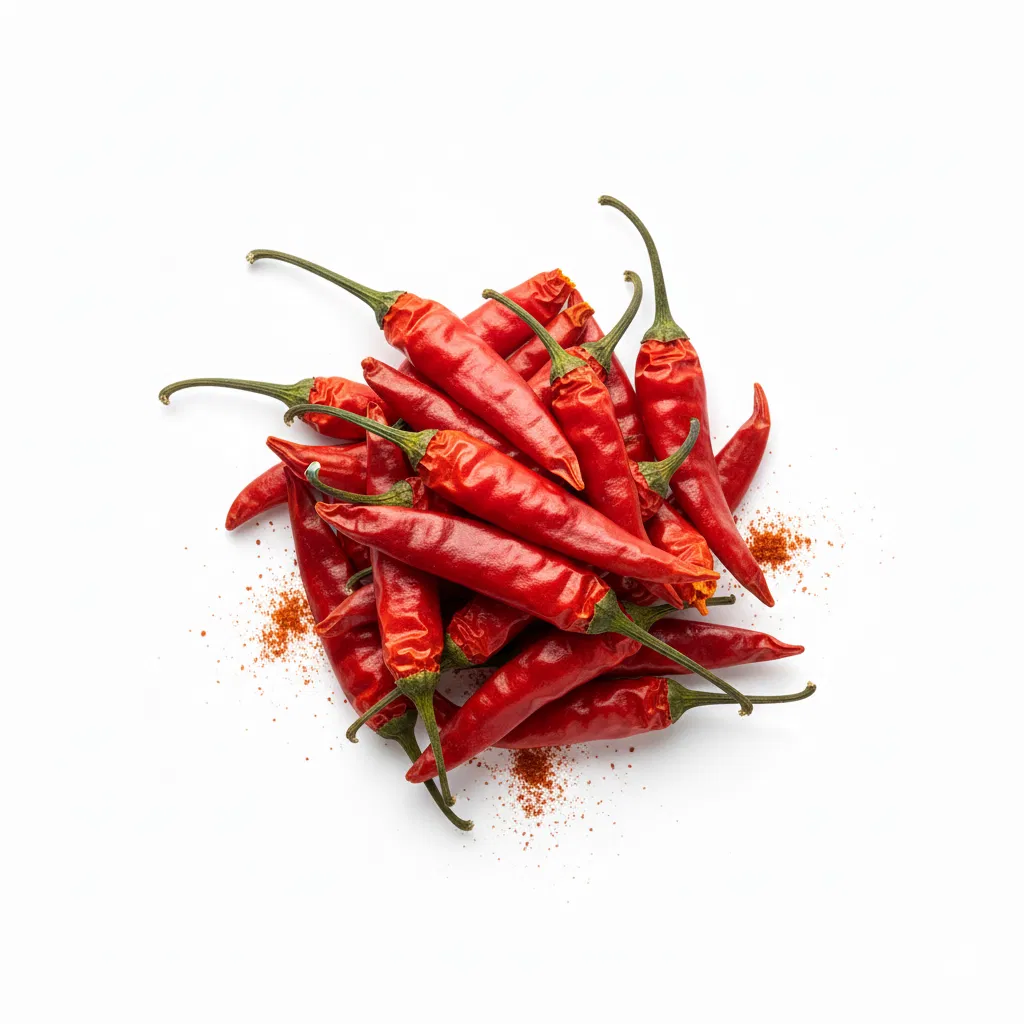
Dried cayenne peppersCayenne
Herb three

Cayenne

Capsicum annuum · the fruit of a tropical shrub

Yes, the same pepper that's in your spice rack. Cayenne comes from the fruit of Capsicum annuum, and folk medicine has leaned on it for fevers, sore throats, chest infections, asthma, and upset digestion. More recently, studies have shown it can reduce the risk of developing arteriosclerosis by lowering blood cholesterol and triglyceride levels, and parts of the world where people eat cayenne every day show far less cardiovascular disease. Its best-known ingredient, capsaicin, is widely used for everyday aches (arthritis, for instance) because it works on both inflammation and as a nerve-blocking agent. Heart health, toothache, and clearing stuffy mucous membranes round out its traditional uses.

Its job in the blend: the carrier. Cayenne gets the blood moving and helps deliver the other two herbs where they're needed.

Better together

Put together, they do more
than any one alone.

Each of these plants is useful on its own. Together, they cover more ground: general support for the body's systems day to day, and a specific role in the programs where we lean on them, gut and yeast work for people, skin and wart programs for dogs.

One thing that surprises people: Tincture of Black Leaf is ONE product, labelled separately for People and for Pets. The two labels exist so that each of you gets directions written for you. What's in the bottle is exactly the same.

Black Leaf Tincture for People

Black Leaf for People

Daily supplement for people. Dosing, how to take it, and the 120-Day Worry-Free Guarantee.

Black Leaf Tincture for Pets

Black Leaf for Pets

The same tincture with dog dosing by weight, and its place in Skin Rescue and Wart Support.

Wild-crafted or organically grown. Tinctured the slow way, the way nature does it.
Black Walnut. Olive Leaf. Black Leaf.

Questions people ask
Why is it called Black Leaf?

The first word of Black Walnut plus the last word of Olive Leaf. The two herbs that do the heaviest lifting gave the tincture its name; Cayenne, the third ingredient, is the carrier that helps deliver them.

What is in Tincture of Black Leaf?

Three plants: Olive Leaf, Black Walnut (the green outer husk, not the nut), and Cayenne Pepper, all wild-crafted or organically grown, tinctured together using the Foss Method.

Is the People version different from the Pet version?

No. It is one product, labelled separately so each kind of user gets dosing and information written for them. The tincture itself is identical.

What is the Foss Method?

A slow tincturing method that works the way nature does, so each drop carries the plant's whole character rather than one isolated compound pulled out of it.

When is Black Leaf used?

For people, as part of gut and yeast rebalancing (see Leaky Gut Syndrome and You). For dogs, inside the Skin Rescue and Wart Support programs. It works quietly from the inside as support for the body's defenses, so there may be nothing dramatic to "see" on a set timeline. That's normal.

Is it safe alongside medications?

Yes. Black Leaf is a completely natural product: three whole plants, wild-crafted or organically grown, tinctured slowly with nothing added. It doesn't compete with medications the way a synthetic supplement might. If you're unsure about anything you or your dog are taking, we're here for free consultations; book one and we'll talk it through.

Where do the herbs come from?

Every herb in Black Leaf is wild-crafted or organically grown, and each is harvested at the point when it's at its most potent.

Why the green husk of the walnut and not the nut?

Because that's where the properties we want live: the natural organic iodine and the compounds behind the husk's long history against fungus and parasites. The nut itself is a fine food, but it isn't medicine.

What is a vermifuge?

The old word for something that helps clear worms and parasites out of the gut. Black Walnut has carried that reputation for centuries.

Is Black Leaf a starting point or a supporting player?

A supporting player. It earns its place inside a bigger approach: gut and yeast rebalancing for people, the Skin Rescue and Wart Support programs for dogs. If you're not sure it belongs in your plan, book a free consultation and we'll tell you honestly.

Before you spend a dime

Wondering if Black Leaf belongs in your plan? Ask us first.

Black Leaf is a supporting player, not a starting point. Tell us what you (or your dog) are dealing with and we'll tell you honestly where it fits, and where it doesn't. No pressure, no script.

We've been walking alongside people and their animals since 1999. The consultation is a scheduled half hour with the people who know these products best. It's free, and it always will be.

Mike Stan Brenda Kara
1-877-816-6500 · Orders & quick questions