
- Success Stories
- LearnThe Resource Library: guides, articles, stories


Looking for help with
Most searched
Also common
Everything else
Joints & mobility
Immune & breathing
Injury & recovery
Legs, hooves & joints
Gut & breathing
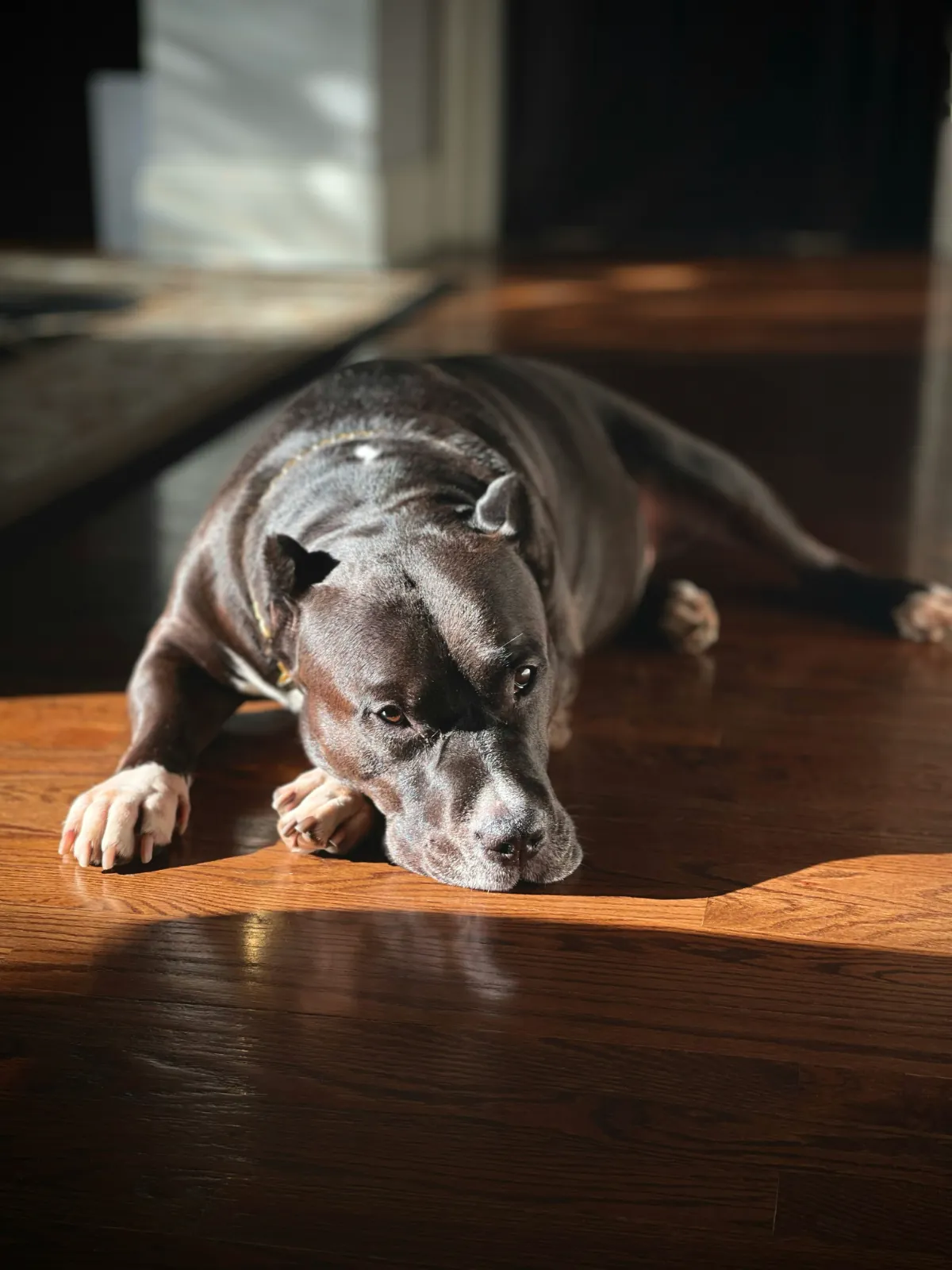
Blood in your dog's diarrhea is a reason to call the vet today, not tomorrow. Here is what the color can tell you, what the vet will look for, and how to help the gut once the cause is known.
Bloody diarrhea can be a serious concern, and your dog should see the vet as soon as possible. Depending on the cause, it may not be good to wait. Some of the conditions behind it move fast and need fluids or medicine the same day; others are milder. Only an exam can tell you which one you're looking at.
It helps to notice a few things before you go: when it started, how many times it has happened, whether there is vomiting too, and whether your dog could have eaten something they shouldn't. If you can, bring a photo or a sample.
Bright red blood is fresh. It usually comes from the lower gut, the colon or rectum, and you may see it as streaks, red mucus, or drops at the end. It looks alarming but isn't always a sign of something life-threatening.1
Black, tarry stool is blood that has been digested on the way through. It usually points higher up, to the stomach or small intestine, and is the more concerning of the two. Dark food can darken stool too; wiping it on a white paper towel and looking for a dark red tinge is one way to tell.1
Go now, or call an emergency clinic after hours, if you see any of these:
There can be quite a variety of causes, whether or not vomiting comes with it. These are some of the most common, though the list is not complete:
HGE deserves its own mention. It comes on suddenly, often in a small or toy breed that seemed perfectly healthy, with vomiting and a large amount of bloody diarrhea. The main treatment is prompt IV fluids at the clinic, and dogs seen early usually do well.2
Because so many things can cause it, finding the answer can take a few steps. Most vets start with a stool sample for parasites, a parvo test for puppies and unvaccinated dogs, and bloodwork; with HGE, the red blood cell count often comes back very high because the dog has lost so much fluid. If something swallowed or a growth is a possibility, X-rays or an ultrasound may follow.2,4
If the answer your vet comes up with doesn't seem solid to you, consider a second opinion, just as you would for something serious in yourself.
Nzymes doesn't treat the cause of bloody diarrhea. That is the vet's job, and sometimes it is urgent. Where we can help is afterward, when the gut is trying to recover: putting back the beneficial bacteria an upset like this washes out, and giving the body the live-food enzymes and antioxidants it needs to rebuild.
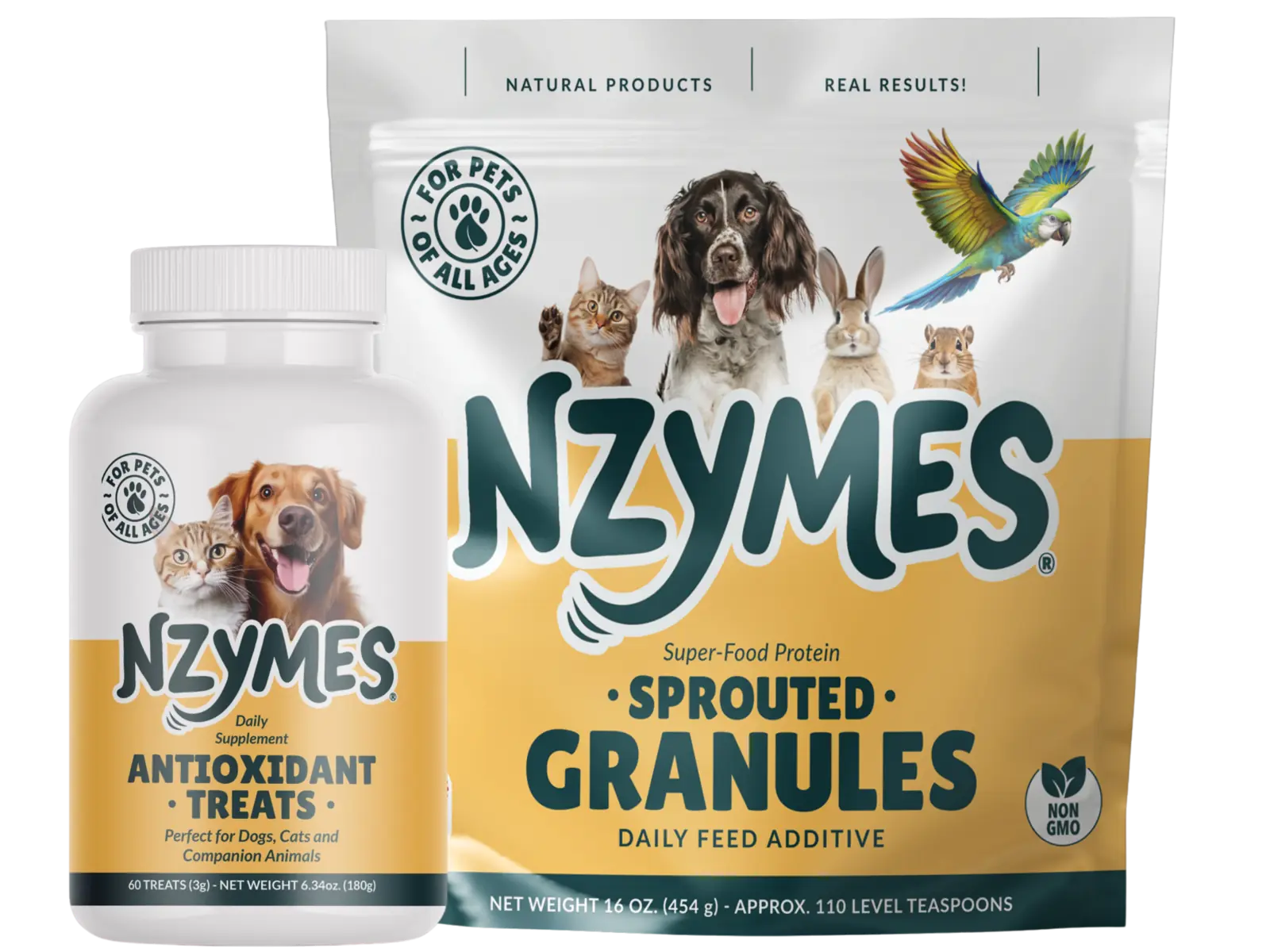 The Core FoundationSee the Core Foundation →Sprouted Granules in the bowl and Antioxidant Treats by hand: live-food enzymes and antioxidants, made from live sprouted soybean meal. Where every dog starts.
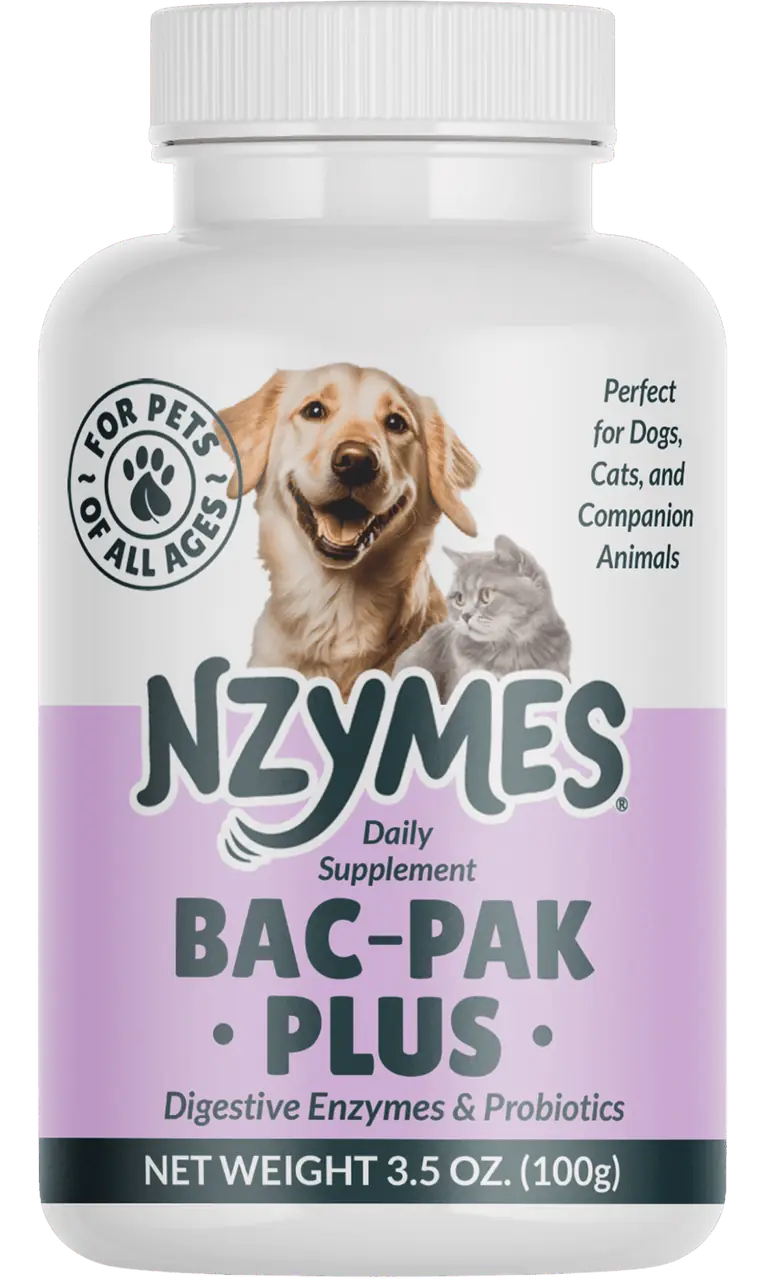 Bac-Pak PlusFive live probiotic strains plus eight digestive enzymes, to restore and protect the beneficial bacteria in the gut.
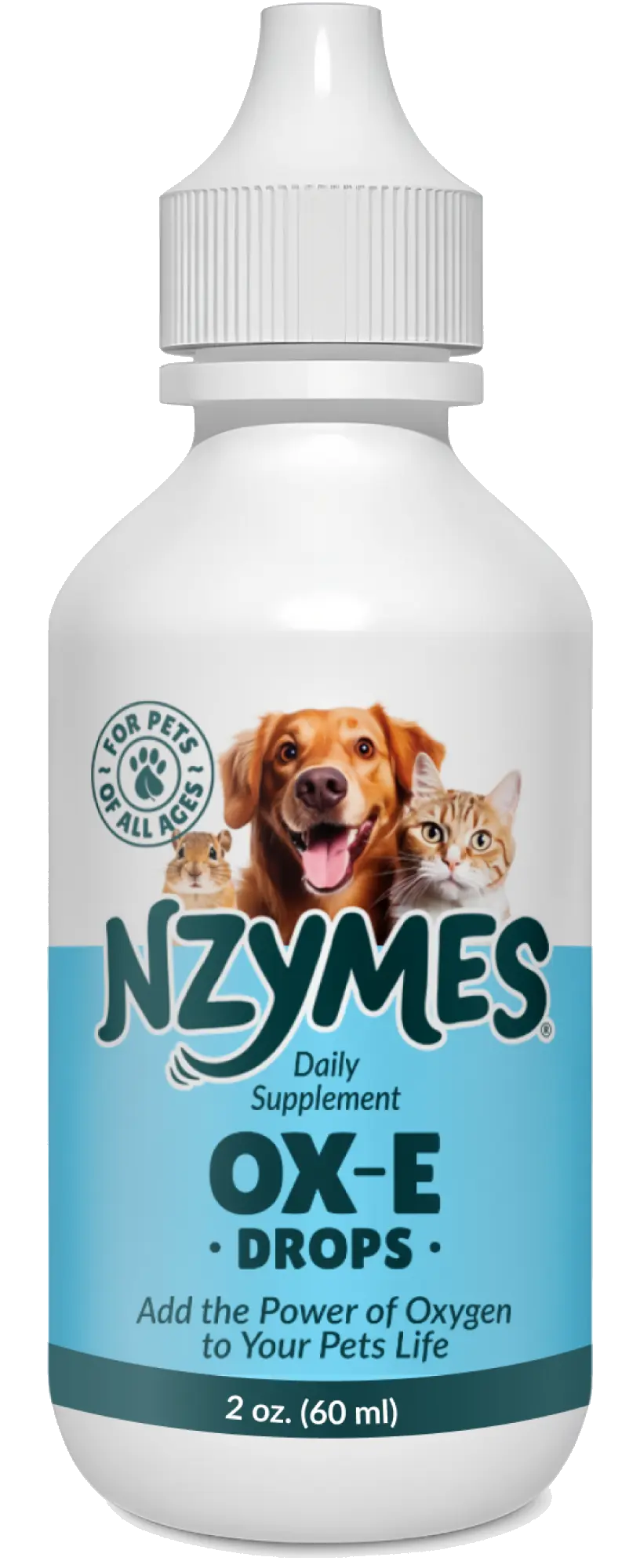 Ox-E DropsFor immune assistance: a few drops a day to support healthy pH and oxygen balance from within.
Not sure what fits your dog once the vet has a diagnosis? Book a free consultation and tell us what they found. Diet is the first thing we'll go over; our recommended foods guide shows what to look for.
Treat it as a reason to see the vet today. It is urgent if there is a lot of blood, jelly-like bloody diarrhea, black tarry stool, vomiting as well, or if the dog is a puppy or seems weak and flat.
Bright red blood is fresh and usually comes from the lower gut: the colon or rectum. Black, tarry stool is blood that has been digested on the way through, so it usually comes from higher up, the stomach or small intestine, and it is more concerning.
Hemorrhagic gastroenteritis, now called acute hemorrhagic diarrhea syndrome (AHDS): sudden vomiting and a lot of bloody diarrhea, often described as looking like raspberry jam. It is most often seen in small and toy breeds. Prompt IV fluids from the vet are the main treatment, and with early care the outlook is good.
Usually a stool sample for parasites, a parvo test for puppies and unvaccinated dogs, bloodwork, and sometimes X-rays or an ultrasound to look for something swallowed. If the answer does not seem solid to you, a second opinion is reasonable.
Not with the cause itself; that is the vet's job, and it can be urgent. Where Nzymes may help is afterward: rebuilding the beneficial bacteria and giving the gut the live-food enzymes and antioxidants it needs while it recovers.
Once the vet has found the cause, tell us what they said, what your dog eats, and how the gut has been since. We'll help you plan the recovery.
The consultation is a scheduled half hour on Google Meet, so you get real time and real answers. It's free, and it always will be.