- Success Stories
- LearnThe Resource Library: guides, articles, stories


Looking for help with
Most searched
Also common
Everything else
Joints & mobility
Immune & breathing
Injury & recovery
Legs, hooves & joints
Gut & breathing
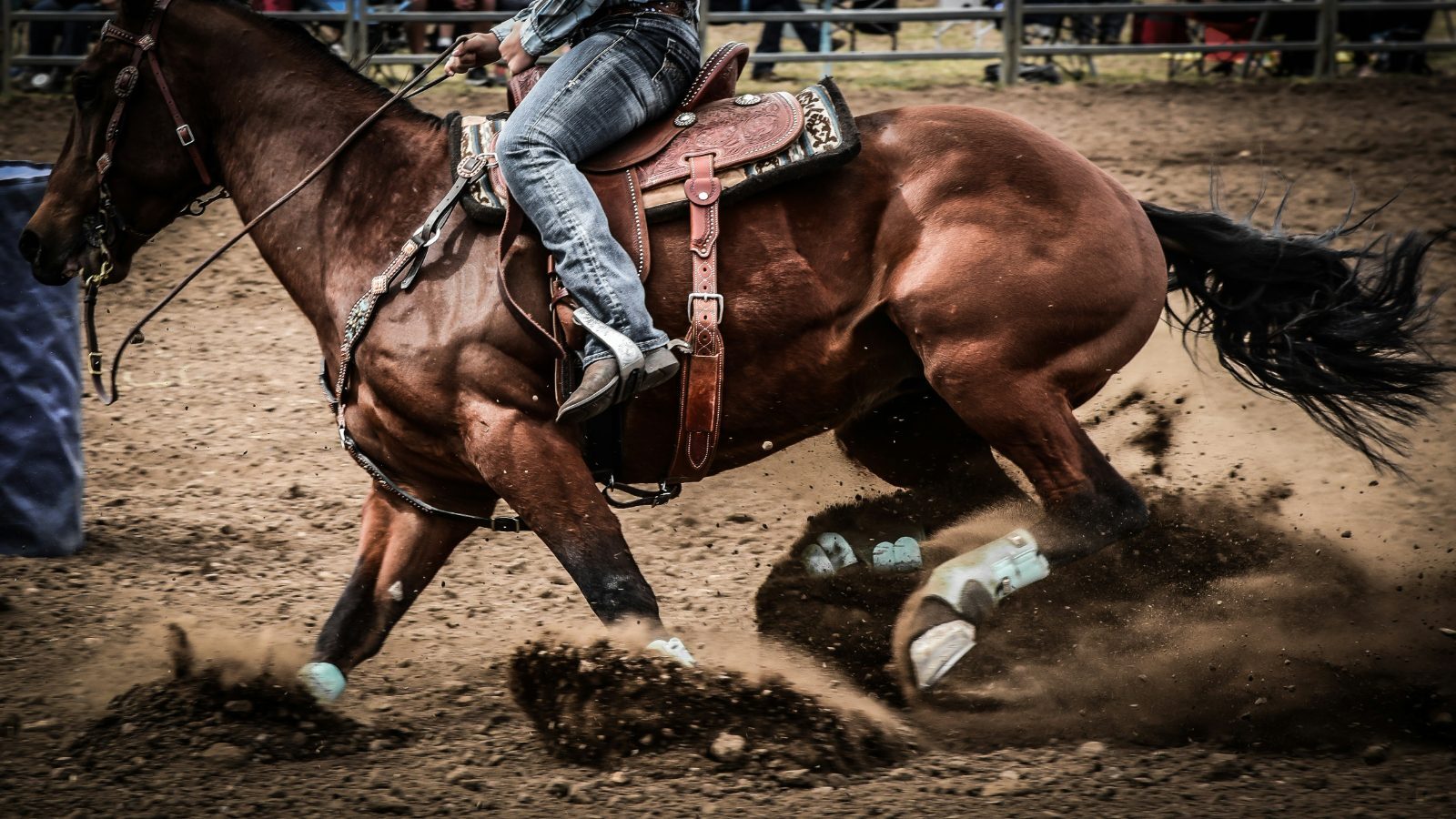
Ranch work, dressage, barrel racing, roping, a long weekend on the trail. We ask a lot of our horses. The harder question is what they've got left afterward. Recovery is where the next ride is won, and recovery runs on nutrition.
Considering what horses are asked to do, it's a wonder they hold up as well as they do. Whether it's regular exercise or just daily short rides around your property, every horse needs the correct nutritional support, because every hard day writes a bill the body has to pay afterward. The working horse just pays it more often: a ranch horse, a cutting horse, a show horse hauling every other weekend. And the big recovery moments outside of work count too. Foaling, an injury layup, and a long event season make the same demands.
The shorter the recovery, the healthier the horse. One that stays run-down between rides, slower to settle, slower to eat, not quite himself, is telling you the reserves are thin.
It is often said: take care of the little things, and the big things will take care of themselves. That might be a little simplistic, but it is not too far off. Every horse is a collection of trillions of cells, the little things, and every day those microscopic wonders perform thousands of tasks to keep a body alive and healthy.
One of those tasks is converting oxygen into energy. But producing that energy creates toxins too: oxygen free radicals, the byproduct of hard breathing and hard work, doing cell damage wherever they sit. That is where the body's antioxidant enzymes come into play. They are nature's ionic scrub brushes. Their job is to take care of those little things and keep them balanced and healthy, and a working horse generates far more mess for those brushes to scrub than a pasture ornament. So, in theory: the greater the presence of enzymes in your horse's body, the greater the impact on health.
Superoxide dismutase and catalase are found in every living cell. They break down the potentially harmful oxygen molecules that collect in cells, and they are the key fighters in the battle against the oxygen free radicals that damage healthy cells and contribute to aging and disease.
Glutathione peroxidase is the scavenger of the family. It hunts down free radicals, turns hydrogen peroxide into plain water and oxygen, helps move amino acids where they are needed, and protects the fats in the cell walls from oxidative damage (the technical name is lipid peroxidation).
Methionine reductase is a regulator of antioxidant defense and lifespan in mammals. It is built around methionine, an essential amino acid, and essential means the body cannot make it; it has to come from the diet. The body uses it to make proteins and other amino acids that support sugar metabolism and the normal function of the immune system.
Energy production. Since it is up to the cells to produce energy, their health is paramount for your horse to perform at his best, and the same can be said for recovery after a workout. The same antioxidant enzymes help the cells flush the buildup of lactic acid out of the muscles, so enzymes and cells work hand in hand. Which raises the question: what happens when there are not enough enzymes in the system?
Enzyme supply. With an inadequate supply, toxins build up in the horse's system and the cells feel it first. They become less vibrant, and damage from the toxic exposure causes their outer edges to lose integrity. Instead of staying independent agents, cells begin to clump together, which exposes less of their surface area to the oxygen-rich blood supply, and clumped cells are less capable of converting oxygen to energy. That is the horse who is still tired days later.
Cellular decay. Left short for long enough, cell decay and eventually cell death advance. When a cell dies, a new cell is produced to replace it, but each successive set of cells is a little less than its predecessor. That is how we age, horses and people alike. Turn that around and it works in your favor: by extending the life of the cells, you are adding life to any person or animal.
Supplementing with a small amount of super-food protein can make amazing differences in the energy, spirit, and stress of your horse. The Nzymes Sprouted Granules are that resource: a complete live-food protein, packed with natural amino acids, antioxidant enzymes, digestive enzymes, minerals, and vitamins, exactly the components stripped away and missing from horse feeds that have been heated and processed. Easily absorbed and put to use by the body quickly, they help the horse's body keep up its own production of the key antioxidant enzymes above. We've been working with this formula since 1999, with horses of every shape and size.
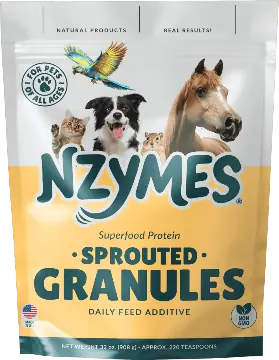
| 600 to 750 lbs | 3 level tsp |
| 750 to 1,000 lbs | 4 level tsp |
| 1,001 to 1,250 lbs | 5 level tsp |
| 1,251 to 1,500 lbs | 6 level tsp |
If your horse is slowing down, less energetic, and taking longer to recover after a ride, this is the place to start. In recovery cases we suggest doubling the daily amount for the first two weeks. Most horse owners report reduced recovery times, and some of them write to us about it.
Ryan Dohrn's APHA gelding, Louisville Slugger, was short on endurance in the heat and slow to settle after workouts. Thirty days on the Granules, in Ryan's words: “His recovery time went from an average of 20 minutes down to about 5.” Read Ryan's full letter on the arthritis guide →
Try it protected by the 120-Day Worry-Free Guarantee, and use the bag all the way up. If you see no positive signs in your horse, send back the empty bag for a refund.
Hard work leaves a mess in the muscles.
A well-fed body cleans it up faster.
Age plays its part, but recovery time tracks the body's reserves, not just the calendar. A horse whose cells have what they need to produce energy and clear the byproducts of hard work will bounce back faster at any age.
Any horse, honestly. Working and competing horses have the loudest need: ranch horses, dressage, barrel racing, roping, cutting, trail horses on long rides. But a horse whose whole job is short rides around the property runs the same biology on a lighter bill, and the big recovery moments count for every horse: foaling, an injury layup, a hard event season.
The Granules add a live-food protein source to the daily feed, easily absorbed and put to use quickly. Beyond the protein itself, this resource helps the horse's body keep up its own production of its key antioxidant enzymes, which break down the harmful oxygen molecules hard work leaves behind and help the cells flush lactic acid from the muscles after a workout.
In recovery cases, double the daily amount for the first two weeks, then watch your horse over the following weeks. The 120-Day Worry-Free Guarantee gives you up to four months, and we want you to use the bag all the way up. If you see no positive signs, send back the empty bag for a refund.
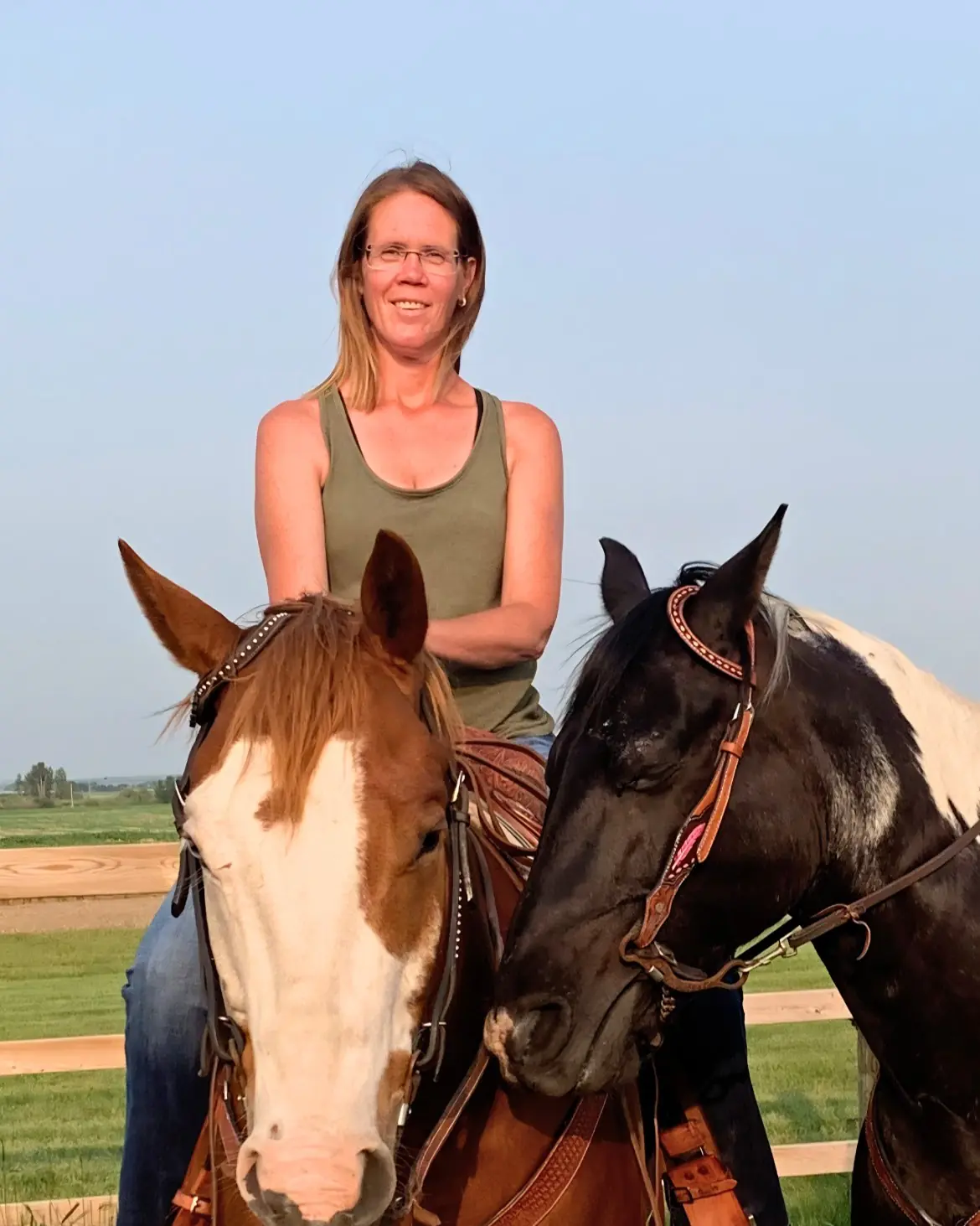
Kara is the equine specialist on our customer care team, and she keeps her own herd on a farm in Saskatchewan. Tell her what you're seeing, what you're feeding, and what worries you, and she'll tell you honestly where to start. Read Kara's story →
The consultation is free, and it always will be.
1-877-816-6500 · Orders & quick questions