- Success Stories
- LearnThe Resource Library: guides, articles, stories


Looking for help with
Most searched
Also common
Everything else
Joints & mobility
Immune & breathing
Injury & recovery
Legs, hooves & joints
Gut & breathing
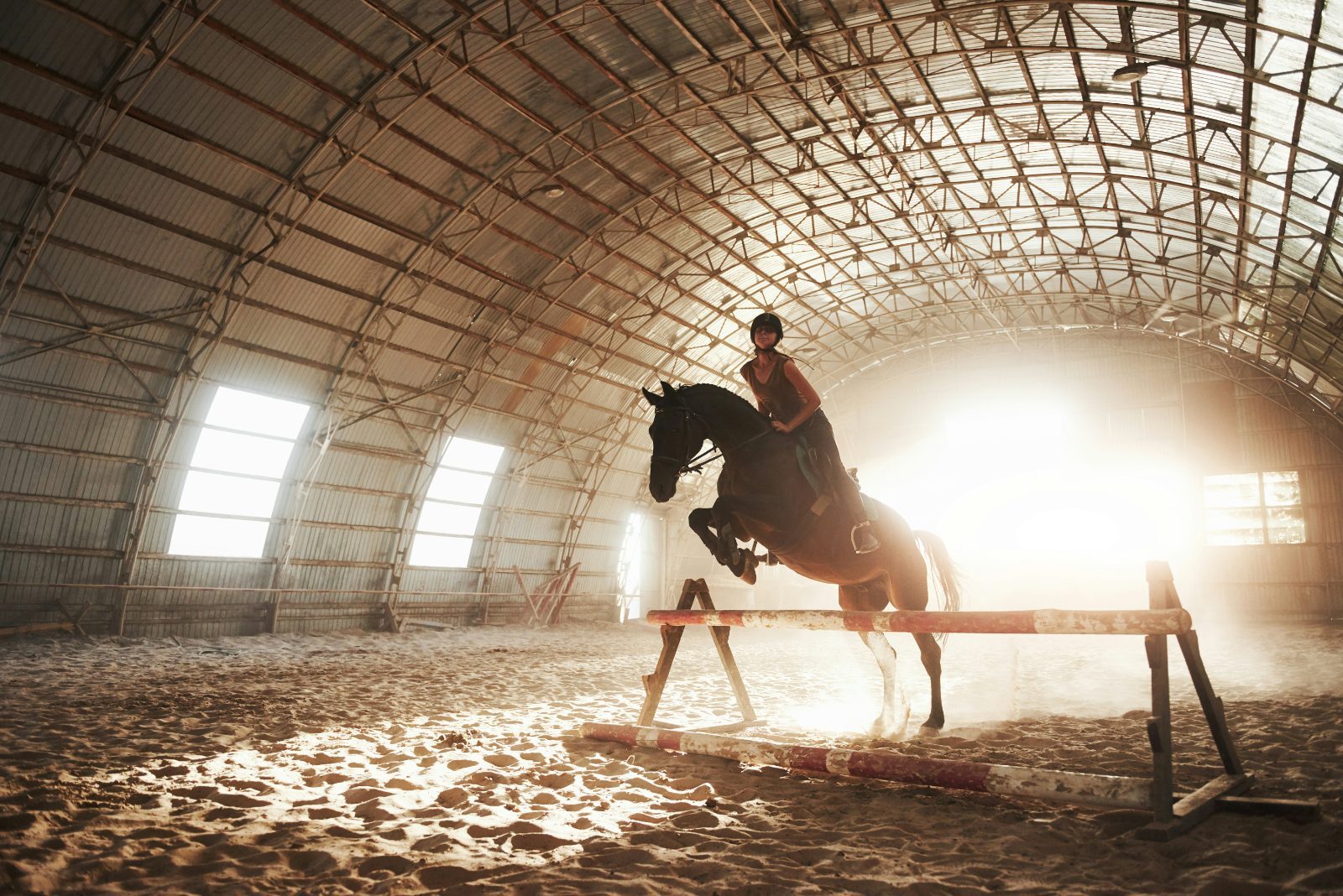
Stiffness that won't warm up. Trouble rising. A stride that has lost its reach. Arthritis is one of the most common reasons a horse slows down, and the trouble rarely starts in the cartilage. It starts in the fluid the cartilage depends on.
Arthritis rarely announces itself. It shows up in the mornings and in the first ten minutes of work: difficulty rising, problems walking, trouble with the stride or the gallop, sometimes trouble just standing comfortably. Those are the visible signs. Underneath them sit the quieter ones: pain, swelling, and inflammation, and quite often real damage to the cartilage that protects the joint.
One stiff morning after a hard ride is a horse being a horse. A pattern that holds week after week, warm-ups that keep getting longer, reluctance toward work that used to be easy, is a joint asking for help. It's worth acting on early, while the cartilage still has plenty to work with.
Rheumatoid arthritis is the autoimmune form: the immune system turns on the body's own tissues, ligaments, and joint structures. It brings serious pain, inflammation, and swelling, and over time it can deform the joints and even erode bone.
Osteoarthritis is the common form: the slow wearing away of the protective cartilage around the joints. Genetics, nutrition, and old injuries all feed it, alongside plain wear and tear. As the cartilage thins, flexibility drops, inflammation rises, and moving starts to cost more than it should.
In our view, cartilage loss is tied hard to the condition of the synovial fluid, the lubrication and cushioning inside every healthy joint. When that fluid declines in quality, content, or viscosity, the cartilage starts taking hits it was never built to take. Old joint damage, over-stressed movement, torn ligaments, and the buildup of toxins and free-radical damage in the soft tissue all pile on from there.
And horses, unlike people, handle pain by instinct: when something hurts, they go still and give it time. A horse that is quietly declining work is often telling you exactly where it hurts.
A healthy body does a remarkable amount of its own inflammation management, and much of that comes down to nutrition. Maintaining the synovial fluid is work the body's own antioxidant enzymes are responsible for, and those enzymes need daily raw material. That's the job of the Nzymes Sprouted Granules: a daily source of live-food nutrition, added to the feed, that helps the body replenish the metabolic resources it uses to keep that fluid healthy, manage inflammation, and clear free-radical damage out of the soft tissue.
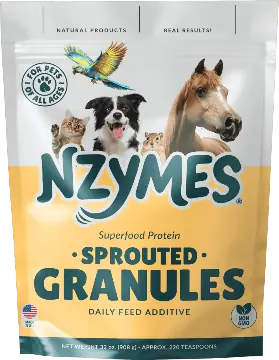
| 600 to 750 lbs | 3 level tsp |
| 750 to 1,000 lbs | 4 level tsp |
| 1,001 to 1,250 lbs | 5 level tsp |
| 1,251 to 1,500 lbs | 6 level tsp |
Add it to the daily feed and watch your own horse, protected by the 120-Day Worry-Free Guarantee. That's up to four months to see what other horse owners have seen, and we suggest using the bag all the way up; it's the quickest way to know.
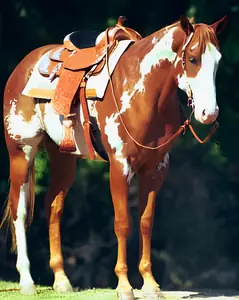
Ryan Dohrn's five-year-old APHA gelding, Louisville Slugger, was stiff after every workout, short on endurance in the heat, and slow to settle afterward. Thirty days after adding the Granules to his grain, in Ryan's words: “more fluid movement during and after workouts, plus his endurance improved 150%. His recovery time went from an average of 20 minutes down to about 5.” Even the little pasture scrapes that used to take a week to close now “clear up in just days.” His own close: “I have eliminated all other supplements from his diet, as the Granules have given me the best results month to month.” Ryan Dohrn · Appling, GA.
You can't take the miles back out of a joint.
You can keep supplying the repairs.
Stiffness after a hard workout that eases with rest is a horse being a horse. Arthritis shows up as a pattern that holds week after week: warm-ups that keep getting longer, difficulty rising, a shorter stride, reluctance toward work that used to be easy.
Rheumatoid arthritis is the autoimmune form: the immune system attacks the body's own tissues, ligaments, and joint structures, bringing pain, inflammation, swelling, and over time deformity of the joints. Osteoarthritis is the common form: the wearing away of the protective cartilage around the joints, fed by genetics, nutrition, old injuries, and plain wear and tear.
Healthy joints depend on healthy synovial fluid, the lubrication and cushioning inside the joint, and maintaining that fluid is work the body's own antioxidant enzymes are responsible for. The Granules add a daily source of live-food nutrition that helps the body replenish the metabolic resources it uses to keep that fluid healthy, manage inflammation, and clear free-radical damage from the soft tissue.
Double the daily amount for the first two weeks, then watch your horse over the following weeks and months. The 120-Day Worry-Free Guarantee gives you up to four months to evaluate; we suggest using the bag all the way up.
Kara is the equine specialist on our customer care team, and she keeps her own herd on a farm in Saskatchewan. Tell her what you're seeing, what you're feeding, and what worries you, and she'll tell you honestly where to start. Read Kara's story →
The consultation is free, and it always will be.
1-877-816-6500 · Orders & quick questions