
- Success Stories
- LearnThe Resource Library: guides, articles, stories


Looking for help with
Most searched
Also common
Everything else
Joints & mobility
Immune & breathing
Injury & recovery
Legs, hooves & joints
Gut & breathing
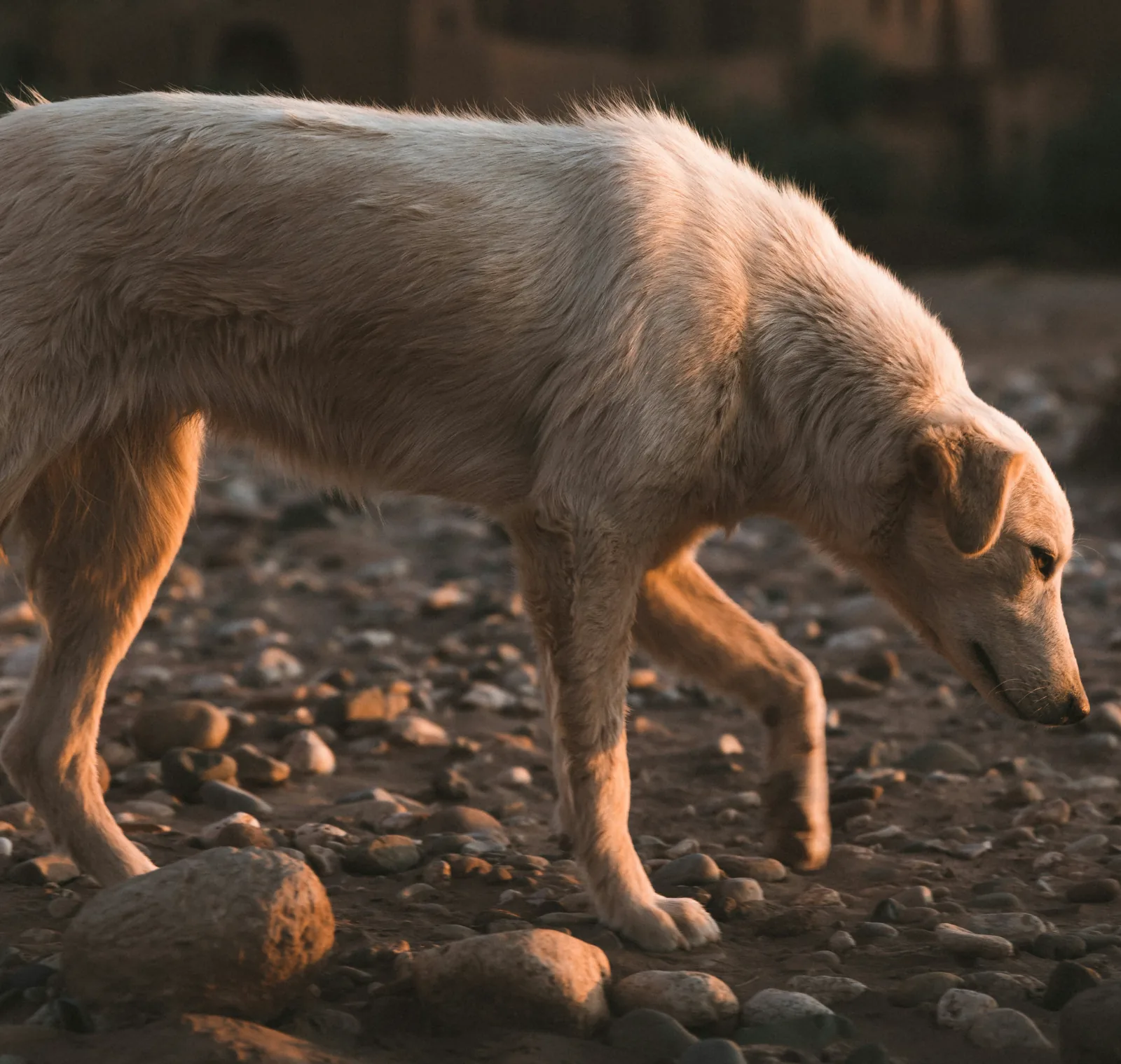
A young dog goes lame in one leg, then it clears and shows up in another. Panosteitis, or pano, is a growth disorder of fast-growing breeds, and the food in the bowl has more to do with it than most families are told.
The limp wanders. Panosteitis, usually shortened to pano, is a condition of accelerated growth. It shows up as lameness, or aches that feel like arthritis, in the long bones of the legs. Most families notice it in one leg first; then that leg settles and another one goes. The process can repeat, with the worst of the discomfort seeming to shift at random.
Pano is self-limiting: as the dog matures it fades out. But during each episode of wandering lameness the inflammation can cause real pain, and some pups are miserable with it. That stretch between first limp and last is where diet and support make the difference.
Older puppies, mostly large breeds. The dogs we see with pano are the ones growing too fast on a poorly balanced food, often fed more than they need. Great Danes and Dobermans are likely candidates, and in our experience German Shepherds may be the hardest hit breed of all. Any long-boned dog can reasonably be expected to run into it where the nutrition is out of balance.
Left alone, the episodes can last several months, or keep going until 12 to 18 months of age if the diet never changes. True pano does not start after the growth plates close at about 18 months.
One thing that gets mistaken for it. An allergic reaction to cephalexin or the sulfonamide antibiotics is often misdiagnosed as pano or HOD, in young dogs and adults alike. An antibiotic reaction can happen at any stage of a dog's life and mimic either one; if the lameness arrived with a prescription, say so to your vet.
The goal is to slow the growth down. These large and giant breeds grow so quickly that the food has to supply proper building materials, with vitamins and minerals the body can actually use, while not pushing the growth any faster. That means a higher quality, meat-based food with moderate protein, fat and calories, and lower glycemic formulations.
How you feed matters as much as what. Properly measured meals, not haphazard ones: no extra feedings, no free feeding where a puppy can easily overeat. At Nzymes we only recommend pet foods, we do not sell them. Over the years we have worked with thousands of musculoskeletal growth problems, and we always lean toward meat-based foods; our recommended foods guide is where to start. Diet is also the first thing we go over on a consultation.
Linda Arndt, the Great Dane Lady, was one of the best canine nutrition consultants there was, and helped thousands of owners through bone-growth problems like this one. Her feed program for pano is still worth reading.
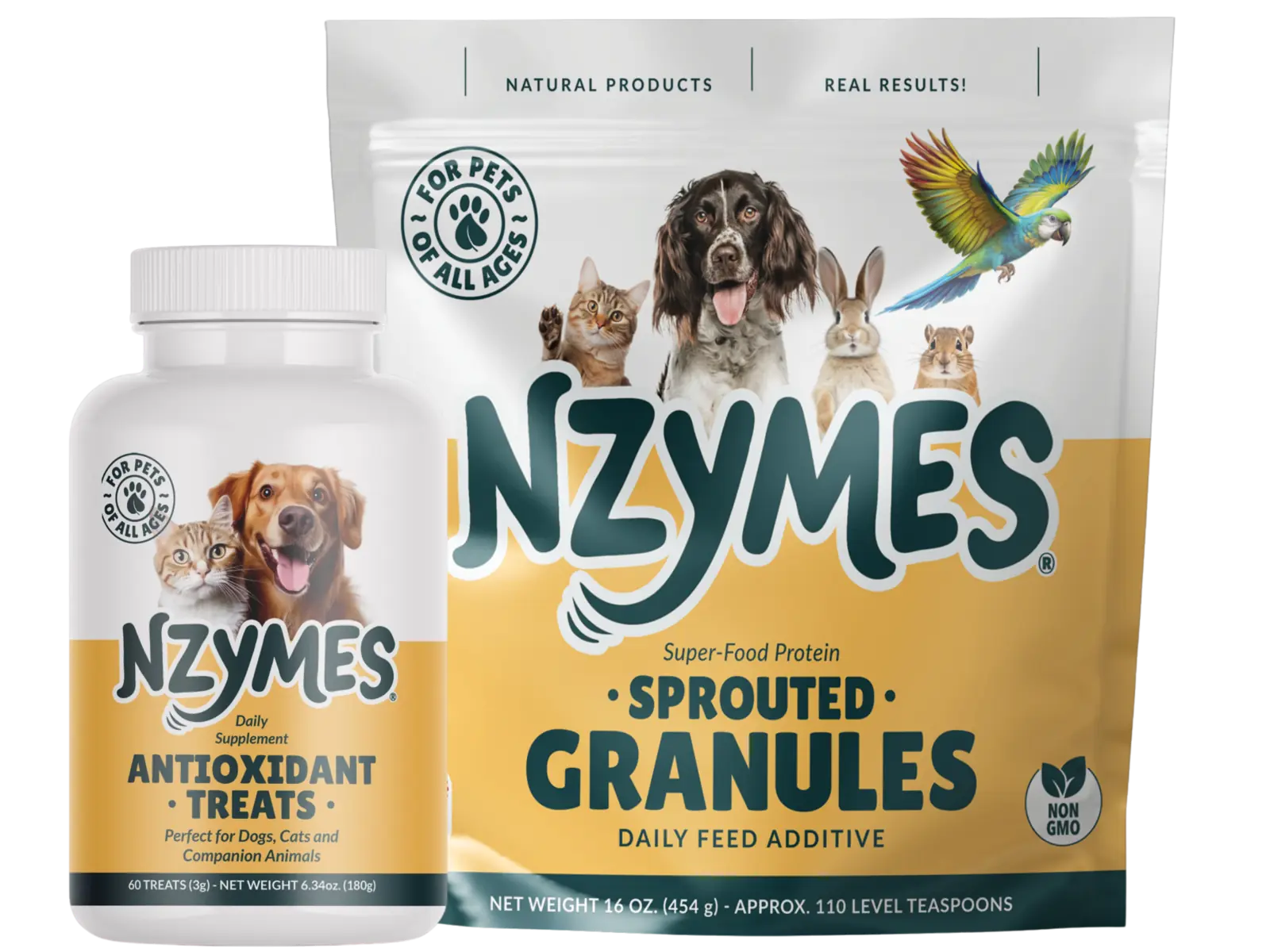 The Core FoundationSee the Core Foundation →Antioxidant Treats and Sprouted Granules together. Live-food nutrition for the inflammation while a pup grows through pano.
For the inflammation, while the diet does its work. To help with the debilitating effects of inflammation in a growth disorder like pano, we recommend our super-food supplement, Sprouted Granules, simply added to the dog's food. The same live-food formula was studied in 387 dogs over 30 days as a support for musculoskeletal inflammation (see Sources below). Paired with the Antioxidant Treats, that is the Core Foundation: one in the bowl, one by hand.
Not sure whether it's pano, a food problem, or both? Book a free consultation.
No. Pano is self-limiting: it fades as the dog matures and the growth plates close, usually by 18 months. The episodes in between can be genuinely painful, which is why diet and inflammation support matter while it runs its course.
That wandering pattern is the signature of pano. The inflammation sits in the long bones of the legs and flares in one, settles, then shows up in another, sometimes repeating around the body over several months.
Any long-boned breed can. Large breeds growing too fast on a poorly balanced food are the most common, and in our experience German Shepherds are hit hardest, with Great Danes and Dobermans close behind.
Yes. An allergic reaction to cephalexin or sulfonamide antibiotics is often misread as pano or HOD, in young and adult dogs alike. True pano does not start after the growth plates close at about 18 months; an antibiotic reaction can happen at any age.
Two things at once: move to a measured, meat-based, moderate protein and fat food (we recommend foods, we do not sell them), and add Sprouted Granules to the bowl for the inflammation. Not sure where to start? Book a free consultation.
Tell us the breed, the age, what the food is, and which leg it is this week. A free half hour with the people who have walked hundreds of families through this.
The consultation is a scheduled half hour with the people who have walked hundreds of families through this, so you get real time and real answers. It's free, and it always will be.