- Success Stories
- LearnThe Resource Library: guides, articles, stories


Looking for help with
Most searched
Also common
Everything else
Joints & mobility
Immune & breathing
Injury & recovery
Legs, hooves & joints
Gut & breathing
Every horse owner knows the word, and most of us have spent at least one long night in a barn aisle because of it. Colic simply means abdominal pain, and it can come from a long list of causes: gas, an obstruction or impaction, grain overload, sand ingestion, a parasite load. What matters most is catching it early. That means knowing your horse's normal well enough to notice the moment something is off.
Colic is one of the most common troubles a horse's digestive system runs into, and one of the least specific. The same word covers everything from a passing gas pain to a surgical emergency, and at the first pawing you rarely know which one you're looking at.
That's the whole reason horse people take colic seriously: most episodes pass, but the ones that don't move fast. The signs below are worth knowing cold, before you ever need them.
No two horses show pain the same way, and some stoic ones barely show it at all. Watch for these, in any combination:
Most colic episodes are mild and pass. The dangerous ones can start out looking just as mild. If the pain is escalating, if your horse is rolling repeatedly or thrashing, if the gut has gone silent, or if nothing is passing at all, get veterinary help right away. Colic can turn surgical in a matter of hours, and nobody has ever regretted calling too early.
The most frequent form: an over-active gastrointestinal tract, cramping against itself. "Idiopathic" is the veterinary word for unknown origin, and it gets used a lot. After years of study, plenty of colic episodes still end without anyone knowing exactly what set them off.
The bowel, usually the large intestine, gets blocked by a hard mass of feed. Many impactions resolve on the farm with fluids: drinking from a pail, syringe feeding, in some cases a stomach tube. Larger ones can need surgery. A sudden switch from grass forage to a straw diet is a classic setup.
A section of gut loses its blood supply, twists on itself, or shifts somewhere in the abdomen it doesn't belong. These are the serious ones, and they are time-critical. This is what the escalation signs above are really watching for.
A horse's small intestine hangs from loose lengths of tissue. The large intestine isn't attached to the body wall at all. Everything in there moves more freely than an organ that size ever should, which is why colic is classified as accidental, and why an ordinary gas pain can become a twist.
It's also why the standing advice at the earliest signs of abdominal pain is so simple: get fluids in on a regular basis, manage the pain, keep the bowel moving, and get medical attention for anything that looks serious.
For the full veterinary picture, the Merck Veterinary Manual's colic overview is a good deep reference.
There is no supplement that prevents colic, and you should be wary of anyone who tells you otherwise. What you can do is take daily care of the digestion that anatomy left exposed: steady forage, steady water, and a gut that has what it needs to do its work.
That last part is our corner of it, and it has been since 1999. Modern processed feed arrives stripped of the live enzymes a horse's body was designed to run on, and putting them back is where we start.
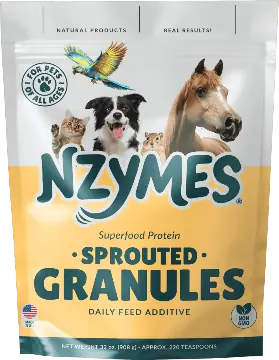
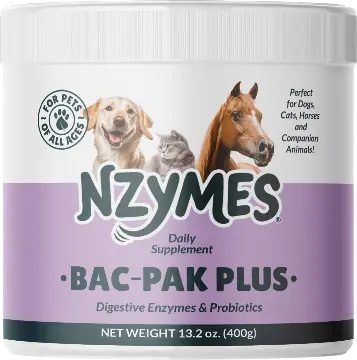
The daily pairing for equine digestion, in the horse-sized options: the 2 lb bag of Sprouted Granules brings back the live enzymes processed feed leaves out, and the 400 g Bac-Pak Plus keeps the gut's friendly bacteria stocked.
Not sure what your horse needs, or whether they need anything at all? That's exactly what Kara is for. Book a free consult with her →
Most colic is accidental.
Good digestion is deliberate.
Sometimes. A mild gas or spasmodic episode often passes on its own; a strangulation or torsion is life-threatening within hours. The hard truth is that the early signs can look alike, so treat every episode as worth watching closely, and escalate quickly if the pain builds, the gut goes quiet, or nothing is passing.
The list is long: gas, obstruction or impaction, grain overload, sand ingestion, and parasite infection are the common culprits. And in a large share of cases, no cause is ever confirmed; that's the "idiopathic" category, and even the veterinary references acknowledge it.
Not entirely; the anatomy sees to that. What pulls in the right direction is routine: steady forage rather than sudden diet changes, constant access to water, parasite control, and daily support for the digestion itself. If you want a second pair of eyes on your horse's routine, Kara will happily walk through it with you, free.
The horse's gut runs on rhythm. An abrupt switch, like moving from grass forage onto a straw diet, is a classic setup for impaction colic. When a feed change is needed, make it gradual, and keep the water coming.
Kara wrote this guide. She's the equine specialist on our customer care team, and she keeps her own herd on a farm in Saskatchewan. Tell her what you're seeing, what you're feeding, and what worries you, and she'll tell you honestly where to start. Read Kara's story →
The consultation is free, and it always will be.
1-877-816-6500 · Orders & quick questions