- Success Stories
- LearnThe Resource Library: guides, articles, stories


Looking for help with
Most searched
Also common
Everything else
Joints & mobility
Immune & breathing
Injury & recovery
Legs, hooves & joints
Gut & breathing

Navicular problems are the most common cause of lameness in horses, and they start in a bone most owners have never seen: a small one, tucked behind the coffin bone, doing two big jobs. Here's what it does, what goes wrong, and what helps.
The navicular bone sits directly behind the coffin bone, held in place by tendons and ligaments. Small as it is, it matters to the health of the whole hoof, and the whole horse.
It protects the joint and tendons from the pressure and concussion of every stride.
It acts as a valve for blood flow to the coffin bone and the corium inside the hoof.
When trouble comes, it usually comes from the ground up: improper trimming of the hoof, short- or long-term shoeing, or an inadequate natural environment.
Navicular problems tend to worsen when the horse is worked in a circle, especially in activities like lunging, so stumbling can show up at any gait, even a simple walk. It's usually most obvious when the horse is asked to step over obstacles: ground poles, tree roots, rocks.
Your farrier is your first ally here. Regular farrier work keeps navicular issues manageable, and in some cases special shoeing is needed; shoes can add extra support to the foot, ligaments, and structure of the leg.
The Nzymes Sprouted Granules are a super-food protein supplement that supports the musculoskeletal side of a comeback: bones, muscles, tissues, skin, and hair. The live sprouted food delivers resources that enhance the body's own natural enzyme activity and help it produce its own supporting antioxidants. Because of this, they may ease inflammation and support healthier bone density. That cellular-level activity supports the metabolic processes that reduce toxic and free-radical damage, and every joint and muscle structure in the body benefits from that work, the navicular area included.
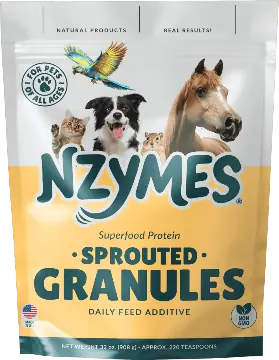
The same daily support behind the mobility success stories our dog families write in about, in the horse-sized bag.
| 600 to 750 lbs | 3 level tsp |
| 750 to 1,000 lbs | 4 level tsp |
| 1,001 to 1,250 lbs | 5 level tsp |
| 1,251 to 1,500 lbs | 6 level tsp |
What should you expect? Freer, easier movement is what owners tell us they see. Read Kira's story: a quarter horse six months lame, one month from her first pain-free walk. And every order is covered by the 120-Day Worry-Free Guarantee: up to four months to see the difference in your own horse.
The farrier supports the hoof from outside.
The feed bucket works from within.
A small bone located directly behind the coffin bone, held in place by tendons and ligaments. It has two main jobs: protecting the joint and tendons from pressure and concussion, and acting as a valve for blood flow to the coffin bone and corium in the hoof.
A short, choppy stride with lameness, toe-first gaits (tippy-toeing), shifting weight from foot to foot, and soreness after working. Problems often show more when the horse works in a circle, as in lunging, or steps over obstacles like ground poles, roots, or rocks.
Common contributors include improper trimming of the hoof, short- or long-term shoeing, and an inadequate natural environment.
Yes. Regular farrier work keeps navicular issues manageable, and in some cases special shoeing is needed: shoes can add extra support to the foot, ligaments, and structure of the leg.
The super-food protein delivers resources that enhance the body's own natural enzyme activity, supporting bones, muscles, tissues, skin, and hair. Because of this, they may ease inflammation and support healthier bone density. That cellular-level activity supports the metabolic processes that reduce toxic and free-radical damage, and the body's joint and muscle structures, the navicular area included, benefit from it.
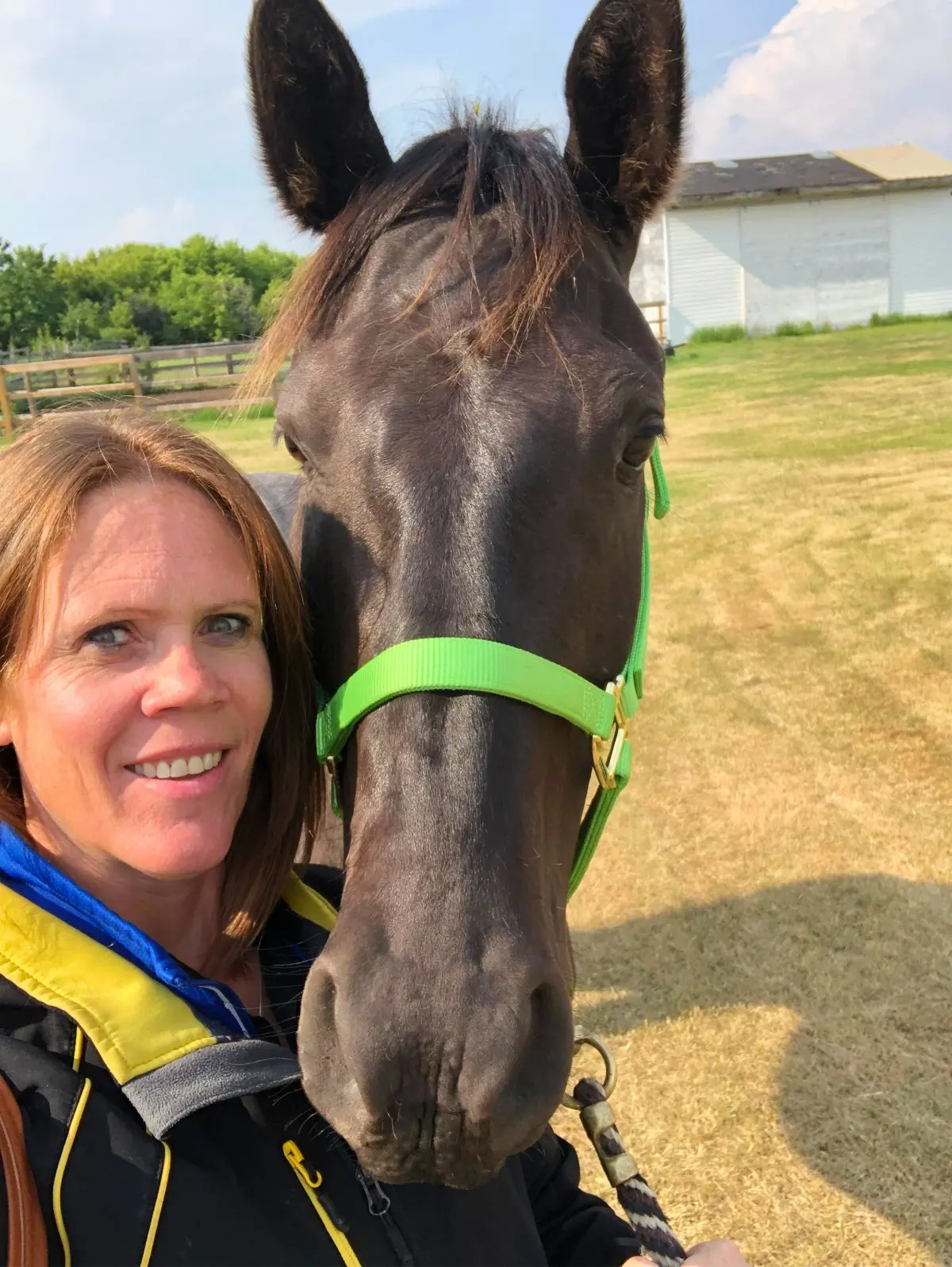
Kara is the equine specialist on our customer care team, and she keeps her own herd on a farm in Saskatchewan. She trims her own horses' hooves herself, so bring her what you're seeing and she'll tell you honestly where to start. Read Kara's story →
The consultation is free, and it always will be.
1-877-816-6500 · Orders & quick questions