- Success Stories
- LearnThe Resource Library: guides, articles, stories


Looking for help with
Most searched
Also common
Everything else
Joints & mobility
Immune & breathing
Injury & recovery
Legs, hooves & joints
Gut & breathing
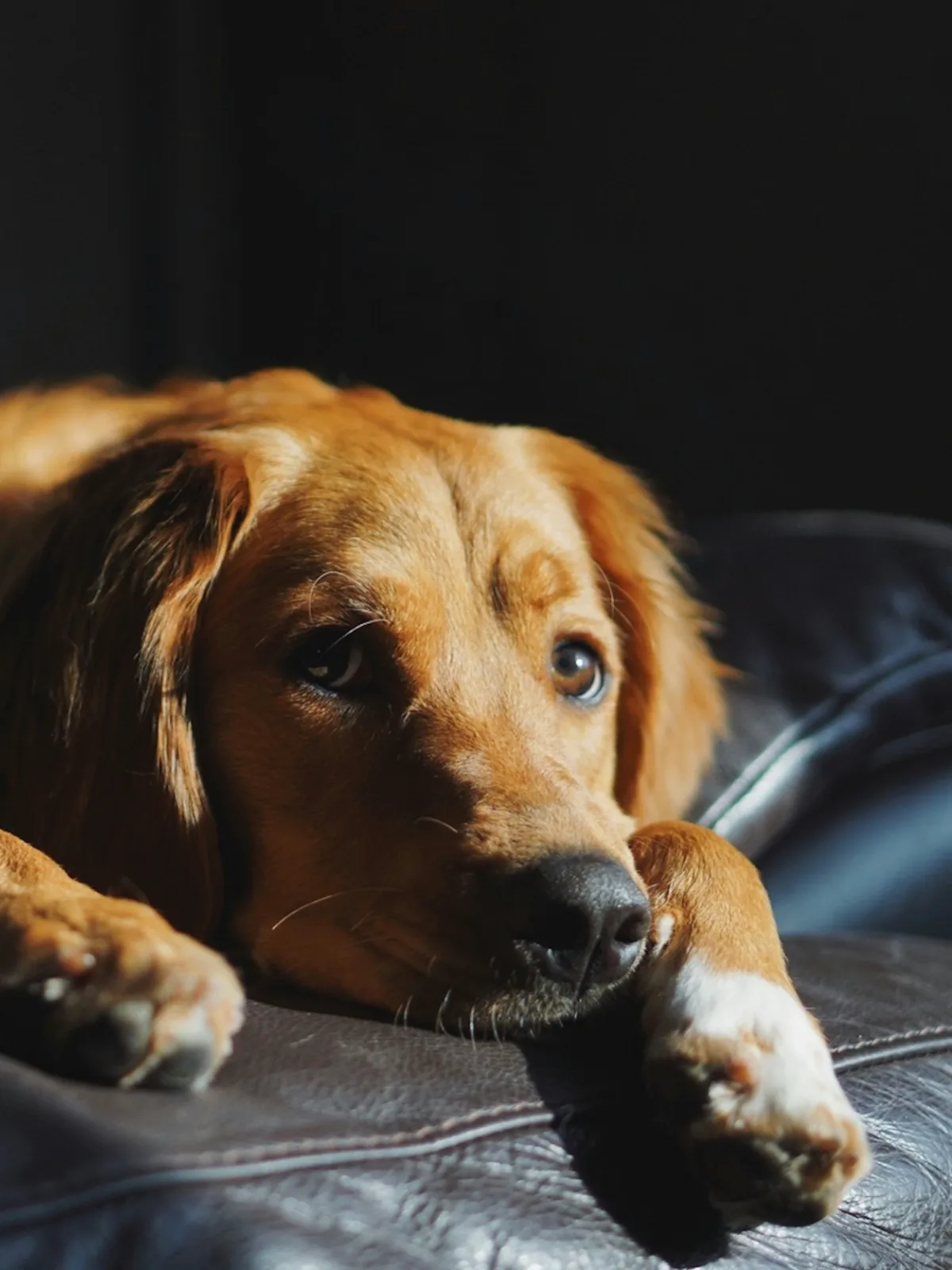
Thyroid problems in dogs have a long list of sneaky symptoms. They show up slowly, and you may not realize they're all connected to one small gland in the neck.
The thyroid controls the metabolism of every cell in the body. It does this by making and releasing a hormone called thyroxine. A healthy thyroid produces just the right amount; when a problem develops, things start to get out of whack. Too much of the hormone causes hyperthyroidism, not enough causes hypothyroidism.
Hyperthyroidism is very rare in dogs. Unfortunately, hypothyroidism is not. Any dog can develop low thyroid levels, but some breeds are predisposed: Golden and Labrador Retrievers, Boxers, Cocker Spaniels and Great Danes are among the most susceptible.1
Each of these is the same slowdown, showing up in a different place. Low thyroid slows cellular function everywhere, so the symptoms look unrelated until you know what ties them together.
Other symptoms you may notice include constipation, chills, and a lowered heart rate, all directly related to the slowing of cellular function from a lack of thyroxine.2
If you suspect low thyroid, it's time for a complete thyroid panel at the vet. We recommend requesting the Thyroid Profile 5 Plus rather than a single T4 reading, and reading the work of Dr. Jean Dodds, long renowned for her research on thyroid issues in dogs.3
If the panel shows your dog needs thyroid hormone, that is the vet's call. What we address is everything around the gland: a cellular metabolism that has slowed, the skin and coat it shows up in, and the yeast overgrowth that so often rides along. Live-food enzymes and antioxidants give those cells what processing took out of the food; for the skin and ears, the yeast shelf explains the rest. Many of the families we work with do both, and review the dose with their vet as the dog improves.
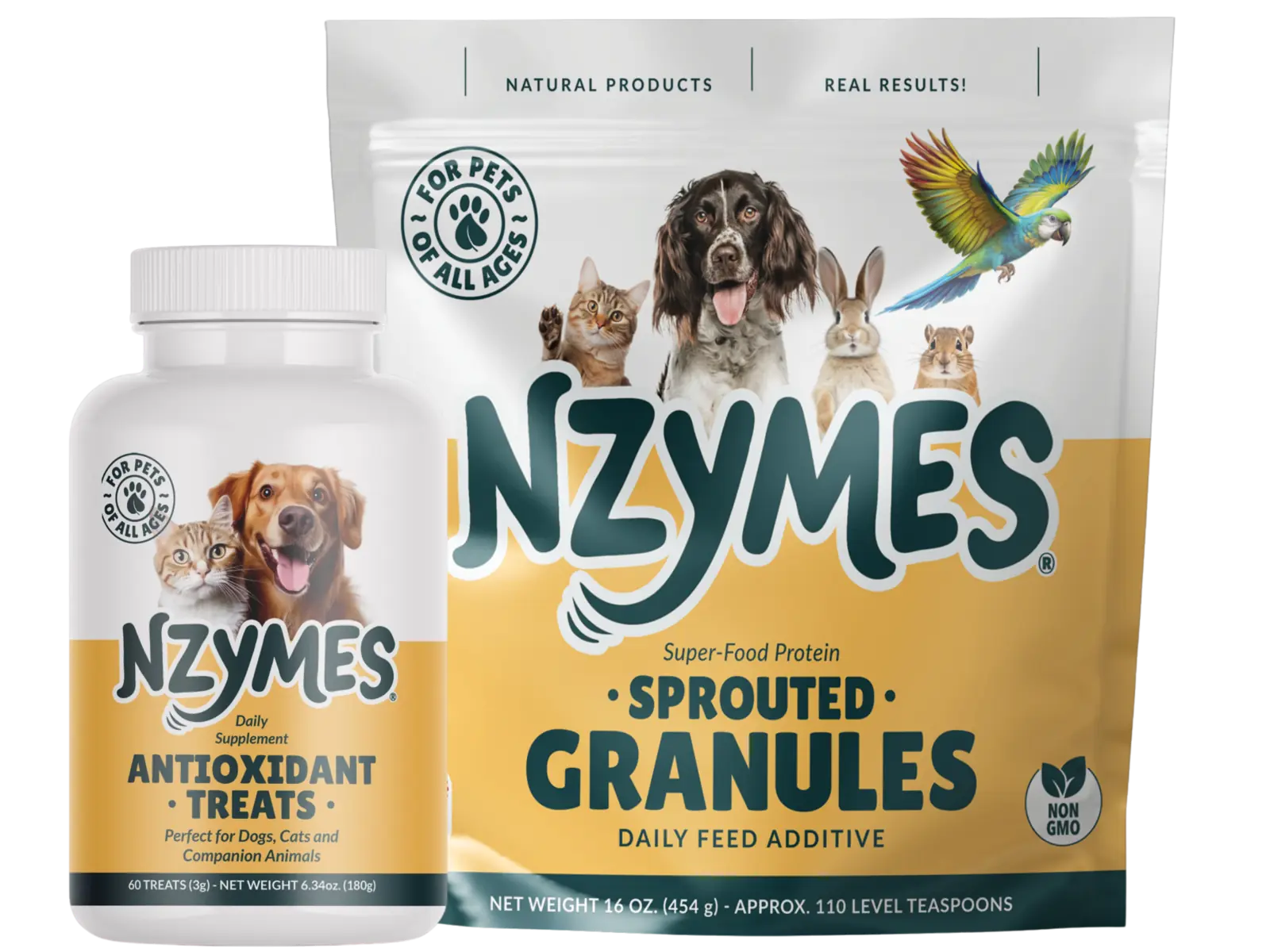 The Core FoundationSee the Core Foundation →Sprouted Granules in the bowl and Antioxidant Treats by hand: the live-food enzymes and antioxidants a slowed metabolism is short on. Where every thyroid dog starts.
Not sure what the panel means, or whether the skin is thyroid, yeast, or both? Book a free consultation and tell us what you're seeing. Diet is the first thing we'll go over; our recommended foods guide shows what to look for.
Usually weight gain on the same food, a coat that thins on both sides evenly, dry or greasy skin, and a dog that sleeps more and plays less. They come on slowly, which is why many families do not connect them until a vet runs a panel.
Golden and Labrador Retrievers, Boxers, Cocker Spaniels and Great Danes are among the most susceptible, though any dog can develop low thyroid levels.
A complete thyroid panel, not a single T4. We recommend asking for the Thyroid Profile 5 Plus, the panel Dr. Jean Dodds has long advocated, because a lone T4 can read normal in a dog that is clearly struggling.
No. If your dog needs thyroid hormone, that is the vet's call. What we address is the body around the gland: the slowed cellular metabolism, the skin and coat, and the yeast overgrowth that so often rides along. Many of the families we work with do both, and review the dose with their vet as the dog improves.
With the Core Foundation (Sprouted Granules and Antioxidant Treats). If skin and ears are involved, read the yeast shelf too. Not sure? Book a free consultation and tell us what the panel showed.
Tell us what the vet found, how long it's been, what the food is, and what you're seeing day to day. A free half hour with people who have walked families through thyroid and skin cases for years.
The consultation is a scheduled half hour, so you get real time and real answers. It's free, and it always will be.