
- Success Stories
- LearnThe Resource Library: guides, articles, stories


Looking for help with
Most searched
Also common
Everything else
Joints & mobility
Immune & breathing
Injury & recovery
Legs, hooves & joints
Gut & breathing

Most people know a tick can give their dog Lyme disease. Fewer know it can carry more than one infection at once, or that the fight afterward is mostly up to the immune system.
Ticks are among the nastiest parasites a dog meets. Lyme disease is the one everyone has heard of, and tick paralysis is a common result of a bite. But a tick can also transmit Rocky Mountain spotted fever, ehrlichiosis or anaplasmosis, and a single tick may carry more than one of them at once, which complicates the risk for your dog.1
So the idea of casually pulling off a tick you've found and moving on should be discarded. We recommend an immediate visit to your vet, to be sure. Lyme itself is caused by a bacterium carried by blacklegged (deer) ticks; tick paralysis is different, a reaction to a toxin in the saliva of certain ticks while they feed. Weakness starts in the back legs and climbs, and most dogs recover within days once the tick is found and removed.2
Early symptoms may be non-existent, or barely there. Vague at best. A dog with Lyme may not show anything for weeks or months after the bite; when signs come, they are usually a lameness that shifts from leg to leg, fever, swollen joints, low energy and a poor appetite. In a smaller number of dogs the kidneys are affected, and that form is serious.3
You don't want to wait until it's too late to get things checked out, because these issues can be very difficult to resolve once they've settled in. It's mostly up to immune function. That is the part a family can do something about.
Since this is likely to be a long and serious struggle, where symptoms may be as severe as partial paralysis, we suggest a full-on approach: feed the immune system from every side at once. That is not to say you should overlook whatever help your vet can give; many of the families we work with do both, and step down gradually as the dog improves.
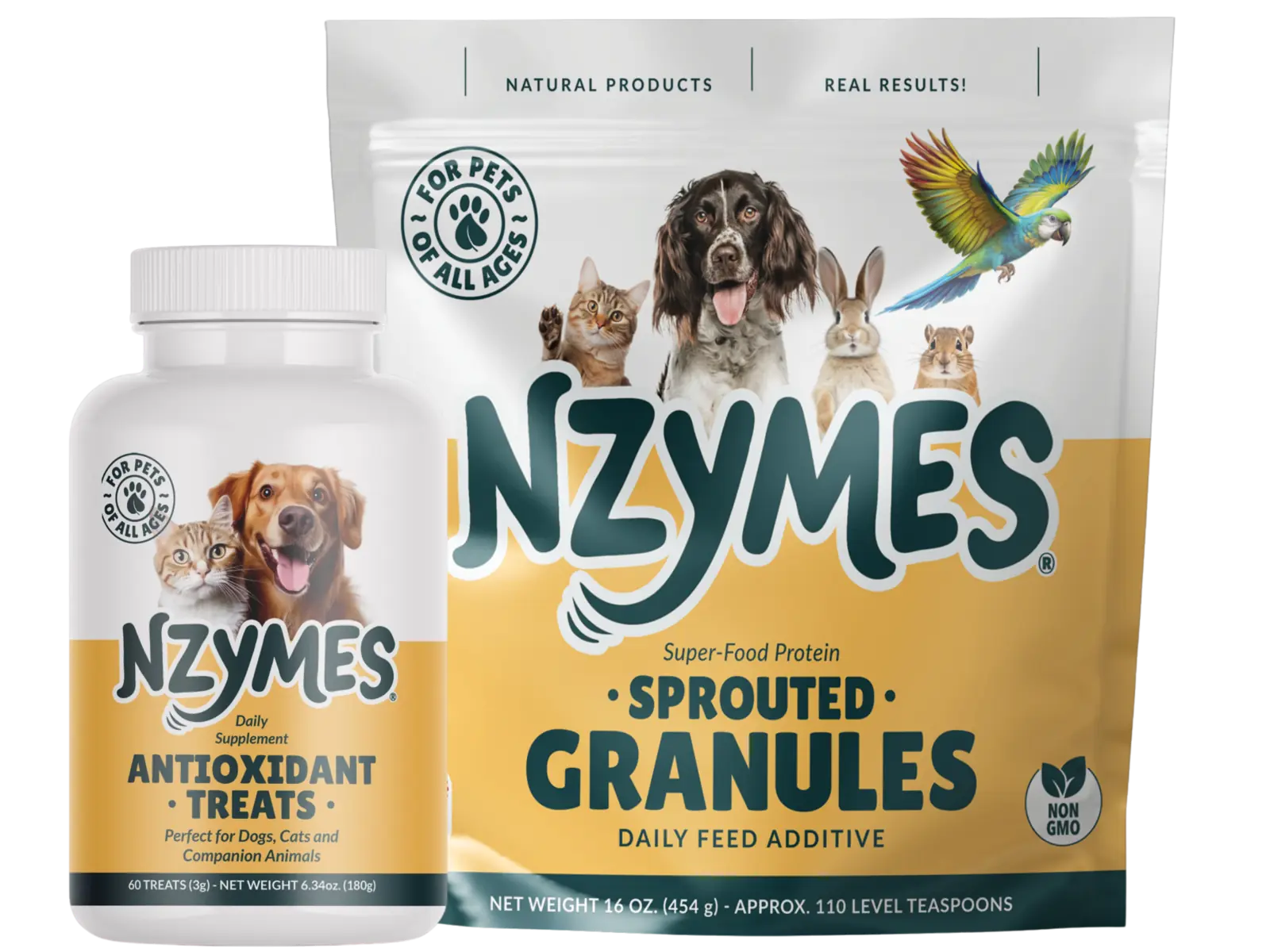 The Core FoundationSee the Core Foundation →Sprouted Granules in the bowl and Antioxidant Treats by hand: the live-food enzymes and antioxidants the immune system runs on. Where every tick-borne case starts.
 Ox-E DropsFor immune assistance: a few drops a day to support healthy pH and oxygen balance from within.
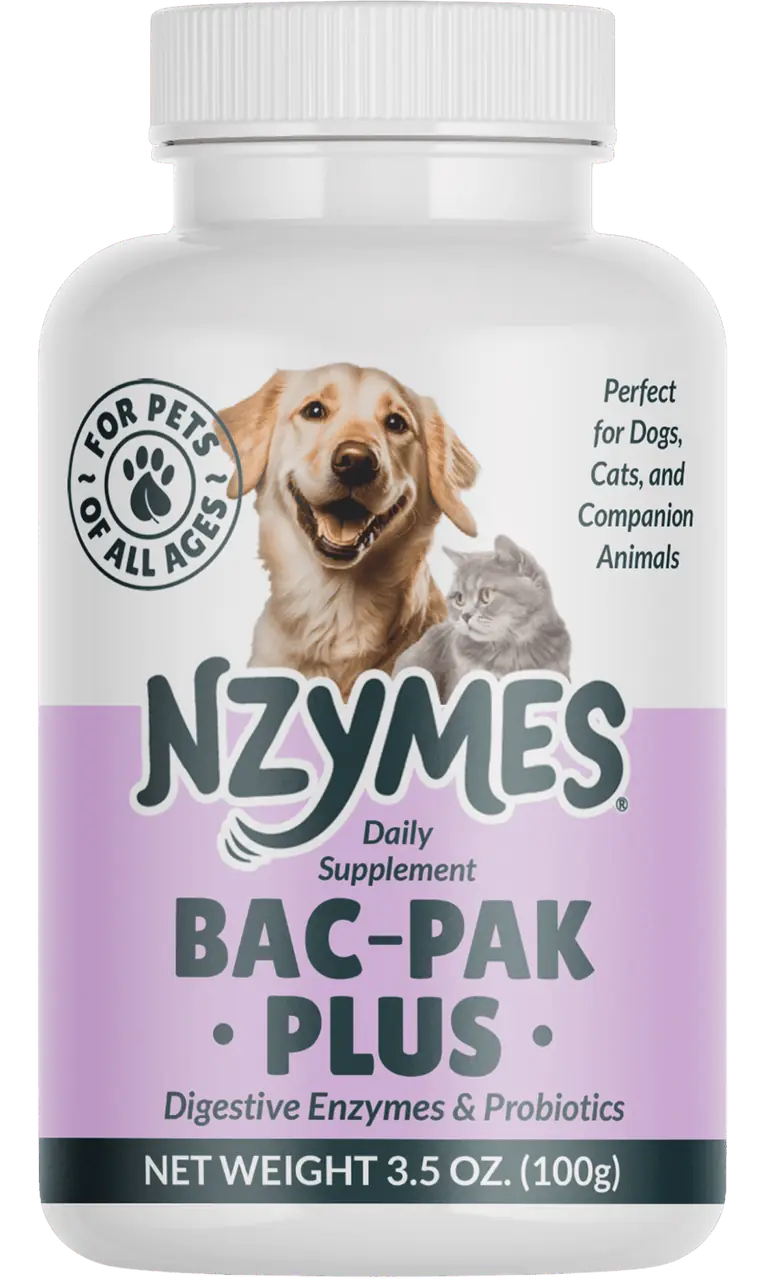 Bac-Pak PlusTo restore, repair and protect the beneficial bacteria in the gut, where so much of immune function lives.
Not sure whether what the vet found is Lyme, a co-infection, or something else entirely? Book a free consultation and tell us what you're seeing. Diet is the first thing we'll go over; our recommended foods guide shows what to look for.
Bohdi, a Border Collie in Winnipeg, arrived with Stage 4 Lyme disease and an enlarged heart. Three vets had called him the worst case they'd seen and sent him home to live out his last days. Brenda Johnson, one of our own consultants, took him in anyway, put him on Nzymes and a program of her own, and three months later his Lyme bloodwork came back negative. Six years on he was still running miles a day. Read Bohdi's story →
Often not for weeks or months, and many dogs never show obvious signs at all. The ones that do usually develop a shifting lameness, fever, swollen joints, and low energy. Because the early stage is so quiet, we recommend a vet visit as soon as you find an attached tick rather than waiting for symptoms.
A reaction to a toxin in the saliva of certain ticks while they feed. Weakness usually starts in the back legs and climbs. Most dogs recover within days once the tick is found and removed, which is why a careful full-body tick search matters.
Yes. Ticks can transmit Lyme disease, Rocky Mountain spotted fever, ehrlichiosis and anaplasmosis, and a single tick may carry more than one. That is why we treat any attached tick as a reason to see the vet, not something to casually pull off and forget.
No. Nzymes feeds the immune system that has to do the work. With tick-borne illness it is mostly up to immune function. Our products give the body live-food enzymes, antioxidants, oxygen support and gut bacteria so it can fight from a stronger position. Many of the families we work with do both, with their vet, and step down gradually as the dog improves.
With the Core Foundation (Sprouted Granules and Antioxidant Treats), and for a serious tick-borne case we also recommend Ox-E Drops and Bac-Pak Plus. If you are not sure, book a free consultation and tell us what the vet found.
Tell us what the vet found, how long it's been, what the food is, and what you're seeing day to day. A free half hour with people who have walked families through tick-borne cases for years.
The consultation is a scheduled half hour, so you get real time and real answers. It's free, and it always will be.