- Success Stories
- LearnThe Resource Library: guides, articles, stories


Looking for help with
Most searched
Also common
Everything else
Joints & mobility
Immune & breathing
Injury & recovery
Legs, hooves & joints
Gut & breathing
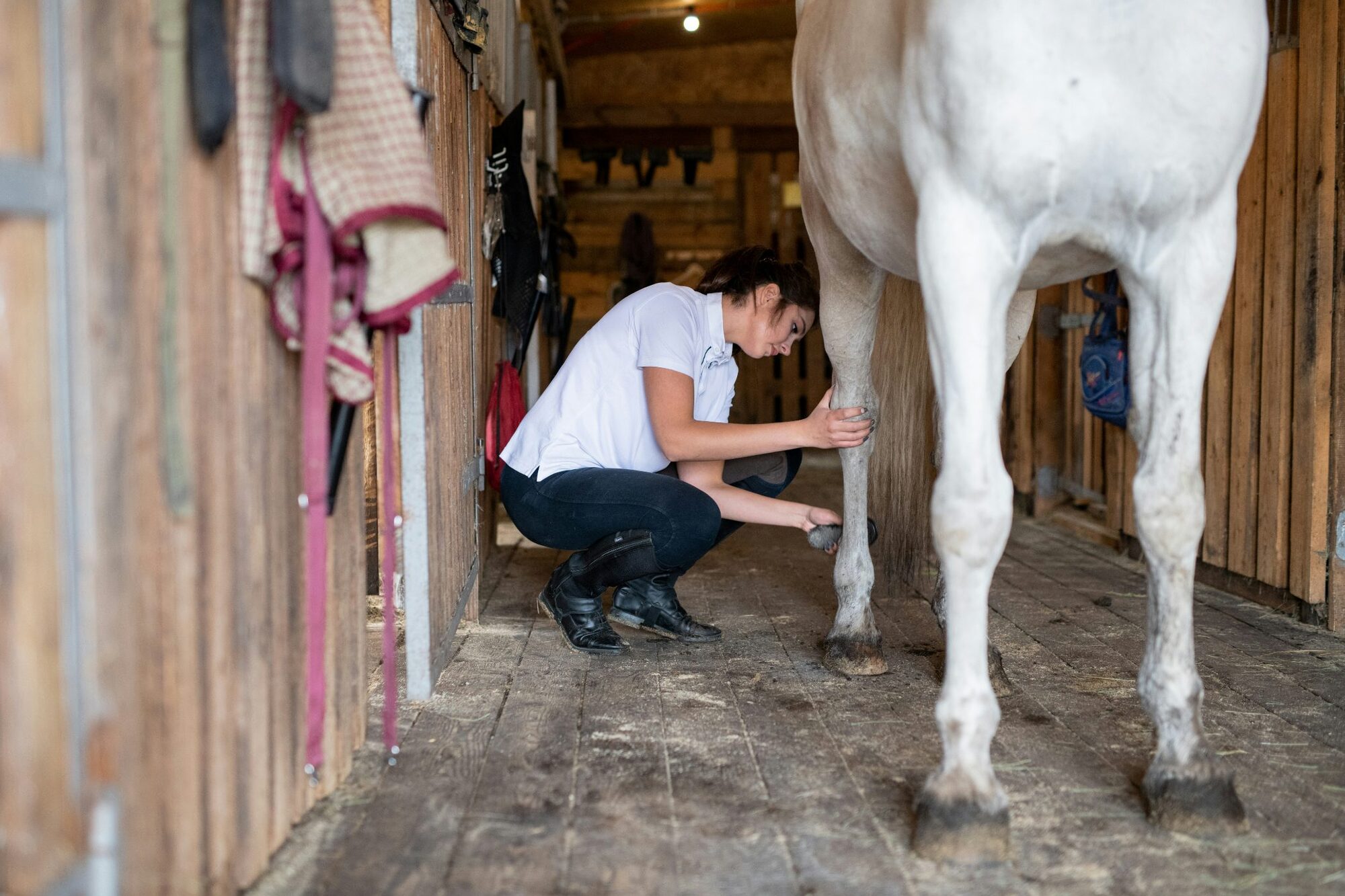
Ask a horse's rear legs what they do all day and the answer is everything: every push-off, every extended trot, every jump, every hard stop and rollback. The hock and the stifle are the joints in the middle of all of it, carrying most of the weight of horse and rider while they work. It's no wonder these two joints take more wear than any others in your horse's body.
Every discipline works these joints hard. Barrel racing and roping ask for hard twisting stops; jumping asks for launch after launch; even a quiet arena horse logs thousands of small pivots and departures over a season. Once damage is done to either joint, some lameness is expected: pain and inflammation see to that. The hock carries an extra vulnerability, too, sitting as close as it does to the Achilles tendon.
Both joints tend to announce trouble early, though, each in its own way, if you know what to watch for.
The hocks are the drive train of your horse's hindquarters. Collected work and jumping ask the hind end for extra effort, and it lands squarely here. Tight turns and small circles add a twisting force on top of the load. String enough of those miles together, ground work or under saddle, and a hock can start to wear down.
A horse with hock pain will usually point the sore leg and park it up under the body, especially when the ache sits toward the inside of the joint. The earlier signs are quieter, and they like to creep in:
The stifle is the closest thing your horse has to your knee. Pick up a hind leg and watch it bend forward, the same way your knee does on a flight of stairs. It's also one of the largest and most complicated joints in the horse's whole body, which is a lot of moving parts to keep happy.
A stifle-sore horse usually tells you in the work before anything else. At rest, they'll spare the more painful leg and stand more comfortably with the stifle rotated to the outside. Under saddle, watch for:
Plenty of horse owners swear by equine chiropractic and acupuncture for hock and stifle trouble, and for good reason: in the right hands, both can bring real relief. The catch is that phrase, "the right hands." There are well-trained practitioners out there and some not-so-good ones, so ask around your barn and get names from people whose horses actually got better.
A good place to start: this guide from The Horse, Veterinary Acupuncture and Chiropractic: What, When & Who.
Joint trouble gets treated at the joint: injections, adjustments, rest. All of that has its place. But the actual repair work happens somewhere smaller, down at the cells, and that's the part almost everyone overlooks.
The superfood protein in our Sprouted Granules enables the equine body to ramp up production of its own metabolic enzymes: Superoxide Dismutase and its partner Catalase, plus Glutathione Peroxidase and Methionine Reductase. Those enzymes are the body's cleanup and repair crew, clearing the toxic buildup and free radicals that pile up in a body working this hard. Give the cells what they need and things start moving in the right direction: stiffness eases, inflammation settles down, energy comes back, and a horse that was guarding a hind leg starts using it again.
We've been sending Granules out to horse barns for over 25 years, and hard-working hind ends are where they've earned their keep. This is the same daily support behind the mobility success stories our dog families write in about, working on the same principle in a bigger body. Not a shortcut, and not a drug: it's the body doing its own repair work, properly supplied. For a horse dealing with hock or stifle trouble, it's the first thing we'd reach for.
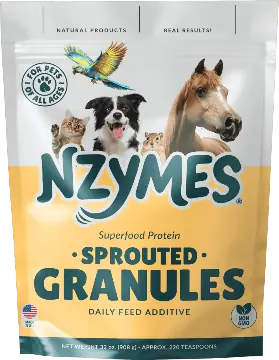
A few scoops a day, mixed into the feed they already eat, or straight from your hand; they love it. This is where every horse we help gets started.
| 600 to 750 lbs | 3 level tsp |
| 750 to 1,000 lbs | 4 level tsp |
| 1,001 to 1,250 lbs | 5 level tsp |
| 1,251 to 1,500 lbs | 6 level tsp |
Wondering how much a horse gets, or whether it fits your situation? Book a free consult with Kara →
The joints take the abuse.
The cells make the repairs.
Watch how they stand and where they balk. A horse with hock pain points the sore leg and parks it under the body, starts out stiff and works out of it, and resists going downhill or backing off a trailer. A stifle-sore horse rests the painful leg with the joint rotated to the outside, fights a particular lead, and balks at hills. Both can start as a vague, come-and-go lameness, and a professional lameness exam is how you settle it for sure.
Hind-end trouble usually shows as loss of drive: balking at hills, fighting a lead, parking the sore leg under the body. Front-feet soreness with a short, choppy stride points instead toward navicular or laminitis, and stiffness that never warms up anywhere can be calcification. Our lameness guide walks through telling the three apart.
It comes down to load and leverage. The hock and stifle carry most of the weight of horse and rider, drive every push-off, and absorb the twisting of tight turns, small circles, jumping, barrel racing, and roping work. Ask any joint to do that much for that many years and the miles add up.
Sprouted Granules, daily, in the horse-sized 2 lb bag. It's the same daily support behind the mobility success stories our dog families tell us about, on the same principle: the superfood protein in the Granules enables your horse's body to produce its own metabolic enzymes, the crews that keep cells healthy and repair moving. If you'd like help judging what it could do for your horse's situation, a consult with Kara is free.
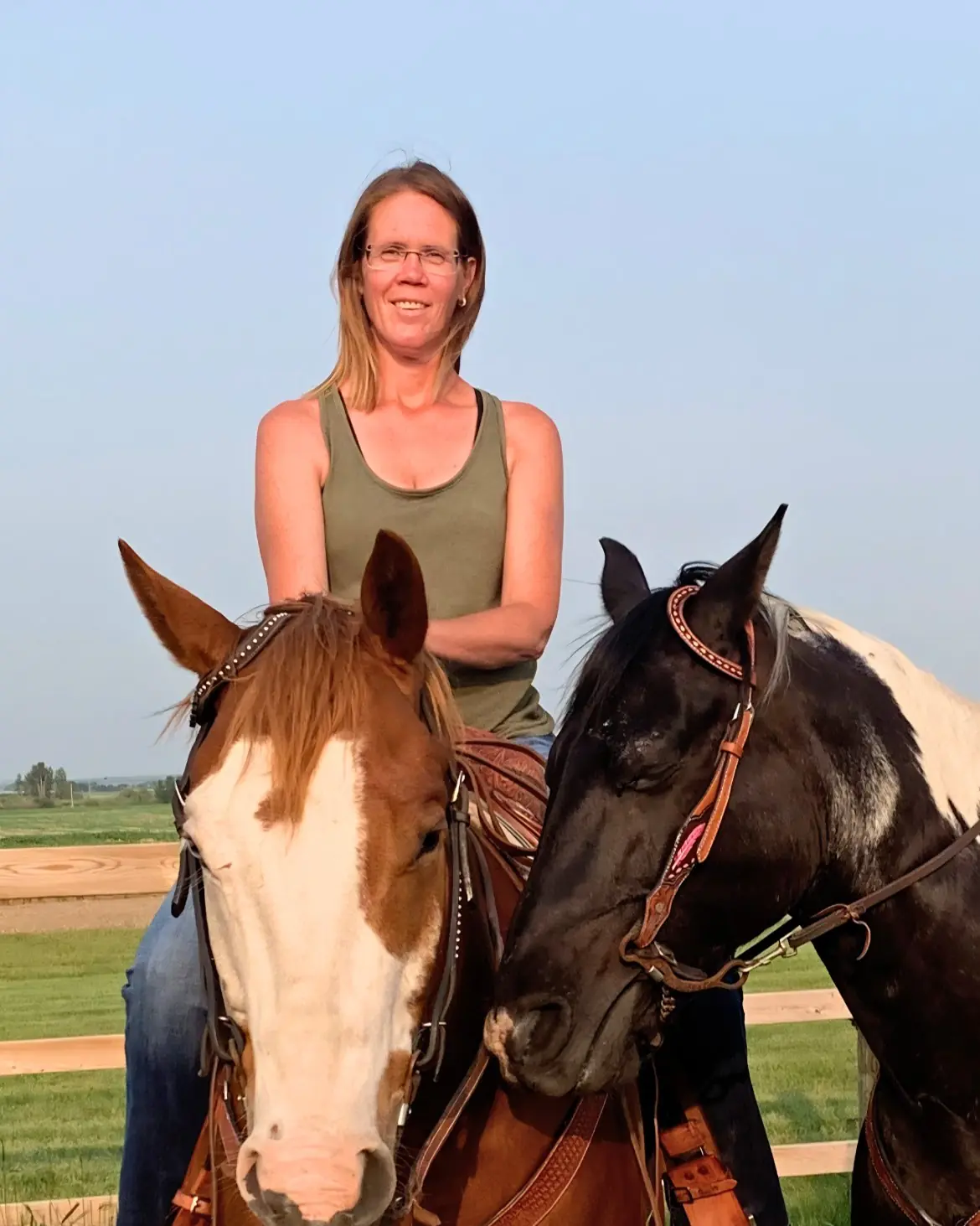
Kara is the equine specialist on our customer care team, and she keeps her own herd on a farm in Saskatchewan. Tell her what you're seeing, what the work looks like, and what worries you, and she'll tell you honestly where to start. Read Kara's story →
The consultation is free, and it always will be.
1-877-816-6500 · Orders & quick questions