
- Success Stories
- LearnThe Resource Library: guides, articles, stories


Looking for help with
Most searched
Also common
Everything else
Joints & mobility
Immune & breathing
Injury & recovery
Legs, hooves & joints
Gut & breathing
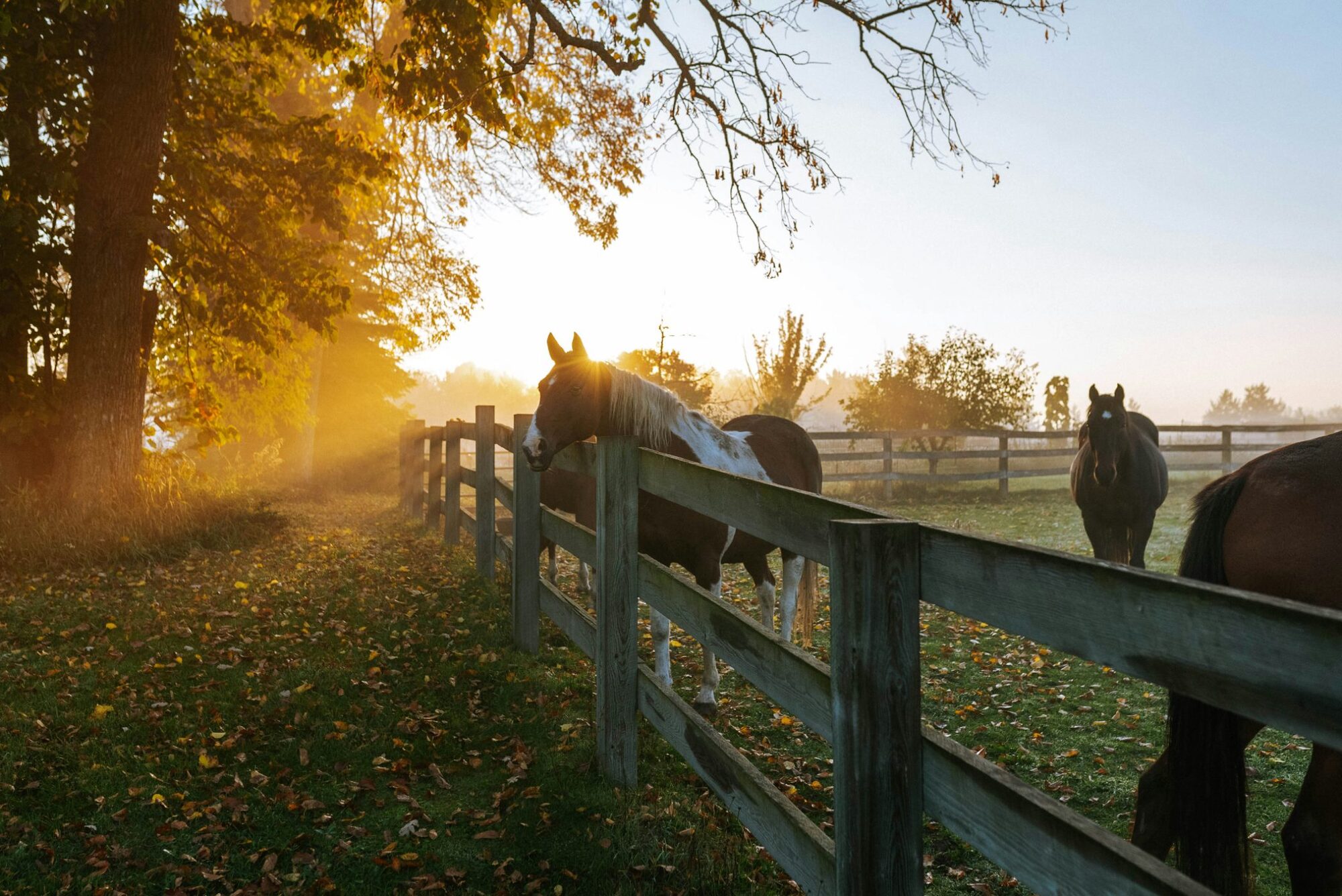
Calcification shows up in horses more than almost any other animal we help. Maybe that's the price of everything we ask of them: the riding, the working, the training, the play. But what's in the feed bucket matters too, because simple vitamin and mineral imbalances can feed the problem.
Calcium is supposed to live in bone. In a calcification disorder it starts collecting in the soft tissue instead, and that tissue hardens around the accumulation. Every step that asks those tissues to flex gets more expensive, and you see it in the horse: the short-stepping, the reluctance, the stiffness that warms up slowly or not at all.
Think about that hard ring that forms in a toilet bowl and cannot be scrubbed away. That's the same mineral. The body genuinely needs it, but when it lands where it shouldn't, that hardness sits inside living tissue that was meant to flex. Vets classify calcification by where it sits and by whether the body's mineral balance is holding.
You don't have to out-muscle a mineral. Add the Nzymes Sprouted Granules to the feed every day and let the body do what it was built to do: the sprouted super-food contributes resources that help the body balance its own metabolic processes, and calcium distribution is one of them. We've watched that play out in horses, dogs, cats, and people too.

| 600 to 750 lbs | 3 level tsp |
| 750 to 1,000 lbs | 4 level tsp |
| 1,001 to 1,250 lbs | 5 level tsp |
| 1,251 to 1,500 lbs | 6 level tsp |
Try it and watch your own horse, protected by the 120-Day Worry-Free Guarantee. That's up to four months to see what others have seen, and we suggest using the bag all the way up; it's the quickest way to know.
Aubree's barrel racing horse, Dreamer, had a calcium deposit sitting next to the tendon in his front foot, and the limp had ended the riding. Three x-rays later, the deposit was smaller and he was running barrels again. Read Dreamer's story →
Calcium belongs in the bones.
Balance is what keeps it there.
Calcium collecting and building up within soft tissue areas of the body. The affected tissues harden from the accumulation, which can create pain and impede movement.
Likely the extra demands placed on a horse's body: regular exercise, riding, working, playing. Simple vitamin and mineral imbalances in the feed can also contribute to calcification problems in bones throughout the body.
Added to the diet daily, the sprouted super-food contributes resources that help the body balance many of its metabolic processes, including calcium distribution, with positive results reported in horses, dogs, cats, and people.
The 120-Day Worry-Free Guarantee gives you up to four months to evaluate. We suggest using the Granules all the way up; that's the quickest way to know whether your horse shows the same results others have.
Kara is the equine specialist on our customer care team, and she keeps her own herd on a farm in Saskatchewan. Tell her what you're seeing, what you're feeding, and what worries you, and she'll tell you honestly where to start. Read Kara's story →
The consultation is free, and it always will be.
1-877-816-6500 · Orders & quick questions