- Success Stories
- LearnThe Resource Library: guides, articles, stories


Looking for help with
Most searched
Also common
Everything else
Joints & mobility
Immune & breathing
Injury & recovery
Legs, hooves & joints
Gut & breathing
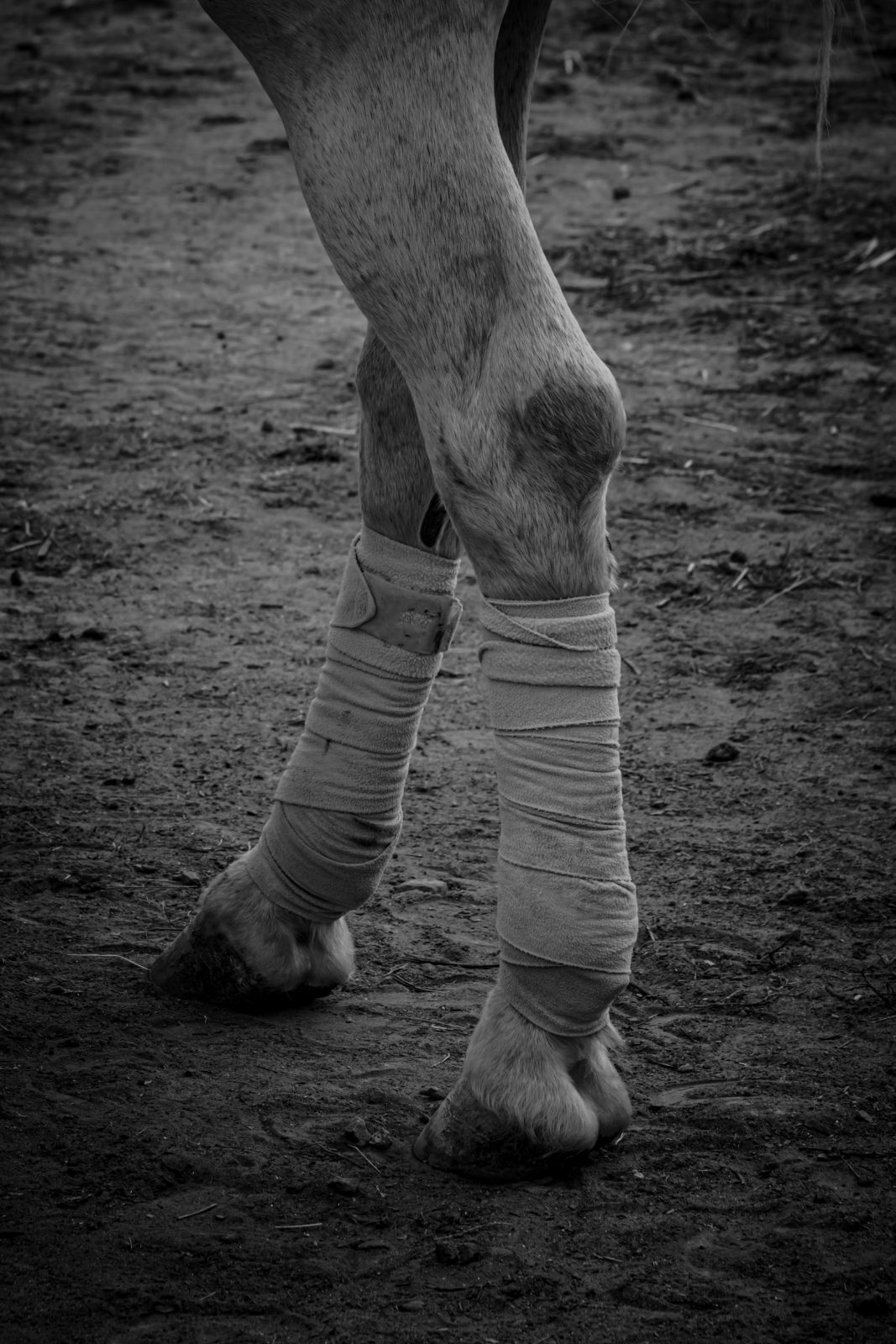
A lame horse has your full attention, and the first job is simple to name: get the discomfort under control, and find out what's causing it. Most lameness traces back to one of three problems, and each one has its own guide here.
There are many possible causes for lameness in a horse, but three account for most of what owners call us about. Where and how the lameness shows up usually points at which one you're dealing with:
The most common cause of lameness. A small bone behind the coffin bone takes the concussion of every stride; when it's in trouble, you'll see toe-first, tippy-toe gaits and weight shifting from foot to foot.
Read the navicular guide →The two hardest-working joints in the hind end. Trouble here shows as reluctance to push off, drifting sideways under saddle, or a hind leg that won't hold its line.
Read the hock & stifle guide →Calcium collecting in soft tissue that was meant to flex. You'll see short-stepping, reluctance, hard lumps, and stiffness that warms up slowly or not at all.
Read the calcification guide →One more cause deserves its own mention: laminitis, inflammation of the layers that bond the hoof wall to the bone inside it. It shows up front-feet-sore like navicular, but the horse lands heel-first to spare his toes instead of toe-first to spare his heels, and it usually starts in the feed room. If he's parked back on his heels with heat in his hooves, start there. Read the laminitis guide →
The degree of lameness eases as the discomfort declines, but the discomfort isn't the whole job: the root issue underneath needs mending too. That's the work the Nzymes Sprouted Granules support. The live superfood provides the body missing nutritional elements that enable it to do its own repair work, and we've spent over 25 years watching what bodies can do when they get what they were missing.
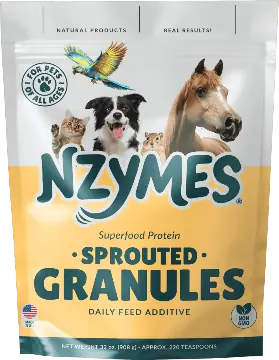
Used with lameness and mobility issues in horses for over 25 years. Add the recommended amount to the daily feed, then watch the days and weeks ahead.
| 600 to 750 lbs | 3 level tsp |
| 750 to 1,000 lbs | 4 level tsp |
| 1,001 to 1,250 lbs | 5 level tsp |
| 1,251 to 1,500 lbs | 6 level tsp |
Kira, a quarter horse six months lame with navicular trouble, took her first pain-free walk a month in: read her story. And every order is covered by the 120-Day Worry-Free Guarantee: up to four months to see the difference in your own horse.
Ease the discomfort first.
Then mend the reason it started.
The three most frequent are navicular problems, hock and stifle problems, and calcification. Each shows up differently: navicular tends toward toe-first, tippy-toe gaits; hock and stifle trouble shows in the hind end; calcification hardens soft tissue that was meant to flex.
Start with where and how the lameness shows: front feet with a short choppy stride point toward navicular; hind-end reluctance and drive problems point toward hock and stifle; hard lumps and stiffness that never warms up point toward calcification. A vet or farrier exam can confirm which one you're seeing.
The live superfood provides the body missing nutritional elements that enable it to do its own repair work. Whatever the root cause, the goal is the same: get the discomfort under control, and support the body's mending of the core issue underneath it.
Horse owners have used the Granules for lameness and mobility issues for over 25 years. Every order is covered by the 120-Day Worry-Free Guarantee, up to four months to see the difference in your own horse.
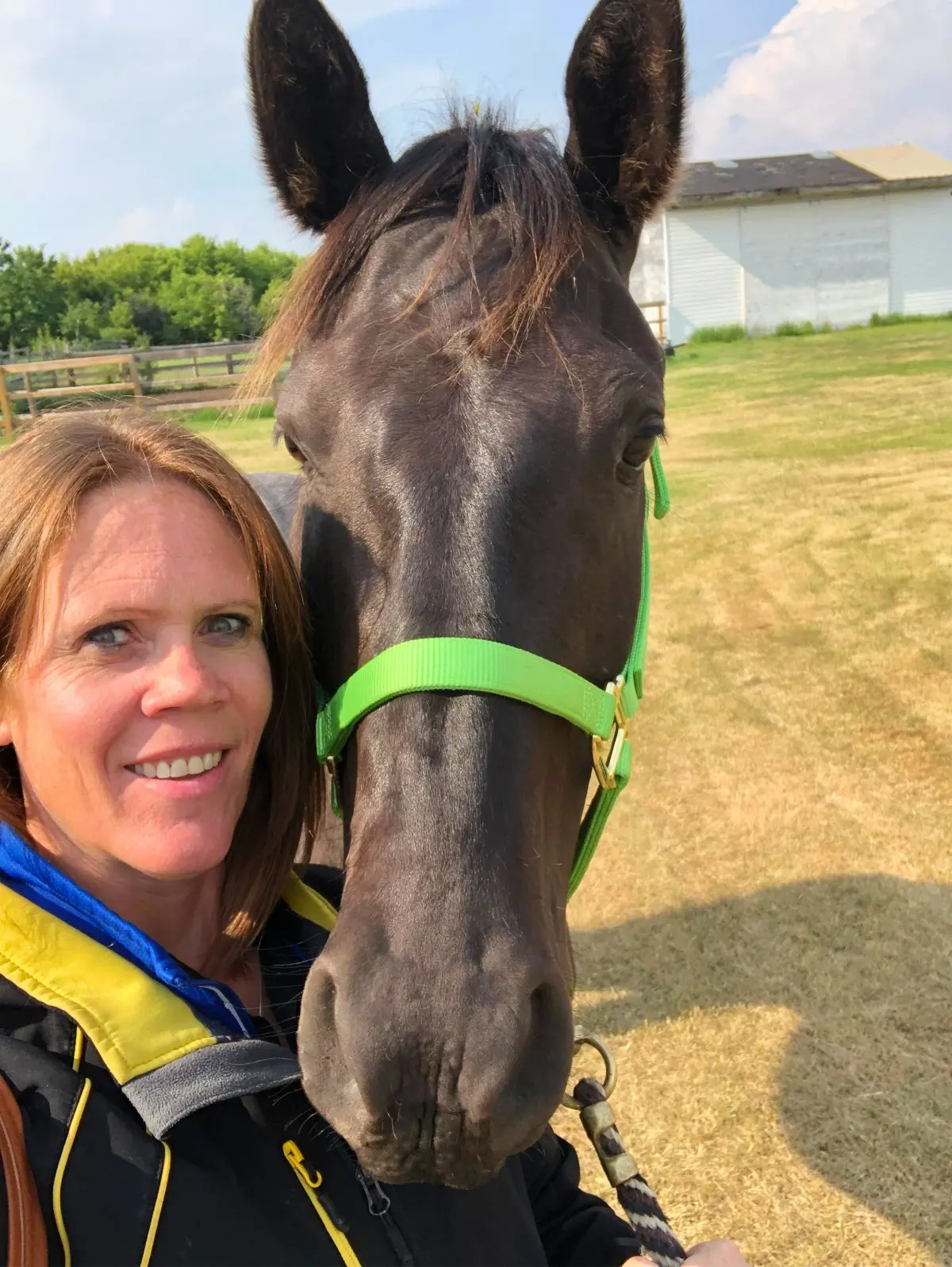
Kara is the equine specialist on our customer care team, and she keeps her own herd on a farm in Saskatchewan. Tell her what you're seeing and she'll tell you honestly where to start. Read Kara's story →
The consultation is free, and it always will be.
1-877-816-6500 · Orders & quick questions