- Success Stories
- LearnThe Resource Library: guides, articles, stories


Looking for help with
Most searched
Also common
Everything else
Joints & mobility
Immune & breathing
Injury & recovery
Legs, hooves & joints
Gut & breathing
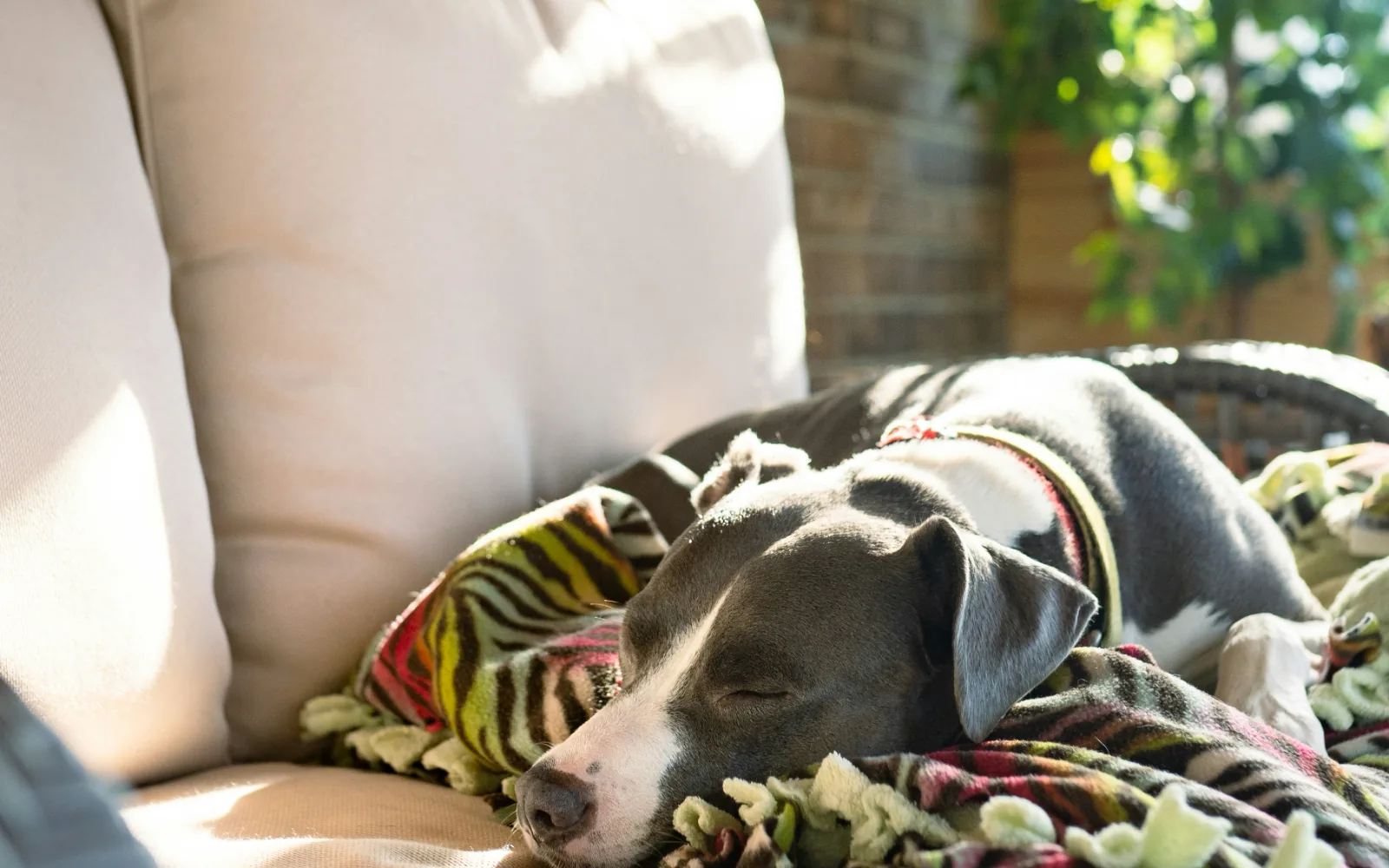
A dog who has lost their get up and go: sleeping more, slower to the door, not much interest in the walk. Here is when it needs the vet, and what a lifetime of cooked food has to do with it.
Lethargy is a symptom, not a diagnosis, and it is one of the first signs of almost any illness. A quiet day after a long hike, a vaccine or a stressful event is usually nothing. But if the tiredness came on suddenly, has lasted more than a day or two, or is travelling with any of the signs below, call your vet today rather than reading further.1
If the vet finds nothing, or finds a dog who is simply "getting older", keep reading. This is the dog we hear about most.
Much of what needs correcting begins in the microscopic cells of the body. Imagine each cell as a miniature power plant. It receives fuel in the form of oxygen, carried in by the bloodstream, and burns that fuel to release energy for everything the body does. And as a real power plant gives off toxic smoke when it burns fossil fuel, the cells give off toxic by-products when they burn oxygen. Those by-products are free radicals: oxygen molecules missing an electron. To balance themselves they steal electrons from whatever is nearby, setting off a chain reaction. As free radicals build up, cell function falls off, and the result is low energy output. It is the same chemistry that rusts metal and browns a cut apple: oxidation, happening slowly inside the body.
To keep this under control the body produces antioxidant enzymes, superoxide dismutase and its cousins, as nature's way of reversing the damage. But making those enzymes depends largely on a daily intake of live food. Heat destroys the live element of food, and every bag and can of pet food has been heated, cooked and processed. Without a daily source of live nutrition, the body does not have the resource to make enough of the enzymes that keep its cells running well. Our All About Enzymes guide goes deeper.
Look at it from the people side for a moment. These antioxidant enzymes are what our own bodies produce in abundance when we are young; you might call them the essence of life. Through our prime years the body makes them at a very high rate, which keeps us healthy and full of vitality. Past a certain point, around 25 for a person, output falls a little every year, and toxins and free-radical damage are no longer dealt with the way they once were. That decline is a large part of what we call aging. The physiology is much the same in a dog, on a shorter clock.
Give the body back the live element the food left out. Sprouted Granules in the bowl are the economical choice; Antioxidant Treats by hand are the convenient one, and most families use both. Both are made from live sprouted soybean meal, which gives the body the raw material to produce its own antioxidant enzymes while supplying a small amount with each daily dose.
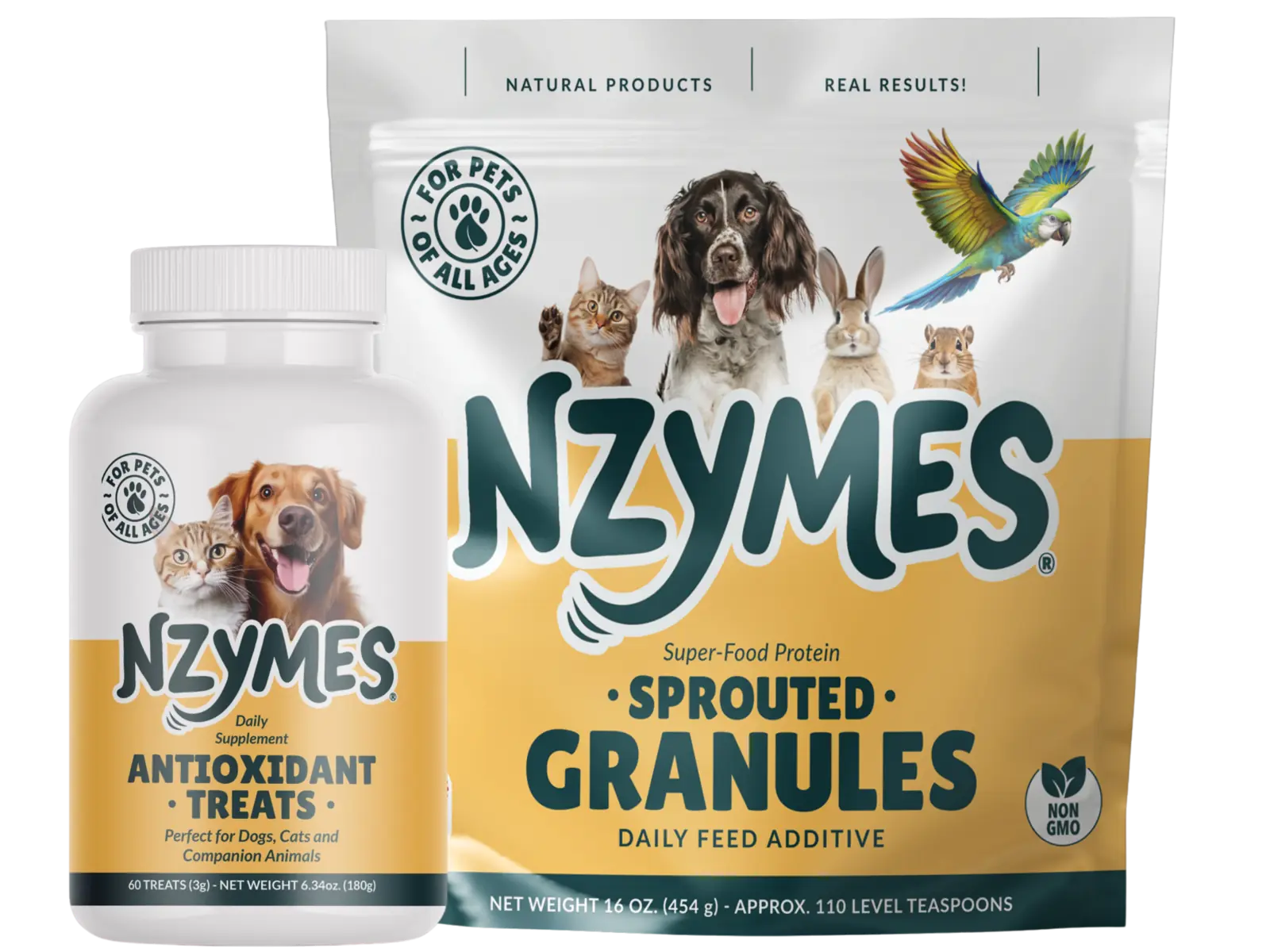 The Core FoundationSee the Core Foundation →Sprouted Granules in the bowl and Antioxidant Treats by hand: live-food enzymes and antioxidants, made from live sprouted soybean meal. Where every dog starts.
Changes are gradual and real; some families see them in days, most within a few weeks. Not sure where to begin? Book a free consultation.
Mild tiredness for a day after a long outing, a vaccine or a stressful event is usually nothing. Call the vet if the lethargy is sudden or severe, lasts more than a day or two, or comes with vomiting, not eating, pale gums, laboured breathing, a swollen belly, or trouble standing.
Absolutely. Cells make energy by burning oxygen, which produces free radicals; the body clears them with antioxidant enzymes it builds from live food in the diet. Cooked, processed pet food has had that live element destroyed, so the body can run short of the resource to keep its cells working well.
Part of it is the same thing that happens to us: after the prime years, the body makes fewer of its own antioxidant enzymes each year, so free-radical damage is dealt with less well. Giving the body live-food material again is how we help it keep up.
Once the vet has ruled out illness, the Core Foundation: Sprouted Granules in the bowl, Antioxidant Treats by hand, or both. Both are made from live sprouted soybean meal, the live-food resource the body uses to produce its own antioxidant enzymes.
Tell a member of our team your dog's age, what they eat and what has changed, and we'll help you work out where to start.
The consultation is a scheduled half hour on Google Meet, so you get real time and real answers. It's free, and it always will be.