- Success Stories
- LearnThe Resource Library: guides, articles, stories


Looking for help with
Most searched
Also common
Everything else
Joints & mobility
Immune & breathing
Injury & recovery
Legs, hooves & joints
Gut & breathing
Watching your dog cough and hack for days is heart-wrenching. Kennel cough is usually a virus and a bacteria working together, in a dog whose defenses were already down, which is why a round of antibiotics so often ends with a dog still coughing. Here's what's actually going on, and the three-way approach that reaches all of it.
Often called Bordetella (medical name Bordetellosis), this very common respiratory illness is highly contagious, and a large share of dogs around the world will meet it at some point. It gets its name from where it's most easily passed around: boarding at kennels, for a night or a month. Kennel cough is most common in dogs with weakened or still-developing immune systems, which is why puppies, seniors, and shelter dogs are the ones we hear about most.
There isn't one culprit. Several different bugs can set it off, and often more than one is involved at the same time. The common ones are parainfluenza, Bordetella bronchiseptica, and mycoplasma. Canine adenovirus, reovirus, and canine herpes virus can also play a role.
If kennel cough is affecting your dog, address it as soon as you can. It's highly contagious, it can worsen into chronic bronchitis or pneumonia if it drags on, and once a dog has been exposed it tends to re-appear more easily. For soothing the symptoms at home while the body works, see the five home remedies.
Here's the part most families aren't told. Kennel cough is very often both bacterial and viral: typically the canine parainfluenza virus and the bacteria Bordetella bronchiseptica together. Antibiotics can work on the bacterial portion. They cannot eliminate a virus. So the usual approach may handle half the problem and leave the other half untouched, in a dog whose immune system was likely already struggling when this started. That's how a dog ends up lingering for weeks, back and forth to the vet, still coughing, hacking, and wheezing.
There's a second problem with leaning on antibiotics alone: over time, more and more strains of bacteria learn to shrug off the common antibiotics. The approach below doesn't have that problem. What it uses isn't the kind of thing bacteria or viruses can build resistance to.
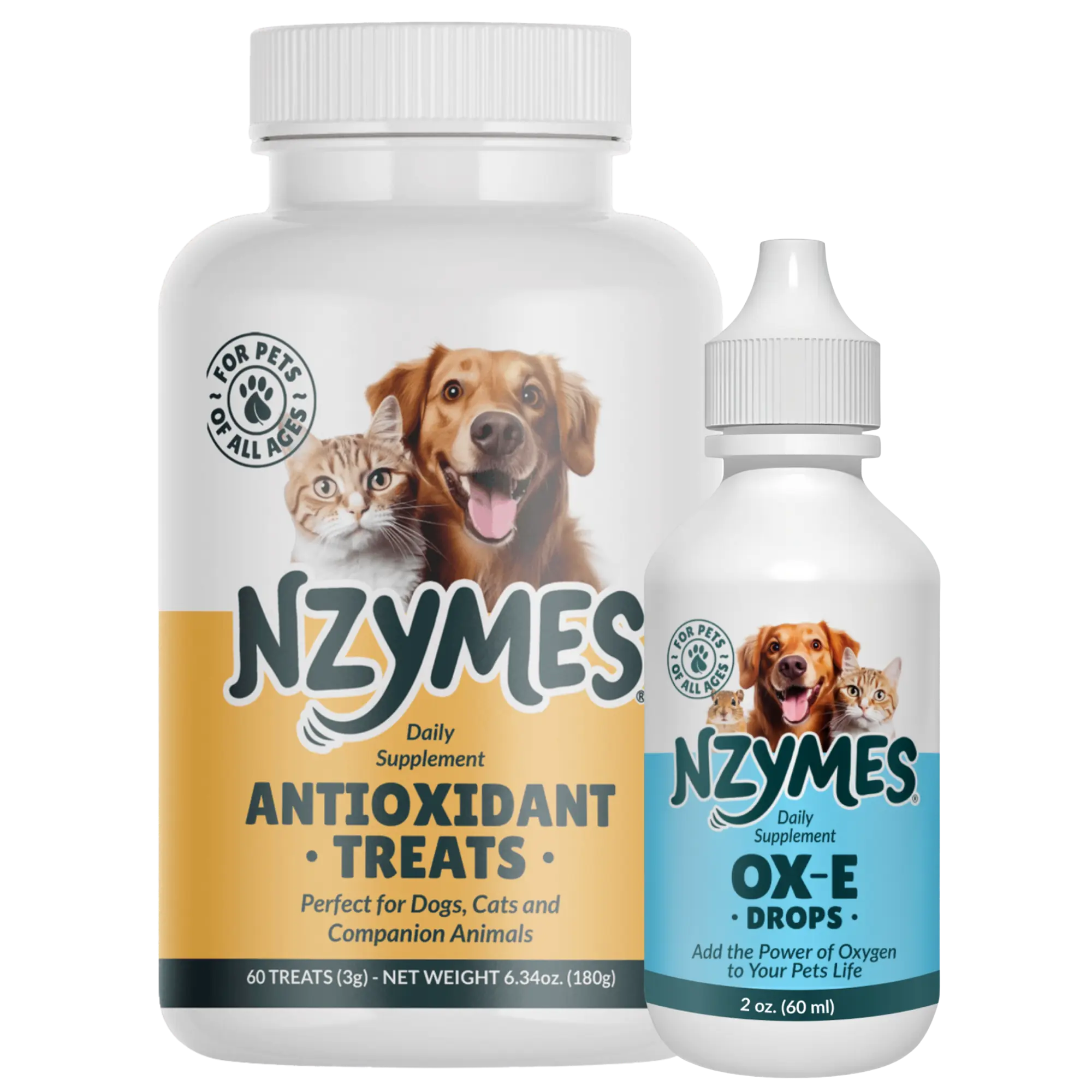 The Breathe Easy BundleAntioxidant Treats and Ox-E Drops together, with the interactive step-by-step guide for the bowl and the vaporizerSee the program →
To really help a dog through kennel cough, you have to reach the bacterial side and the viral side at the same time, and you can't skip the weak immunity underneath. The Breathe Easy Bundle does all three at once:
One: rebuild the defense. Antioxidant Treats provide serious nutrition to help the body improve its metabolic processes, especially immune function, so the dog's own system is on a path to handling this.
Two: work from the inside. Ox-E Drops added to the daily diet work within the body's own chemistry to help it destroy bacteria and disable viruses, so they can't multiply and are left helpless against an immune system that's getting stronger.
Three: reach the lungs directly. The same drops, mixed with water in a vaporizer, carry that support straight into the lungs and bronchial pathways, right where the trouble is.
What makes Ox-E Drops so useful against respiratory trouble like kennel cough? The active ingredient is sodium chlorite (NaClO2), and here's the plain version of what it does. It works with the body's own pH and raises the oxygen available to the cells. It also releases ions that jam certain enzymes harmful bacteria, viruses, and fungi rely on to survive, without harming your dog's own cells. And because it can be taken by mouth and breathed in from a vaporizer, it reaches the lungs and bronchial tubes directly, right where the worst symptoms come from. Many families keep the drops going after the cough clears, as everyday support for the airways.
Nzymes has been helping dog owners with respiratory challenges for over twenty-five years, and most of those families would rather not reach for a prescription if they don't have to. It usually takes a few days. One case from years ago stays with us: the vets said the dog was too far gone to save, the family would not give up, and it took about six days to free her from the respiratory trouble. That's Abby's story. That's why our team motto is "Don't stop believing."
An antibiotic reaches the bacteria.
Three ways at once
reach all of it.
No. Antibiotics reach the bacterial half, and the approach here works alongside them, not instead of them. Many of the families on this shelf used both. If you'd like to talk through your dog's specific case, book a free consultation.
Once a dog has been exposed, it tends to re-appear more easily, especially in a dog whose immune system is already run down. That's why the immune-nutrition piece matters as much as the drops: the goal is a body that clears the next bug on its own.
Those are things to soothe the symptoms while the body works (honey, coconut oil, herbs). This guide is about what's actually going on in the airways and how the three-way approach addresses it. Read them together: 5 Home Remedies for Kennel Cough Symptoms.
The Breathe Easy Bundle: Ox-E Drops in a vaporizer and in the water bowl, with Antioxidant Treats to strengthen the immune system that has to finish the job. The program page walks through the vaporizer step and what to expect. If you'd rather talk it through with a person first, our free consultation is always there.
Keep reading on this shelf
5 Home Remedies for Kennel Cough SymptomsRead now Penny's story: from fluid in her lungs to chasing a ball in a weekRead now
 Rosie's story: antibiotics couldn't touch her cough. Ox-E Drops did.Read now
Kennel cough is one of the things families bring to us most often, especially from families whose dog is still coughing after a round of antibiotics. Book a free consultation and tell us what the cough sounds like, how long it's been going, and what your dog is taking, and we'll tell you honestly what it sounds like, including whether a vet visit makes sense.
The consultation is a scheduled half hour with the people who have walked hundreds of families through this, so you get real time and real answers instead of a rushed phone call. It's free, and it always will be.