- Success Stories
- LearnThe Resource Library: guides, articles, stories


Looking for help with
Most searched
Also common
Everything else
Joints & mobility
Immune & breathing
Injury & recovery
Legs, hooves & joints
Gut & breathing
Kennel cough (Bordetella) is a dog's version of the common cold: contagious, rarely serious, and miserable while it lasts. It's also both viral and bacterial, which is why antibiotics alone so often leave a dog still coughing. Here are five things you can do at home to soothe the symptoms and help the body clear it.
Kennel cough in dogs is often called Bordetella or Bordetellosis, and it's a lot like a cold in people: easy to catch, rarely serious, and usually gone in a week or two. What you'll most likely notice is a dry, hacking cough, gagging like something's caught in the throat, and sometimes a white, foamy drool. As with people, it hits the very young and the very old harder, because their immune systems are more vulnerable, though any dog can catch it.
Before we get to the remedies, one thing worth knowing: kennel cough is both viral and bacterial. That matters because many vets prescribe an antibiotic, which only treats the bacterial infection, not the virus. Symptoms take about a week to show up after exposure and can continue for up to ten days. Even after your dog seems fine again, they can still pass it along to other dogs for up to two weeks. Good to know before the next trip to the dog park, the vet, or the kennel.
One of the best, healthiest, and quickest ways to soothe your dog's itchy throat is a simple spoonful of honey. Honey is far more than a sweet treat. It's a genuine natural disinfectant, with antibacterial, antimicrobial, antiviral, antiseptic, anti-inflammatory, and antifungal properties.
Dogs usually love the taste and will take it straight from the spoon. Large and small amounts are both safe, but for that awful dry, hacking cough, at least a teaspoon three or four times a day is what we usually suggest.
Coconut oil has become a popular supplement for people and pets alike. Its fatty acids help the body against harmful bacteria, viruses, yeast, and parasites, and plenty of families give it daily as an all-around infection fighter. It has also earned a reputation as one of the better remedies for kennel cough symptoms.
The usual maintenance amount is one teaspoon per ten pounds of body weight per day. For a dog with kennel cough, you can double that. The only side effect we hear about is loose stools or an upset stomach when the amount jumps too fast, so build up gradually. Coconut oil and honey go well together, and many families use them in combination.
There are natural supplements designed specifically for respiratory trouble like kennel cough. Nzymes Ox-E Drops is a sodium chlorite solution that helps in two ways. Breathed in from a vaporizer, it reaches the infection right where it lives in the airways. Added to food or water, the same oxygen-based action helps the body neutralize those invaders, bacterial or viral, wherever they've settled. Together that's a two-layer approach, and it's the heart of the Breathe Easy Bundle, which pairs the drops with Antioxidant Treats for the immune system underneath. Penny's story shows what it looks like in a real home.
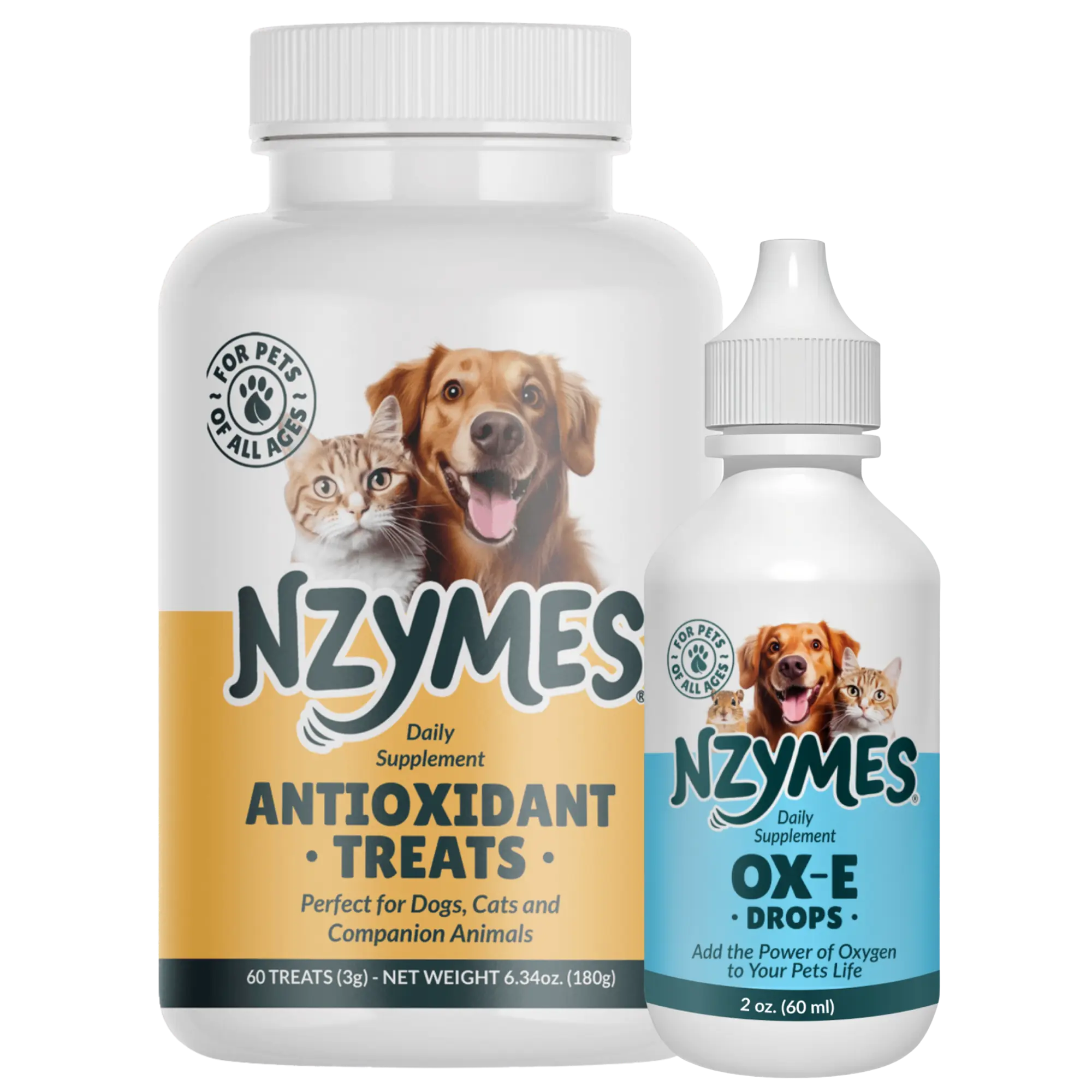 The Breathe Easy BundleOx-E Drops for the vaporizer and the bowl, Antioxidant Treats for the immune system underneath, and the interactive step-by-step guideSee the program →
Vitamin C is another helpful remedy, since it can act as an antiviral; the daily amount depends on your dog's size. Colostrum (from the first milking of cows) and probiotics are also excellent for immune health, which is exactly what's needed when fighting kennel cough.
Natural food markets and pet supply stores carry many herbal products that help a coughing dog. Call ahead and ask for dried licorice root, sage or blackberry leaves, thyme, or elder blossom. Any of these make a soothing tea for your pup.
Essential oils like eucalyptus or ravensara make for a helpful, pleasant dose of aromatherapy. Use an aroma diffuser, or simply add a few drops to the water in a vaporizer.
Controlling your dog's exposure to other animals is obviously one of the best ways to prevent kennel cough, canine flu, and other contagious illnesses. It's also a bit unrealistic, especially if your dog is a social butterfly. By far the better defense against any infection is a strong immune system, which you build every day with good food, exercise, and the kind of support above.
For now, if your dog has picked up a respiratory infection, these five will help turn it around. The Breathe Easy Bundle puts the supplement side together, with an interactive guide that walks you through each step.
Not sure whether it's kennel cough or something more? Describe the cough and how long it's been going. Book a free consultation →
An antibiotic reaches half of kennel cough.
A strong immune system
reaches all of it.
Symptoms usually show up about a week after exposure and run for up to ten days. Even after your dog is symptom free, they can still pass it to other dogs for up to two weeks, so hold off on the dog park, daycare, and the groomer a little longer than feels necessary.
Sometimes, and that's a conversation to have with your vet. But it's worth knowing that kennel cough is both viral and bacterial, and an antibiotic only reaches the bacterial half. That's why many dogs on antibiotics keep coughing. The remedies here, and the immune support underneath them, are aimed at the whole picture, including the immune system that has to finish the job.
For most healthy adult dogs, no. It's miserable, but it passes. Very young puppies, seniors, and dogs whose immune systems are already run down are the ones to watch, because in them it can worsen into pneumonia. If the cough is getting deeper instead of drier, if your dog stops eating, or if breathing itself becomes hard, that's when a vet visit matters.
The Breathe Easy Bundle: Ox-E Drops in a vaporizer and in the water bowl, with Antioxidant Treats to strengthen the immune system that has to finish the job. The program page walks through the vaporizer step and what to expect. If you'd rather talk it through with a person first, our free consultation is always there.
Keep reading on this shelf
Kennel Cough in Dogs: Why Antibiotics Fall Short, and the Three-Way AnswerRead now Bronchitis in Dogs: What to KnowRead now Koleha's story: a 1½-pound puppy, breathing easier in 12 hoursRead now
 Sadie & Baby's story: two coughing Chihuahuas, breathing again in 24 hoursRead now
Kennel cough is one of the things families bring to us most often, especially from families whose dog is still coughing after a round of antibiotics. Book a free consultation and tell us what the cough sounds like, how long it's been going, and what your dog is taking, and we'll tell you honestly what it sounds like, including whether a vet visit makes sense.
The consultation is a scheduled half hour with the people who have walked hundreds of families through this, so you get real time and real answers instead of a rushed phone call. It's free, and it always will be.