- Success Stories
- LearnThe Resource Library: guides, articles, stories


Looking for help with
Most searched
Also common
Everything else
Joints & mobility
Immune & breathing
Injury & recovery
Legs, hooves & joints
Gut & breathing
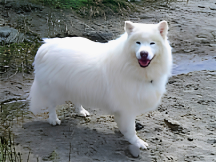
Nash is an eight-year-old, 120-pound Alaskan Malamute who used to clear the couch on his way to the doggie door. One morning he could not get up. Three weeks of medications, x-rays and heating pads later, the vet offered Shirley two options: a $6,200 back surgery with a 50% chance, or deciding when to let him go.
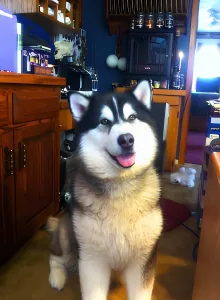
“I thought NO WAY, this is impossible.
It had been over 3 weeks since he was able to do that!”
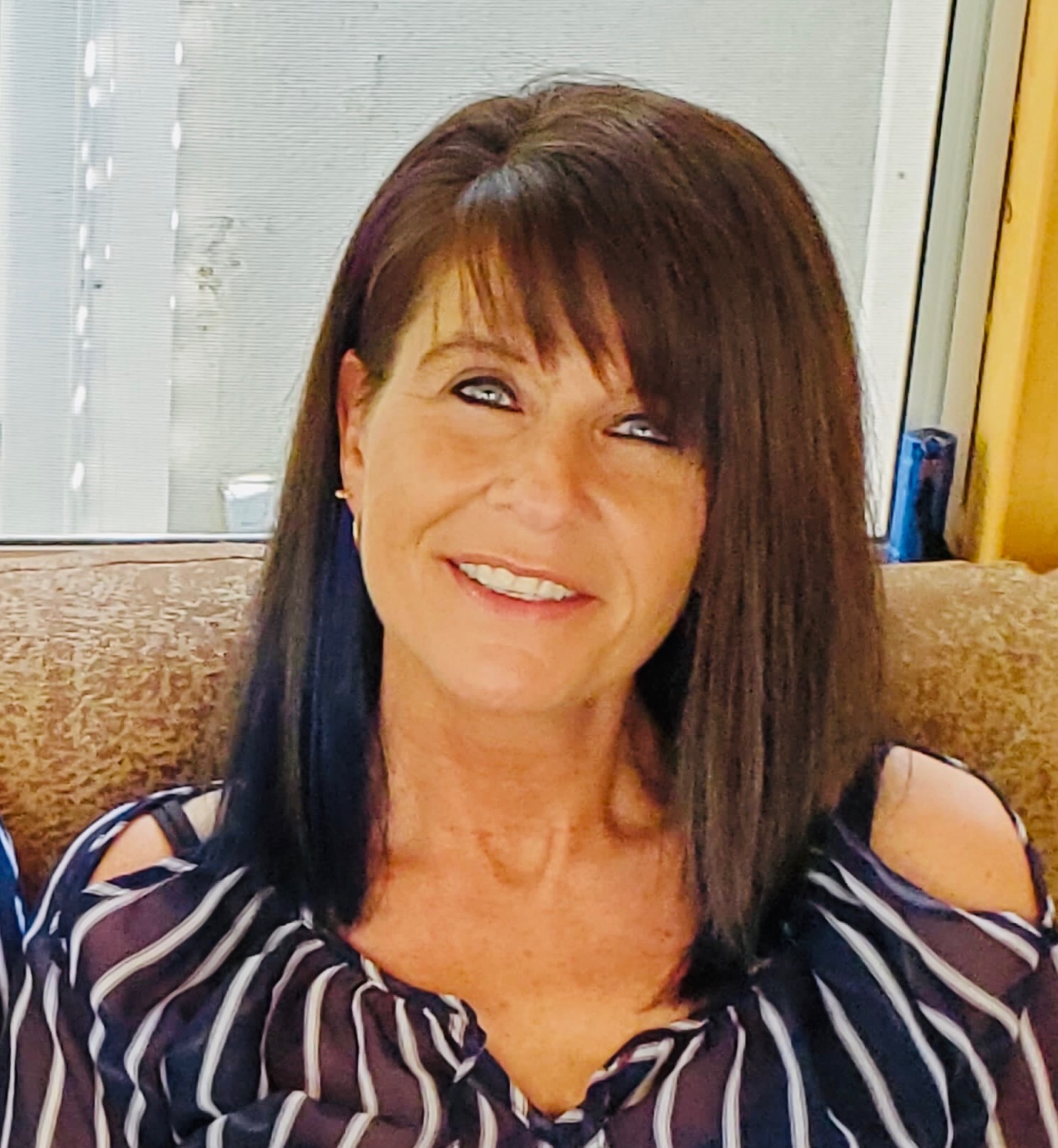
"Our story begins when our dog Nash could not get up one morning. He was a very active dog, mainly when he was younger: jumping from the bed in one bedroom, all the way across the house, over the couch and then through the doggie door. I guess he thought of it as a daily exercise routine."
"As he got older that stopped, at least the jumping on and off the beds stopped. He has a cushioned sleeping area in my bedroom and this one day he couldn't get up. He had severe pain and would yelp. He was dragging his back end around and we had to lift him up and carry him. He could walk very little, acting as if he had sciatica."
"For the next 3 weeks, he was on numerous medications from the vets. He would lay on the floor with a heating pad on his spine for relief and then an ice pack, back and forth. X-rays were taken, blood work, etc. The only thing they could see was 2 discs that looked like they had some arthritis. After the 3rd week with NO improvements, I had to take him off all the pain killers because he started to have constant nose bleeds that lasted for hours."
"One: bring him 60 miles away to a place that does MRIs and then possibly have back surgery, around $6,200, with a 50% chance of improvement. The vet mentioned that if Nash was younger, the outcome of the surgery would have a higher success rate, but with his age and possible scar tissue, the outcome would be iffy. Or two: decide when to put him out of his misery."
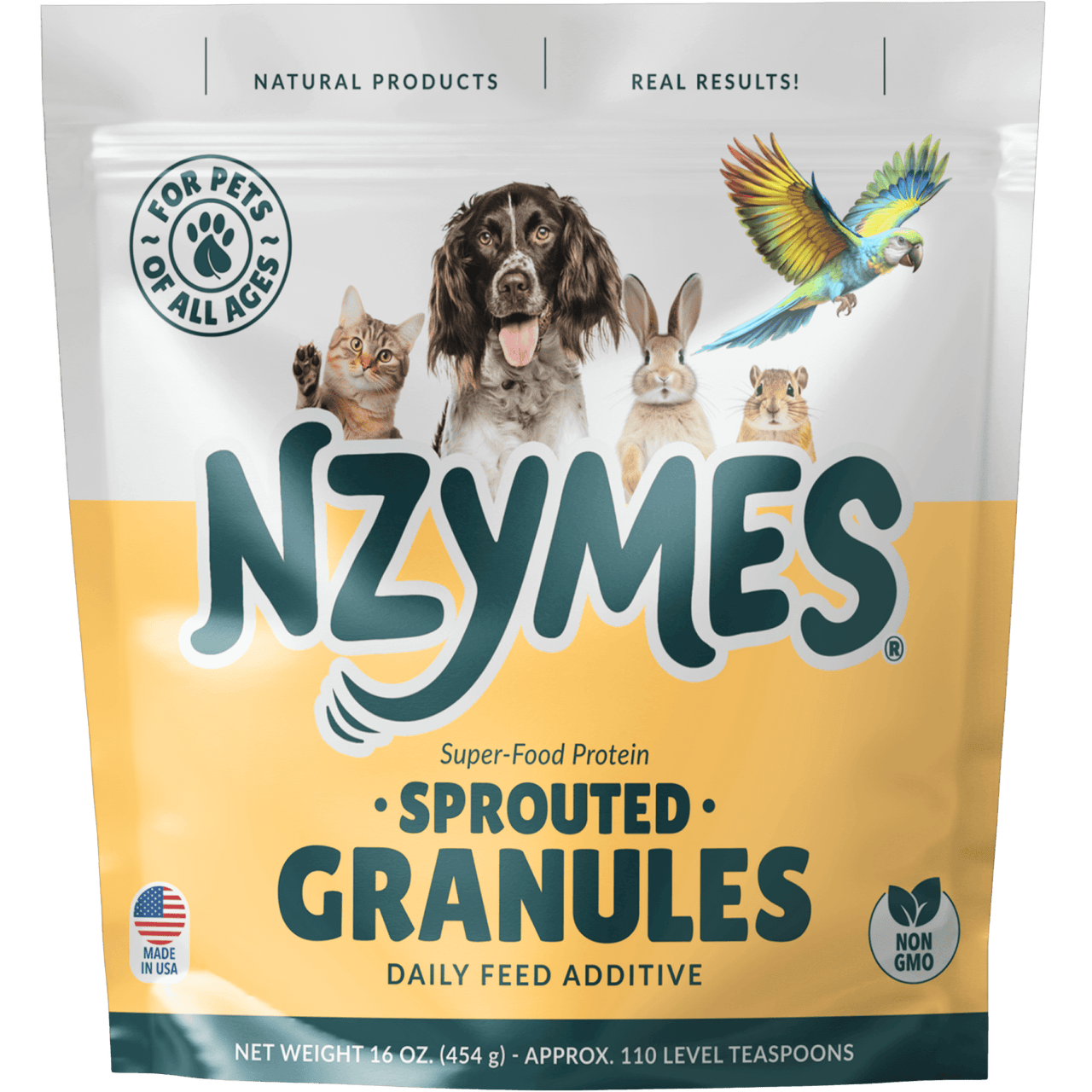
"We brought Nash home and I decided to go online and see what other options I might have. I found this site, read some of the success stories and said, why not? So I ordered the Nzymes and paid for the quickest delivery possible."
"The order came as quick as promised and when it arrived, I gave him his first round at 2 pm with a little food, then again at 10 pm. The next morning I gave it to him at 9 am, then again at 5 pm. He was already improving on his appetite and thirst. Then the following morning after he got his morning round, he got up, with a hitch, and walked out the doggie door."
"I thought NO WAY, this is impossible. Just 2 days ago he couldn't get up on his own. It had been over 3 weeks since he was able to do that! He improved a little each day, and now he really has only a slight hitch, when he's laid out in the snow or on the cold deck for a while."
"As far as the vets know, they probably think he died. I can't wait till he goes back in for his yearly exam. He acts as if he is 4 years old now. Please, if your big doggie has a problem with his joints, back or hips, try this. Give it time. It works! And honestly, why wait? Start him or her on it now and help prevent any of these possible problems."
Nash's turnaround was faster than most. For many dogs it is weeks, not days, and the pace depends a great deal on what is in the bowl; diet is the first thing we go over on a consult, and our recommended foods guide is where to start. If your dog is where Nash was, book a free consultation and we'll talk it through with you.
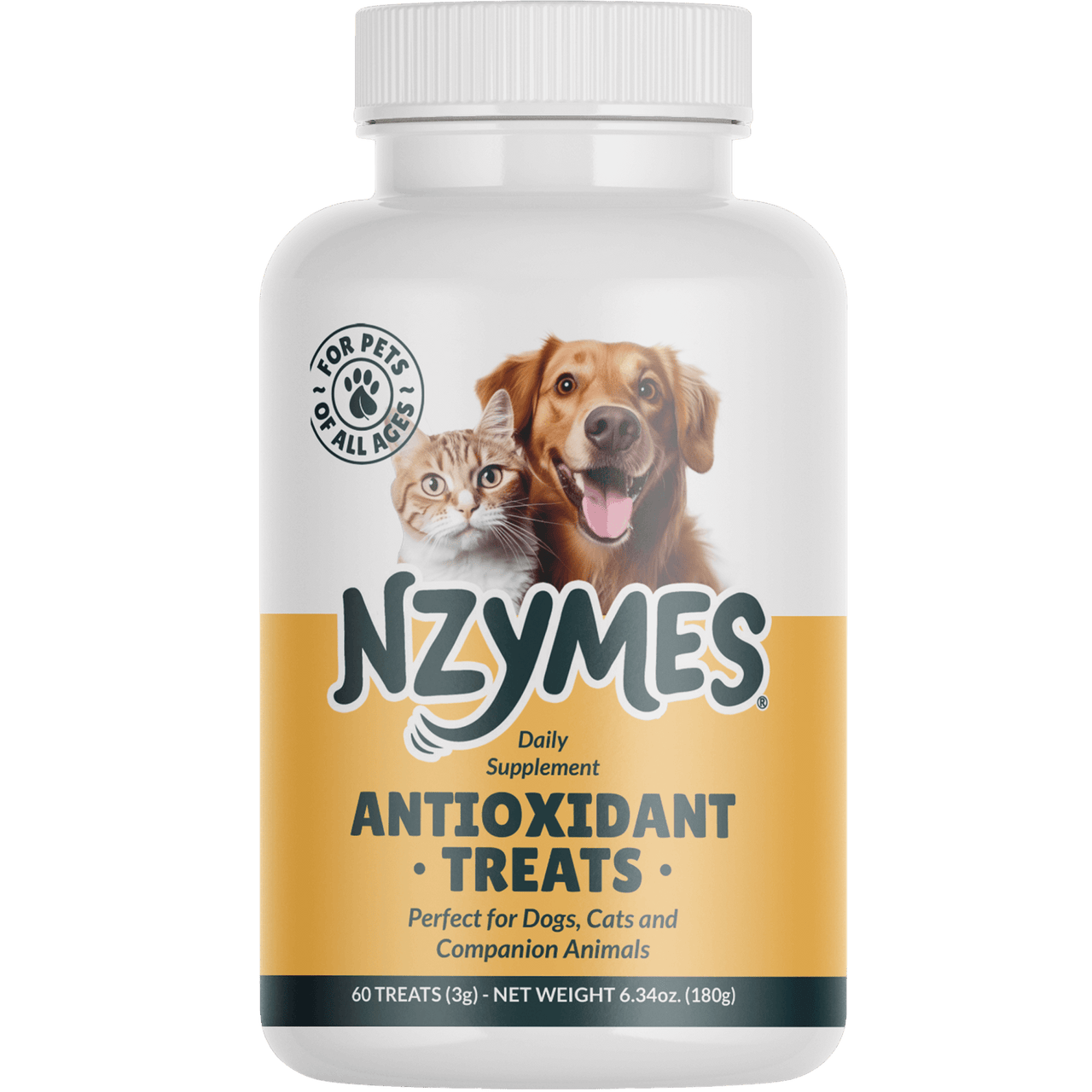
Today we pair the Granules with Antioxidant Treats as the Core Foundation: the same nutrition in two forms, one in the bowl and one by hand. For a 120-pound dog, the Granules carry the dose.
He acts as if he is 4 years old now.
THANK YOU, Nzymes, for saving NASH!
A big dog who cannot get up, and a vet offering surgery or goodbye: that is a hard place to be standing. Book a free consultation and tell us the breed, the age, what the x-rays showed, and what he can manage today. We'll help you think it through.
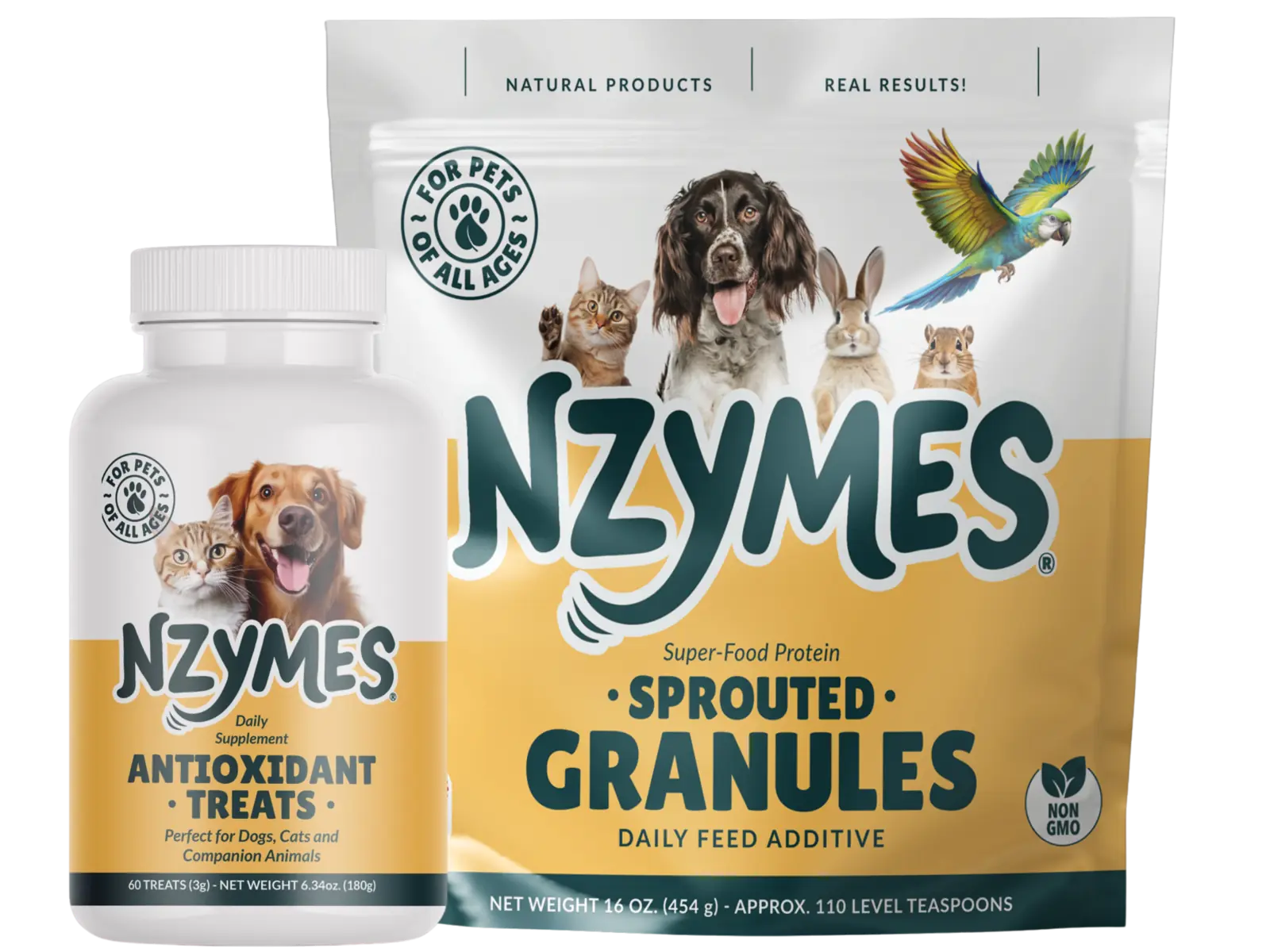
Shirley used the Sprouted Granules on their own. Today the Granules come paired with Antioxidant Treats as the Core Foundation. Diet comes first: start with our recommended foods guide. Dogs under 25 pounds get the Tiny Treats version.
See the Core Foundation →Every order comes with our 120-Day Worry-Free Guarantee, free customer care from a small family team, and formulas built on over twenty-five years of work: support for your dog's own body, from the inside.
Nash's story is shared with his family's permission. It's one dog's experience, not a guaranteed result and not a substitute for veterinary care. Nzymes products are nutrition that supports your dog's own body, not a treatment for arthritis, disc disease, or any disease. Never stop or change a prescribed medication without your vet. Every dog is different and individual results may vary.