- Success Stories
- LearnThe Resource Library: guides, articles, stories


Looking for help with
Most searched
Also common
Everything else
Joints & mobility
Immune & breathing
Injury & recovery
Legs, hooves & joints
Gut & breathing
Trinket, a 15-year-old gray Arabian mare, had melanomas all over her body, one near her tail almost larger than a grapefruit. Her caretaker wrote down what the next month looked like.
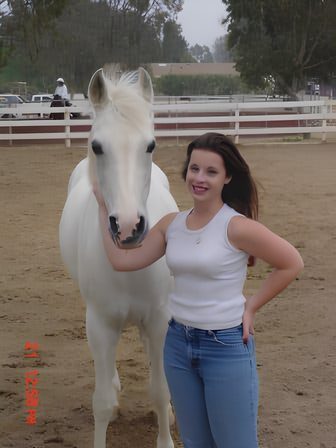
Trinket used to have to rest her tail on the mass, or move with her tail raised up. That is not the case anymore.
"I was hired as a caretaker for Trinket, a 15-year-old gray Arabian mare," Rachel wrote. "One very common problem for gray Arabians is the development of skin melanomas and Trinket was no different: she had numerous melanomas all over her body." The largest, near her rear end, bulged out almost larger than a grapefruit; others were speckled through her body, pea-sized, one on her rump the size of a quarter.
On top of the melanomas came stiffness and mobility trouble from inactivity, enough to make her stumble now and then. Rachel later noted that Trinket's worst masses had erupted under her tail not long after she gave birth to a foal; that observation became part of the melanoma feed program she went on to build.
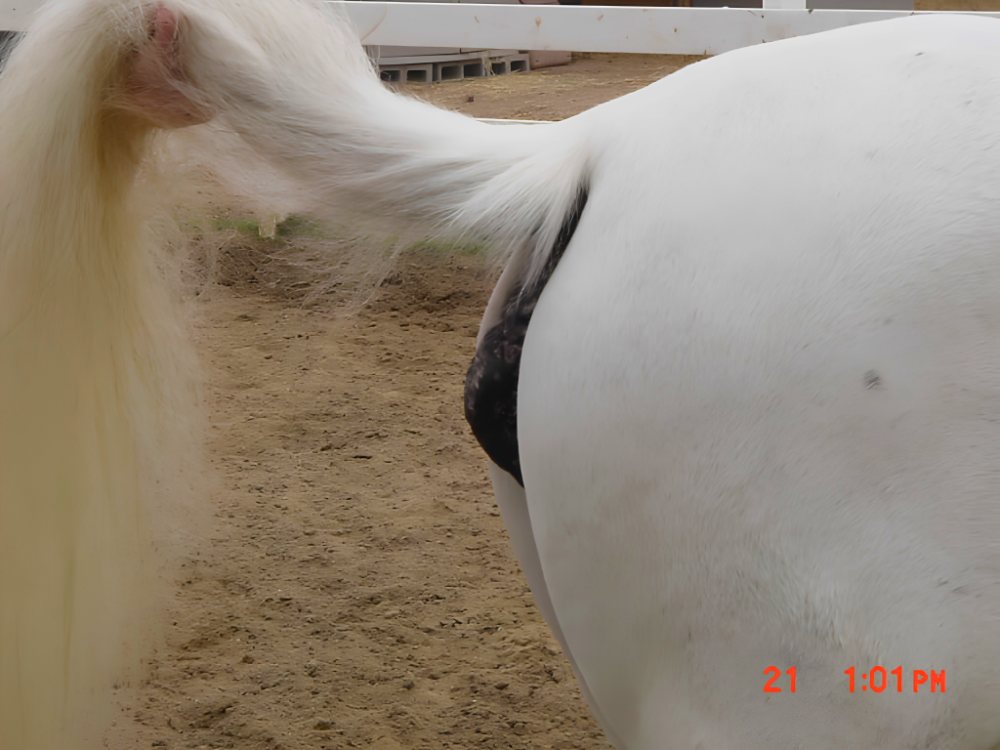
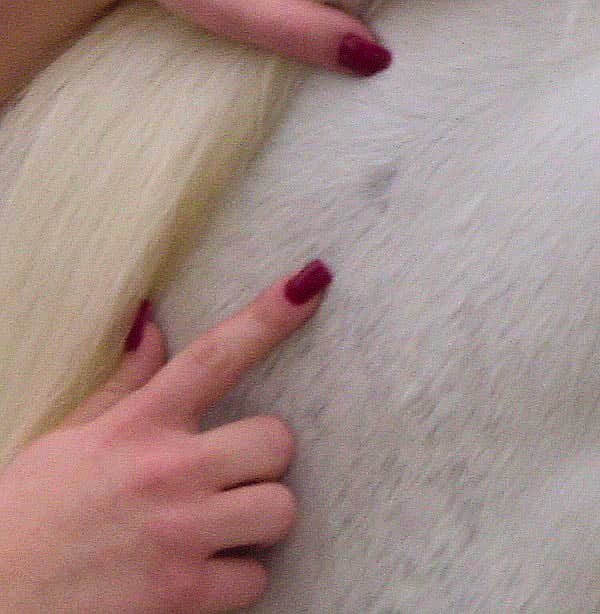
"Her body obviously needed the extra 'oomph' internally to help deal with the poor immune health she had been experiencing, and that's where the Nzymes Sprouted Granules come in."
Trinket was the first horse Rachel helped this way, and what she learned caring for her became the melanoma feed program Rachel now uses with her own horses. "My experience in caring for Trinket taught me a great deal that I now incorporate with MY OWN HORSES." The full program lives in our Melanomas in Horses guide.
"Also, I wanted to let you know that Trinket just loves her Nzymes Granules. She really goes crazy as soon as she sees me open the bottle. It has become a new source of enjoyment for me."
"Her coat and overall appearance have improved dramatically! Over this last month, I noticed 4 inches of new hair growth at her mane and tail."
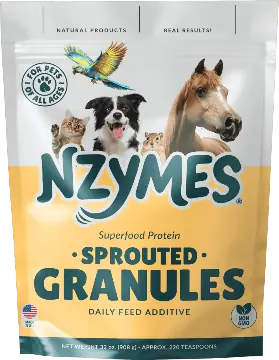
Nzymes Sprouted Granules in her daily feed for the inside work, and a 2% topical solution of Ox-E Drops sprayed on the affected areas. The same pairing anchors Rachel's full melanoma support program, with Bac-Pak Plus alongside.
Rachel and Trinket, in the video interview from the original story.
“I must say that I am truly amazed at the results the Sprouted Granules and Ox-E Drops have delivered.”
Kara is the equine specialist on our customer care team, and she keeps her own herd on a farm in Saskatchewan. Tell her what you're seeing and she'll tell you honestly where to start. Read Kara's own story →