- Success Stories
- LearnThe Resource Library: guides, articles, stories


Looking for help with
Most searched
Also common
Everything else
Joints & mobility
Immune & breathing
Injury & recovery
Legs, hooves & joints
Gut & breathing
Most of us know what a wart looks like on skin. Dog warts are a different animal, and the oral kind spreads the way dogs live: mouth first, wherever dogs are nose to nose. Below: what spreads, what doesn't, and one family's two weeks.
Most of us know a wart when we see one, at least on skin: a flat, raised, hardish bump, and plenty of us have had one ourselves. Dog warts are a bit different. There are a few types, but nearly all of them come from the same place: a virus called the papillomavirus.
In over twenty-five years of taking these calls, we've rarely heard from a family about a skin wart. The oral kind, oral papillomas, are the ones that worry families. They're the obvious, ugly, lumpy growths in and around the mouth, and often the throat. They look like little cauliflowers, they multiply fast, and when they reach the throat they can get in the way of eating and breathing.
The flatter warts on the skin go by the name papillomatosis. Tucked under the coat, they're easy to miss and rarely bother anyone. Not everyone agrees with us on this next part, but to us it only makes sense that either kind can spread, to other parts of the body or to other dogs.
You'll find articles that say not to worry: dog warts can't spread, not on the same dog and not to other dogs, and they'll go away on their own. That may be true for skin warts, some of the time. For oral warts, we don't buy it. Just think about how much a dog licks, of everything, all day. Every lick moves the virus around inside the mouth, and every shared toy or bowl carries it to the next dog.
Short of something airborne like kennel cough, is there an easier way for a virus to get around? Saliva is everywhere dogs gather. Think of how many dogs are chasing the same ball, the same Frisbee, the same stick, or nosing through the same dropped food and wrappers. Saying dogs can't pass a virus to each other just doesn't square with how dogs live.
So the argument is simple: a virus causes dog warts, and viruses spread. A dog with oral papilloma warts (the five facts are here) should be treated as contagious, the same way you'd keep a kid with a cold home from school. Put oral and saliva side by side and you can see how easily and quickly it travels. And since the same virus is likely behind skin warts too, a dog who picks it up could end up with either kind, or both.
One thing to hold onto: this virus is dog-specific. You won't catch warts from your dog. People have their own papilloma virus, and it has nothing to do with the one in your dog's mouth.
As with most dog viruses, puppies and older dogs are the most likely to get them, because their immune systems have less to work with. What the vet suggests usually depends on where the warts are. In an uncomfortable spot, like the mouth, the usual offer is surgery. Be aware that this can backfire: as the open wounds try to heal, the virus often spreads quickly to other parts of the body. If the warts are somewhere less bothersome, the vet may suggest waiting it out. Much like canine influenza, keeping your dog comfortable while the virus runs its course can be the better choice, if it does in fact run its course.
Wherever the warts are, it's hard to sit and wait while you know your dog is fighting a virus. We talk with families in exactly this spot every week. We believe a well-fed, well-supported body can do a lot of its own healing, so we'd rather work on this from the inside, and we're happy to report our customers have experienced great success. The families on this shelf have shared what that looked like for their dogs, with dates on the photos.
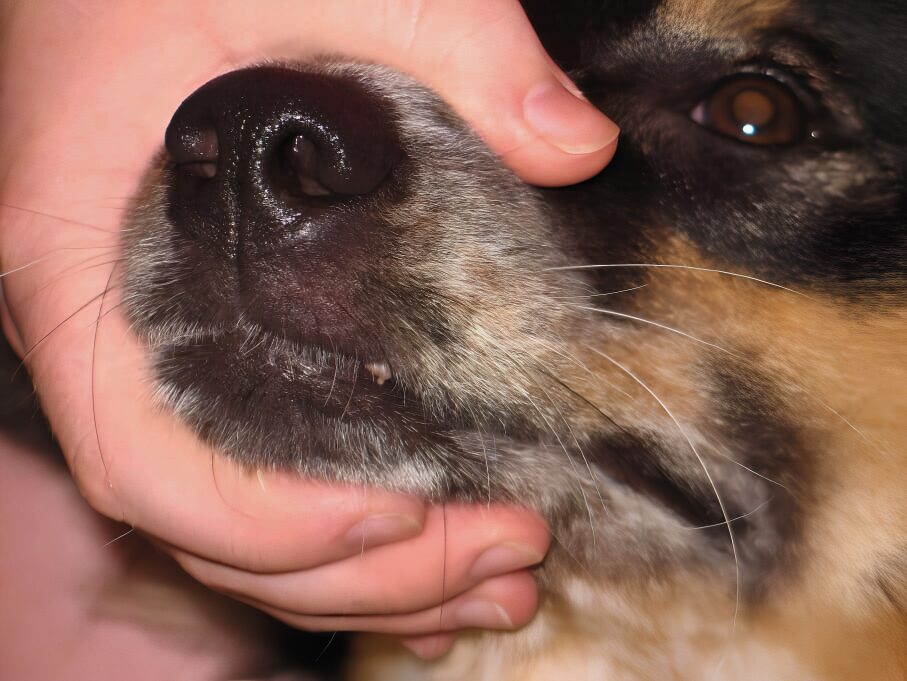
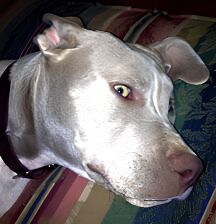
Meet Joan and her sweet pit mix, Pooh Bear. Joan sent us a short note and a couple of pictures: Pooh Bear before Nzymes, and Pooh Bear less than two weeks in.
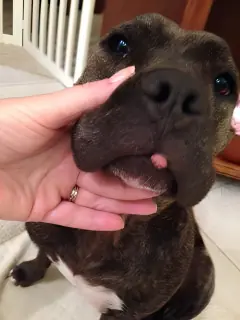
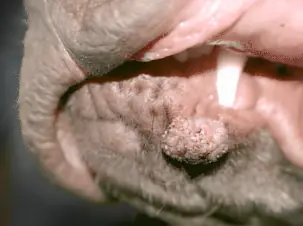
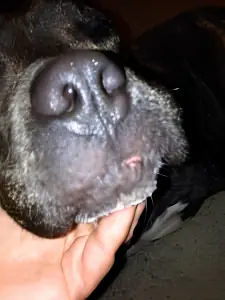
"My sweet pit mix, Pooh Bear, developed a gross looking thing on her lip, diagnosed by our vet as a 'dog wart' that 'would probably go away on its own in a couple weeks.' Well, a month or two later it was just bigger and uglier. My niece told me about Nzymes. I had my doubts but gave it a try. In just over two weeks Pooh Bear's disgusting wart has nearly vanished. I've got the pics to prove it. And she LOVES the special treats. Thank you Nzymes! I am now a firm believer."
Stories like Joan's keep us going, and they say something true about what the body can do when it's given what it needs. Nutrition gets overlooked as a road back to health, for small problems and hard ones alike, mostly because it isn't a quick fix. But as Joan found, a few weeks can change a lot. Addie's sixteen days tell the same story.
* Customer stories describe individual experiences. Results vary from dog to dog.
Honestly, yes. The virus travels in saliva, and dogs in the same house share water bowls, toys, and faces. It's worth separating bowls and toys while growths are present. The dog who gets them is usually the one whose immune system was already running behind, so if you have two dogs, it's worth supporting both.
No. The dog papilloma virus stays with dogs. People have their own form of papilloma virus, and the two don't cross. Cats, birds, and other pets can't catch it from a dog either.
While the growths are present, yes, and daycare, group play, and shared toys along with it. It's a kindness to the other dogs, and it's probably how the virus found your dog in the first place. Once the growths are gone and the immune system has had time to catch up, normal life resumes.
Not reliably. Surgery takes off the growth, but it doesn't touch the virus, and the open wound left behind can give the virus more places to take hold as it heals, which is exactly the rapid spread many families describe afterward. We'll never bar the vet door, but it's one of the reasons we suggest supporting the immune system before anything is cut.
Joan saw Pooh Bear's wart nearly gone in just over two weeks; Addie's family photographed sixteen days. Other dogs take longer; every dog starts from a different place. The dated photos from twelve families on this shelf give you something real to compare to, and if you'd like an honest read on your own dog's situation, the call is free.
Keep reading on this shelf
5 Facts About Oral Dog WartsRead now Canine Oral Papilloma Warts & COPVRead now Obi-Wan's story: surgery didn't hold. Twenty days of Nzymes did.Read now
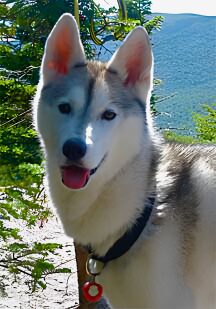 Kimmi's story: a wart beside her ear, gone three days after starting NzymesRead now
Warts are one of the calls we take most often. Whether you're still deciding, or you've started and something has you second-guessing, tell us where the growths are, how fast they're moving, and what your dog is taking, and we'll tell you honestly what it sounds like, including whether a vet visit makes sense.
The consultation is a scheduled half hour with the people who have walked hundreds of families through this, so you get real time and real answers instead of a rushed phone call. It's free, and it always will be.



.png)