
- Success Stories
- LearnThe Resource Library: guides, articles, stories


Looking for help with
Most searched
Also common
Everything else
Joints & mobility
Immune & breathing
Injury & recovery
Legs, hooves & joints
Gut & breathing
Pemphigus is the medical name for a whole group of autoimmune conditions that show up on the skin, and sometimes in the mouth and other mucous membranes. The blisters and sores are painful, and the cause is the body's own defenses turning on it.
At the root of this strange "immune system gone crazy" condition is a malfunction in the body's own way of solving problems. That is the crux of every autoimmune disease: the immune cells, or antibodies, have been fooled by something gone amiss, and attack the body's own tissue. In pemphigus, the target is the protein that glues skin cells to one another, called desmoglein.1
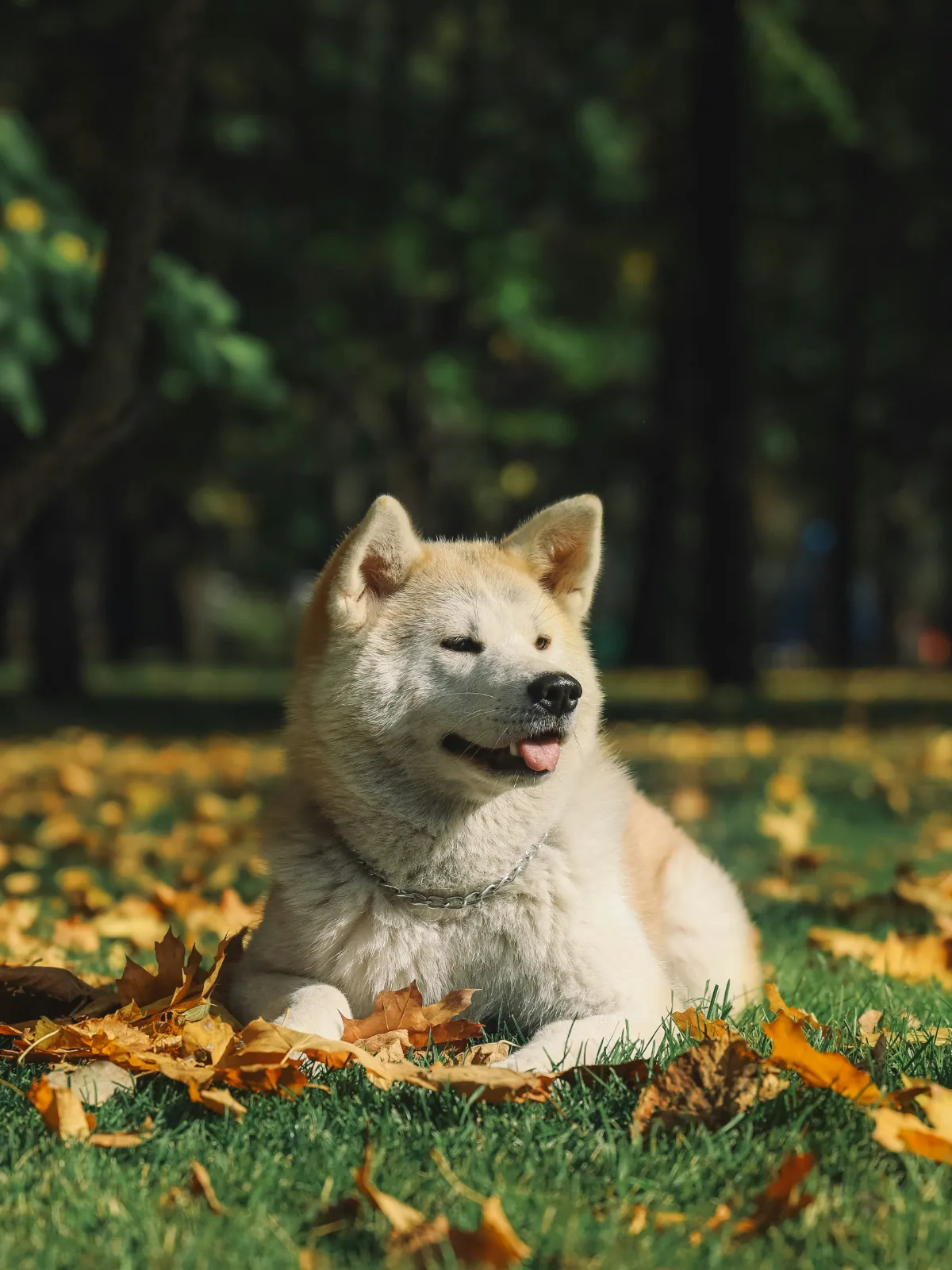
Pemphigus covers a fairly large group of these complex immune-malfunction conditions, and in dogs or cats, pemphigus foliaceus is by far the most common. In this form the separating cells cause ulcers or crusts around the eyes and ears, on the pads of the feet, in the groin, and across the bridge of the nose. The Akita seems especially predisposed. In cats, lesions often appear at the nail beds, leaving crusty, sore feet.2
Pemphigus foliaceus is usually spontaneous, but it can also be drug-induced, or develop as a reaction to years of chronic skin disease.2 That last cause is the one we see most: a dog whose skin has been inflamed for years before the immune system finally turns on it.
These are complex problems, and they can be difficult to resolve. What Nzymes can do is give the body the resources it needs to run its own mechanisms in a healthier way: live-food enzymes for the skin that has to rebuild, antioxidants for the inflammation, and support for the gut, where so much of immune function lives. Many of the families we work with do both, and step down gradually with their vet as the skin settles.
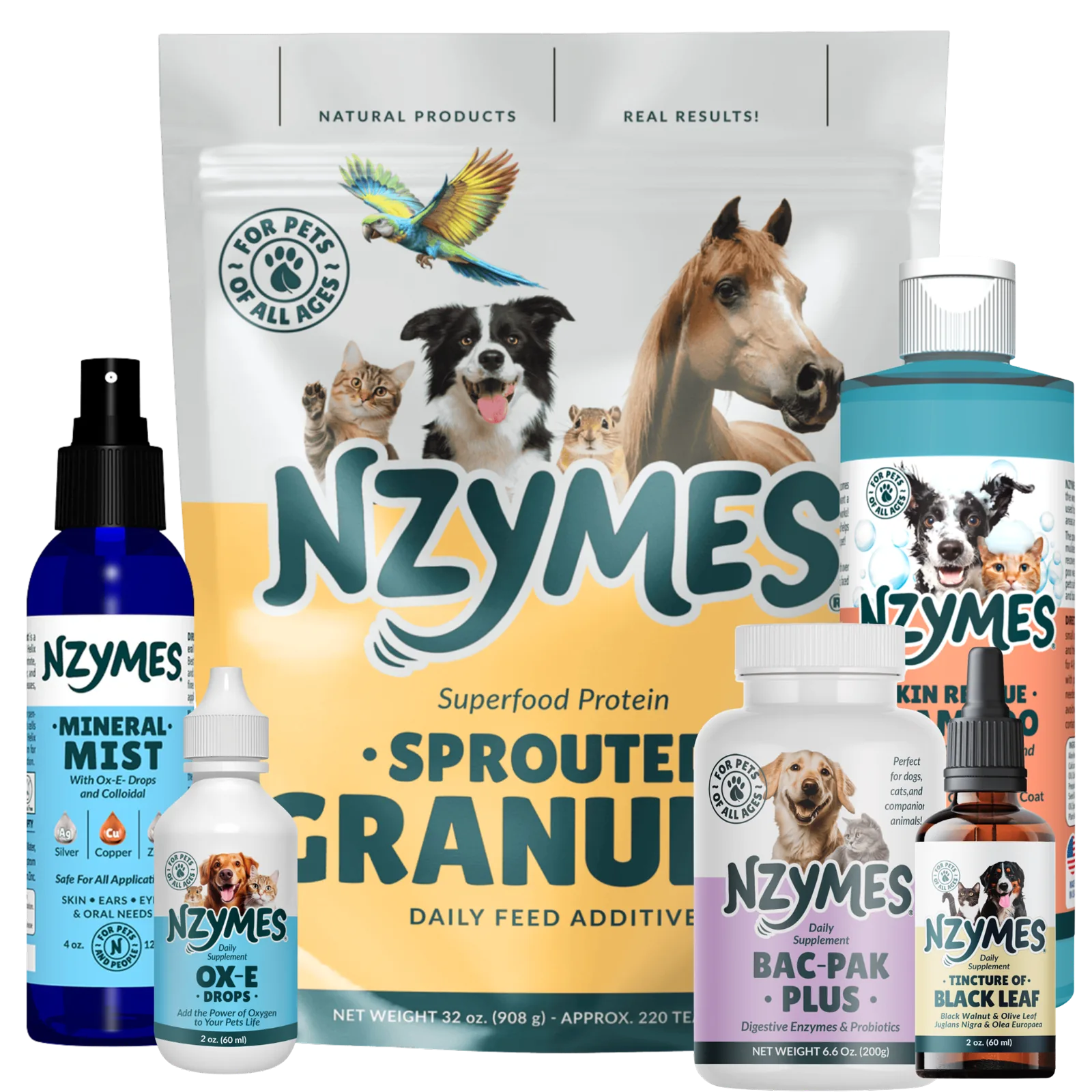 The Skin Rescue ProgramSee the Skin Rescue Program →Sprouted Granules and Ox-E Drops, which the original page recommended for pemphigus, plus gut support and topical care for the skin itself, with step-by-step instructions.
Because pemphigus so often follows years of chronic skin trouble, the Skin & Coat shelf is worth reading alongside this guide. And you are welcome to book a free consultation about your dog's situation; diet is the first thing we'll go over, and our recommended foods guide shows what to look for.
Crusts, pustules or shallow ulcers, most often around the eyes and ears, on the bridge of the nose, the foot pads and the groin. Blisters form, slough off, and leave sores. In cats the nail beds are a common site.
No. It is an autoimmune condition, not an infection. The dog's own antibodies attack the protein that holds skin cells together.
Pemphigus foliaceus is usually spontaneous. It can also be drug-induced, or develop after years of chronic skin disease. Some breeds are predisposed; the Akita is the classic example.
No. What we address is the body underneath: the skin that has to heal, the gut and immune system that have lost their bearings, and the food that feeds all of it. Many of the families we work with do both, and step down gradually with their vet as the skin settles.
With the Skin Rescue Program, which builds on the Sprouted Granules and Ox-E Drops the original page recommended and adds gut and topical support for the skin. Not sure? Book a free consultation and tell us what the biopsy showed.
Tell us what the vet found, how long it's been, what the food is, and what you're seeing day to day. A free half hour with people who have walked families through autoimmune skin cases for years.
The consultation is a scheduled half hour, so you get real time and real answers. It's free, and it always will be.