
- Success Stories
- LearnThe Resource Library: guides, articles, stories


Looking for help with
Most searched
Also common
Everything else
Joints & mobility
Immune & breathing
Injury & recovery
Legs, hooves & joints
Gut & breathing
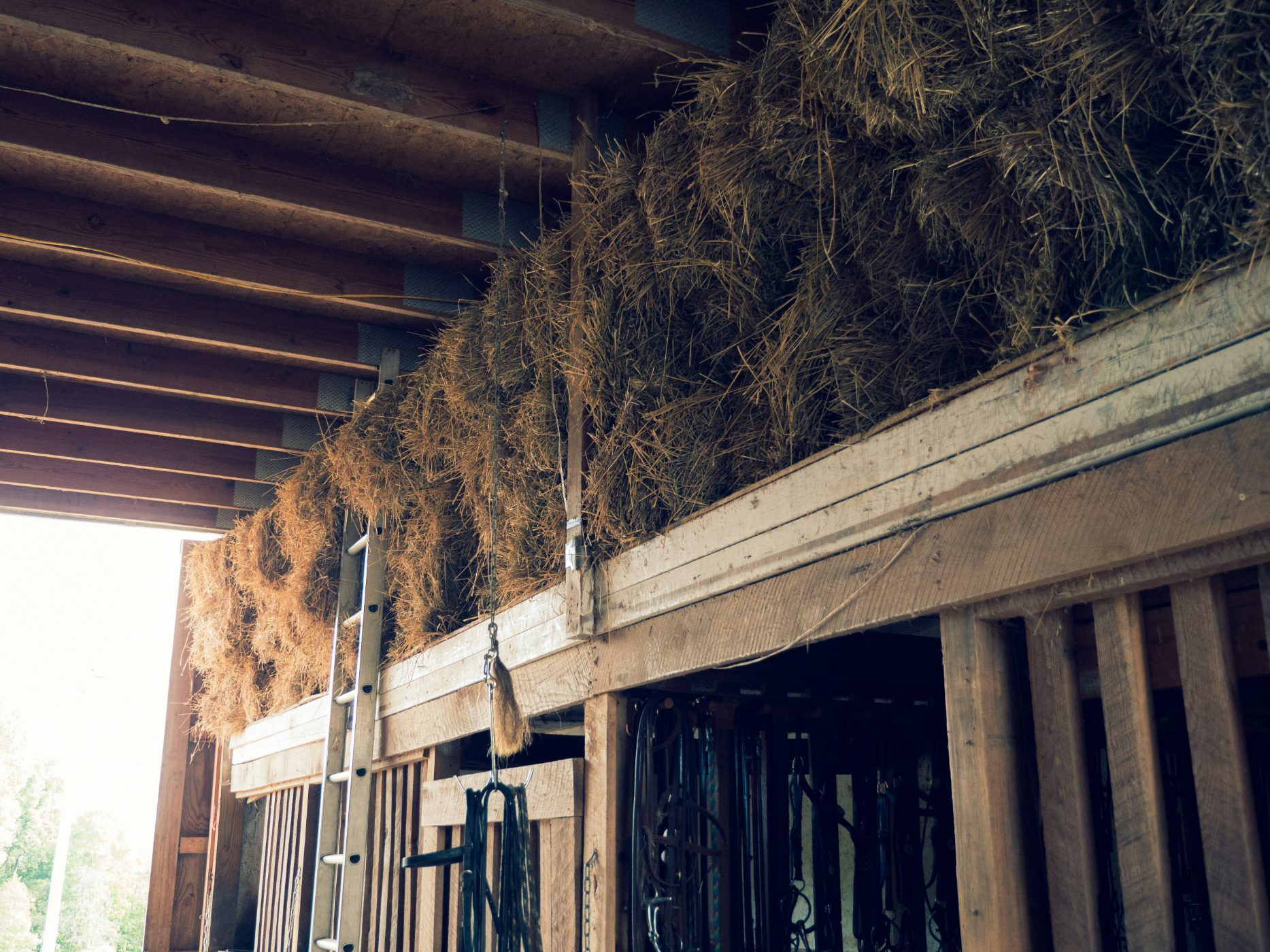
Almost every problem on this shelf traces back, sooner or later, to the feed room. Here's the foundation: how much hay a horse actually needs, the six nutrients that have to be there, and the do's and don'ts that keep small decisions from becoming big problems.
Horses eat large amounts of hay and grass as their main source of food. In general, a horse should eat 1 to 2% of their body weight in hay every day, roughly 15 to 20 pounds. A 1,000-pound horse in light work might get 12 to 15 pounds a day; the same horse in a heavy work program may need 15 to 18.
When choosing, buying, or storing hay, make sure it has no fungal mold and minimal dust. Both can create health problems and contribute to potential heaves or respiratory infections; moldy hay is also how fungal pneumonia usually starts.
If your hay or pellets come from a feed company, they should already balance most of these. The details still matter, and one of them gets forgotten more than any other:
About 2 quarts for every pound of hay eaten. On hot days, during hard work, or for a nursing mare, 3 to 4 times that. Keep the supply adequate and clean, always.
The main energy source in most feeds. Starches and sugars break down to glucose in the small intestine; fiber ferments in the large intestine to release its energy.
For muscle development during growth and exercise. Most adult horses need only 8 to 10% in the diet; nursing mares and growing foals need more. Alfalfa is a good source, but watch its sugars.
Three times the energy of any grain. A small amount of flax seed is a good source. Most premixed feeds run 2 to 6%; senior feeds may run 10 to 12%.
They come in two kinds: fat-soluble (A, D, E, and K) and water-soluble (C and the B-complex). A horse foraging on green pasture usually has plenty of both. The exceptions: high-grain diets, low-quality hay, and horses under stress from travel, showing, racing, or illness.
Body structure, electrolytes, nerves, muscle. Pasture and premixed rations usually cover them, but salt is the exception: keep a salt lick available at all times. Heavy sweaters may need electrolyte help; youngsters under 2 may need extra calcium, phosphorus, copper, and zinc.
An overabundance of starch or high-sugar feed can cause colic or laminitis. Forages normally run only 6 to 8% starch, but under certain conditions can reach 30%. Timothy or bromegrass hay is the safer main diet: less soluble carbohydrate than alfalfa or corn.
Even a well-balanced feed program has two gaps: the live enzymes that heat processing removes, and the friendly gut bacteria that keep the whole digestive system working. These two, added to the daily feed, close them:
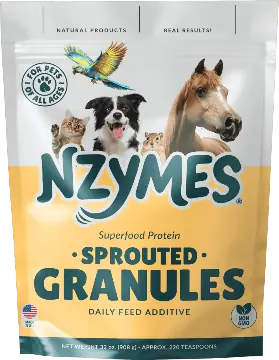
The live sprouted superfood that puts back what processing takes out, supporting the body's own repair and maintenance work every day.
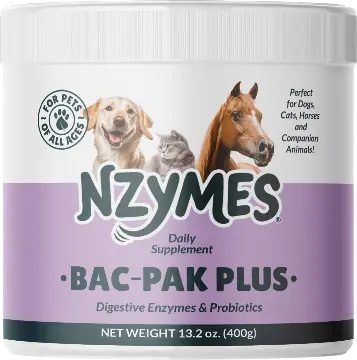
Digestive enzymes plus probiotics for the gut flora that ferment your horse's fiber into usable energy. The 400 g tub was made with horse owners in mind.
Both are covered by the 120-Day Worry-Free Guarantee: up to four months to see the difference in your own horse.
Good feeding isn't complicated.
It's consistent.
In general, 1 to 2% of body weight daily, roughly 15 to 20 pounds. A 1,000-pound horse in light work might get 12 to 15 pounds a day; the same horse in heavy work may need 15 to 18.
About 2 quarts for every pound of hay eaten, and on hot days, during hard work, or for a nursing mare, 3 to 4 times that. It's the most important nutrient of all.
Too much starch or high-sugar feed can cause colic or laminitis. Forages normally run 6 to 8% starch but can reach 30% under certain conditions. Timothy or bromegrass hay carries less soluble carbohydrate than alfalfa or corn.
A horse at normal weight on green pasture or a premixed ration usually gets enough. The exceptions: salt should always be available as a lick, heavy sweaters may need electrolyte support, and youngsters under 2 may need extra calcium, phosphorus, copper, and zinc.
No fungal mold, and minimal dust. Both can create health problems and contribute to potential heaves or respiratory infections.
Kara is the equine specialist on our customer care team, and she keeps her own herd fed through some of the hardest feeding country there is. Tell her what you're feeding and what you're seeing, and she'll tell you honestly where to start. Read Kara's story →
The consultation is free, and it always will be.
1-877-816-6500 · Orders & quick questions