
- Success Stories
- LearnThe Resource Library: guides, articles, stories


Looking for help with
Most searched
Also common
Everything else
Joints & mobility
Immune & breathing
Injury & recovery
Legs, hooves & joints
Gut & breathing
It wasn't there yesterday. Today there's a raw, red, weeping patch your dog won't leave alone, and it's getting bigger. Hot spots move fast, and summer is their season. Here's what's actually happening, and what helps.
A moist skin eruption that can occur anywhere on a dog's body. It usually appears raw and red, can spread slowly, and quickly becomes a breeding ground for bacteria.
That last part matters: an open, weeping hot spot can pick up a secondary bacterial infection, so if the spot is spreading fast, bleeding, or your dog is in real distress, get help promptly. This guide is about the more important question: not what a hot spot looks like, but what caused it. Because a hot spot that keeps coming back despite everything you've tried is almost always a signal of something happening deeper in the body.
If you've read the earlier guides, you know the pattern: an imbalanced gut lets yeast overgrow, and the overflow surfaces at the body's exits, carrying an itch that sits so deep it can't be satisfied. A hot spot is what happens when that deep itch meets a dog's only tool for reaching it: licking.
Starch-heavy kibble converts to sugar in the body, and sugar is what yeast runs on. Most big-name dog foods are loaded with it.
Warm weather activates yeast the same way sugar does, which is why hot spots earn their name in the summer months, and why furnace season can bring flare-ups too.
Lick, itch, lick, itch. The moisture and the irritation build until the skin erupts. The spot is the visible end of a chain that started in the gut, weeks or months earlier.
New to that chain? Our complete systemic yeast guide walks through it step by step →
Here's the hopeful part: if hot spots and some itching are the whole picture, your dog's immune system is still holding most of the line. Check which column you're in:
The immune system is keeping things mostly under control. The right support now can keep it that way.
This is a full systemic yeast picture. Start with the full guide, then book a consult.
When you see a hot spot, check the ears too. Ears and paws are where yeast shows itself first, and a gunky buildup or sour smell there tells you the imbalance has been working for a while, even in a dog who's never had a yeast issue before. If your dog has had steroids or antibiotics recently, check twice.
A three-part approach works on the hot spots from the inside and the outside at the same time: foundational nutrition so the body can address the internal imbalance, internal support against the yeast itself, and topical care for the spots your dog is living with right now.
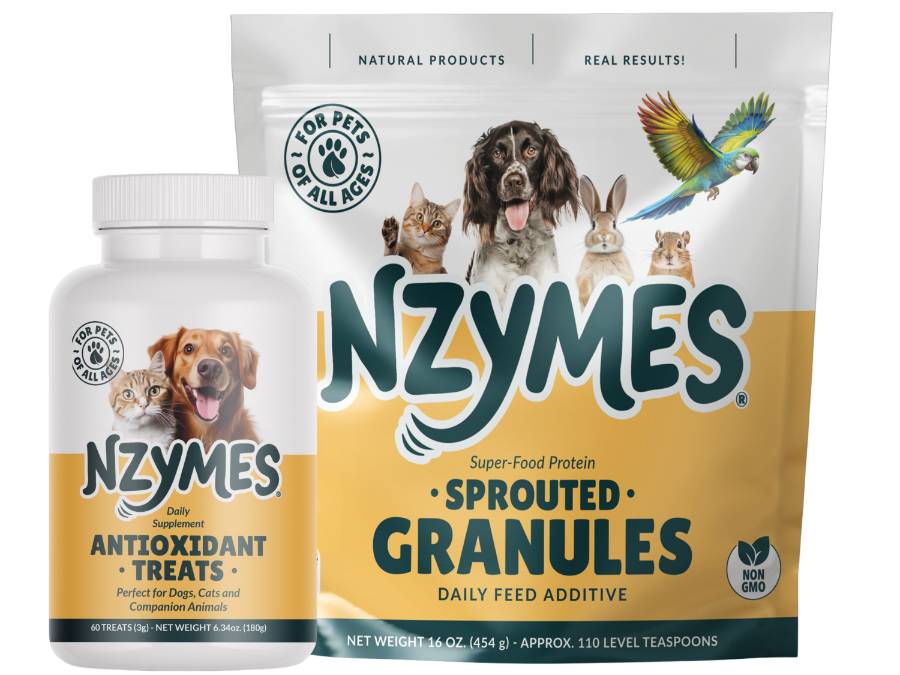
Antioxidant Treats and Sprouted Granules together: the live-food sprouted nutrition that lets the body ramp up its own production of its antioxidant enzymes, the equipment it needs to address the imbalance underneath. Already using one of the two? Either alone is a fine start.
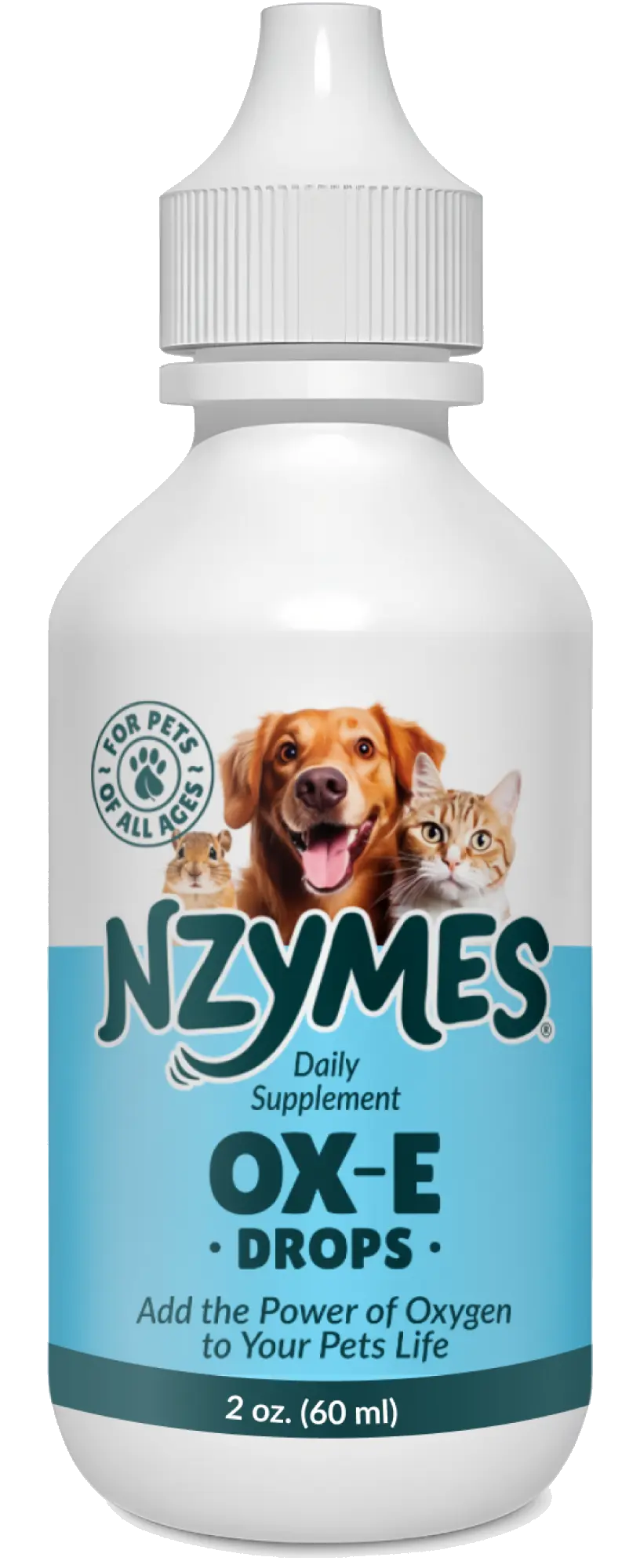
Added to the food bowl daily, the drops support the body's efforts against fungal yeast issues, working right where the problem lives. Dosage by weight is printed right on the bottle.
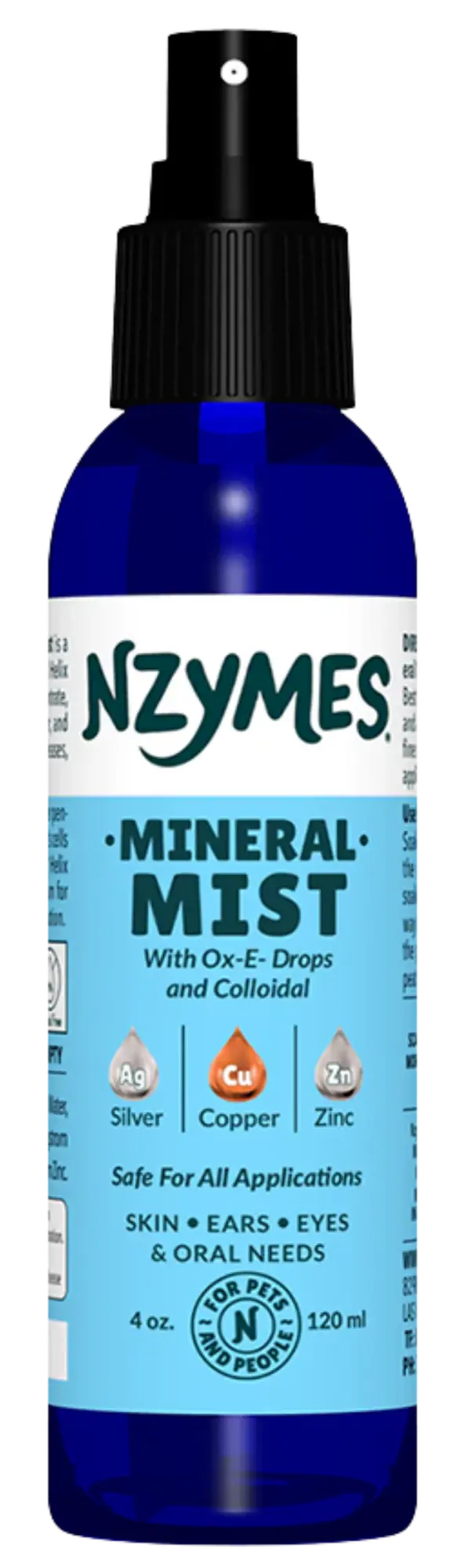
A ready-to-use topical spray, applied directly to the spot three or four times a day to keep the area moist and supported while the skin settles. Any other visible skin symptoms can get the same treatment.
If symptoms begin to spread or worsen despite steady care, the yeast overgrowth is more advanced than it looks. That's the moment for the full protocol: the Skin Rescue program, and a consult first.
If hot spots and minor itching are the main issue, a better bowl is the single highest-impact change you can make. We keep a living list of the foods we actually recommend, treats included, with the reasoning behind each.
See the recommended foods →Most of the popular dog biscuits and treats on big-store shelves are just as starch-heavy as the kibble, and they quietly undo a good food change. The recommended foods list includes approved treats, so the reward stays a reward.
The hot spot is where it surfaced.
It was never where it started.
Recurring hot spots are usually a sign of an ongoing internal imbalance, not a surface issue. Addressing only the visible skin leaves the yeast overgrowth underneath fed and growing, so the same cycle repeats. The way out is working both ends at once: comfort at the skin, correction at the gut.
Localized hot spots and itching without much else usually mean the immune system is still winning. Wider outbreaks, blackened skin, recurring ear infections, or thickened elephant-like skin point to a systemic yeast picture. The triage above lays it out, and the full yeast guide covers the advanced road.
It's one of the most significant factors, and the most actionable one. High-glycemic starches like potatoes, white rice, corn, wheat, and tapioca convert quickly to sugar and feed the yeast driving the itch. Switching to a lower-starch food cuts the fuel supply; our recommended foods list shows you what to switch to.
Spray it directly on the spot three or four times a day to keep the area moist and supported, and treat any other visible skin symptoms the same way. If things spread or worsen despite steady care, the imbalance is further along than it looks; that's the time to book a consult and talk through the full protocol.
They do the same foundational job. Sprouted Granules mix into the bowl and go further for larger dogs, which makes them the economical choice over 60 pounds. Antioxidant Treats deliver the same sprouted nutrition in chewable form, which some dogs (and families) simply find easier. Either works; pick the one your routine will actually stick with.
That's the whole story: where yeast comes from, what feeds it, and the places it shows itself. If your dog's symptoms match what you've been reading, the next step isn't another article. It's a conversation.
Yeast is one of the toughest things we help families through. Tell us what you're seeing, where the spots are, and what your dog is eating, and we'll tell you honestly if the Skin Rescue program is the right fit, so you know what the road actually looks like before you start.
The consultation is a scheduled half hour with the people who know this protocol best, so your family gets real time and real answers instead of a rushed phone call. It's free, and it always will be.




.png)